
Oahu · Trip Planning
Hawaii Travel Tips: What to Know Before Your Oahu Trip
Most of what trips up a first visit to Oʻahu is a rule, not a surprise: a form to fill out, a law about sunscreen, a reservation that sells out, a tax added after the price tag. Here are fourteen of them, each with the rule or number, the official page it comes from, and a link to the guide that goes deeper. The rules are statewide; the examples are Oʻahu.
Some links on this page are affiliate links. If you book or buy through them, we may earn a commission at no extra cost to you.
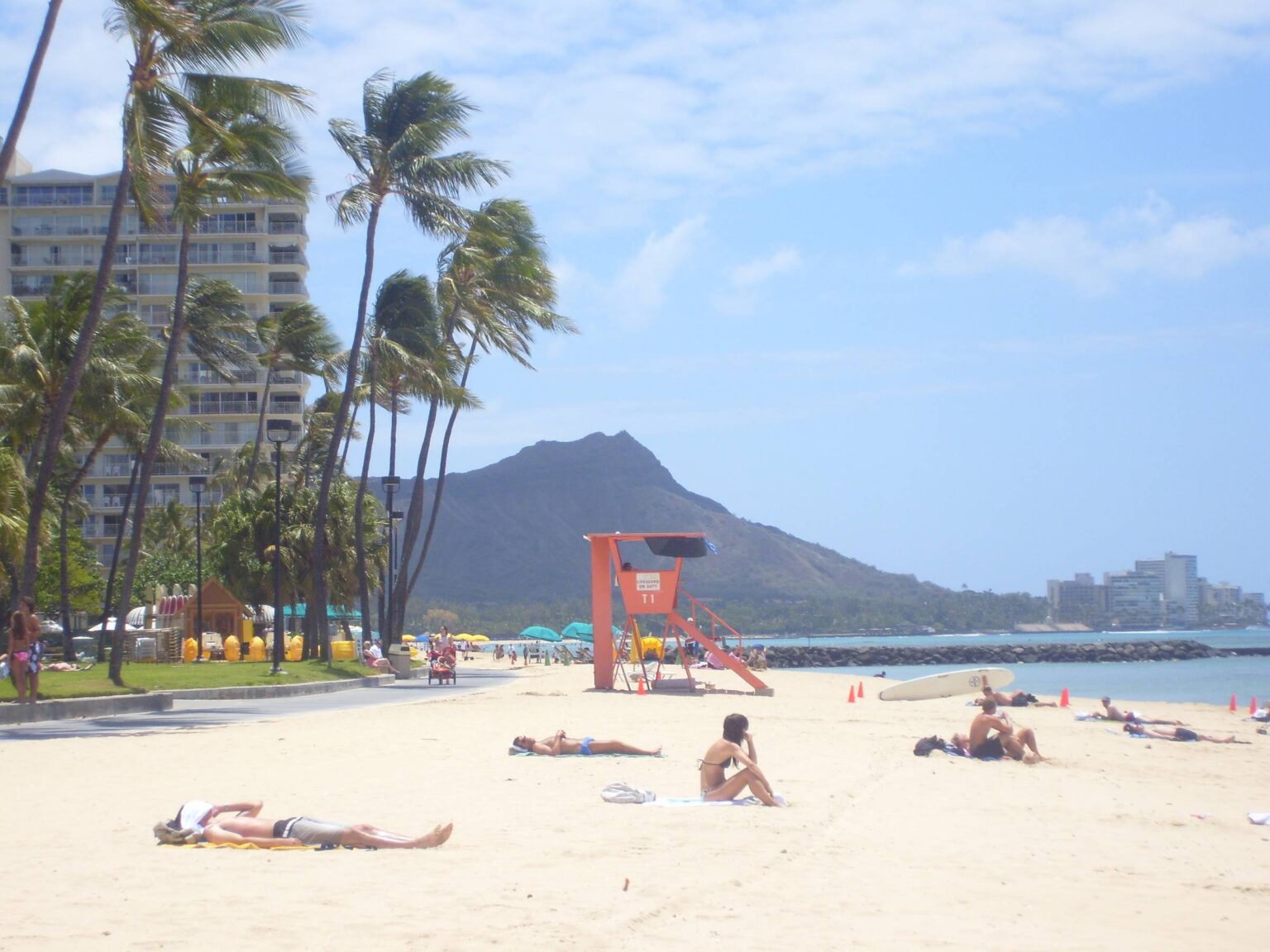
Waikīkī Beach and Diamond Head. Photo: Jackie Gleason, Public domain, via Wikimedia Commons.
Quick Answer
Do these five first. Carry REAL ID or a passport. Fill out the state agricultural declaration before you land. Book Diamond Head and Hanauma Bay ahead, since neither takes a walk-up on a busy day. Buy sunscreen with the state’s two banned ingredients in mind. Swim only where a lifeguard is on duty.
Before You Fly
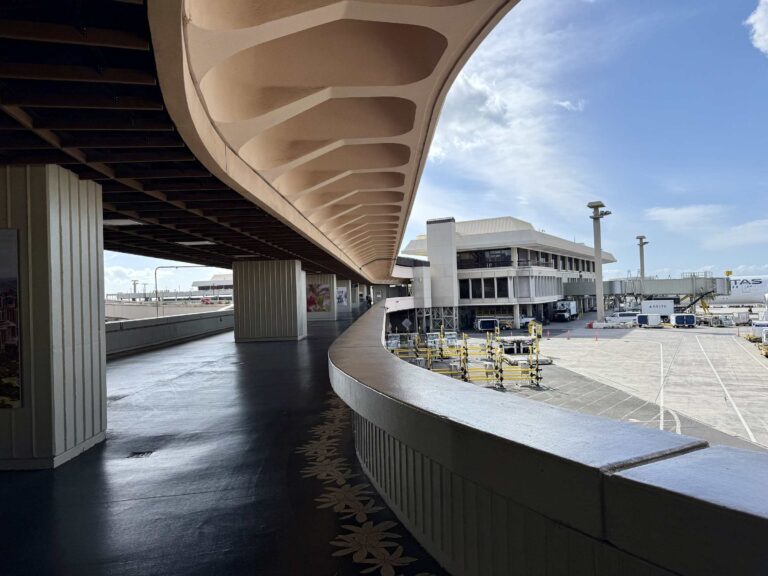
- 1. Bring REAL ID or a passport. Since May 7, 2025, TSA has not accepted state IDs that are not REAL ID compliant at airport checkpoints, and a traveler with no acceptable ID can pay $45 to use TSA ConfirmID (TSA). The Honolulu airport asks you to arrive at least two hours before overseas flights and 90 minutes before interisland flights, plus 30 minutes if you park or return a rental car (HDOT). Terminals, security and the Skyline station are in our Honolulu airport guide.
- 2. Fill out the agricultural declaration. State law requires it for all inbound flights from the continental U.S., and one adult can complete it for the family. Providing false information or failing to declare a prohibited item is a misdemeanor, punishable by up to $25,000, a year in jail or both (Akamai Arrival, State of Hawaiʻi). Going home, every bag bound for the mainland is inspected by the U.S. Department of Agriculture before the flight, so leave time to open them (HDOT).
- 3. Mind the clock. Hawaiʻi does not observe daylight saving time (NIST), so the gap with the mainland changes twice a year. Check it before you book a call or a flight home.

Honolulu Airport Private Transfer with a Lei Greeting
★★★★★ 4.8 · 507 reviews · From $45
Check AvailabilityWe may earn a commission if you book through this link, at no extra cost to you.
In the Water and on the Beach
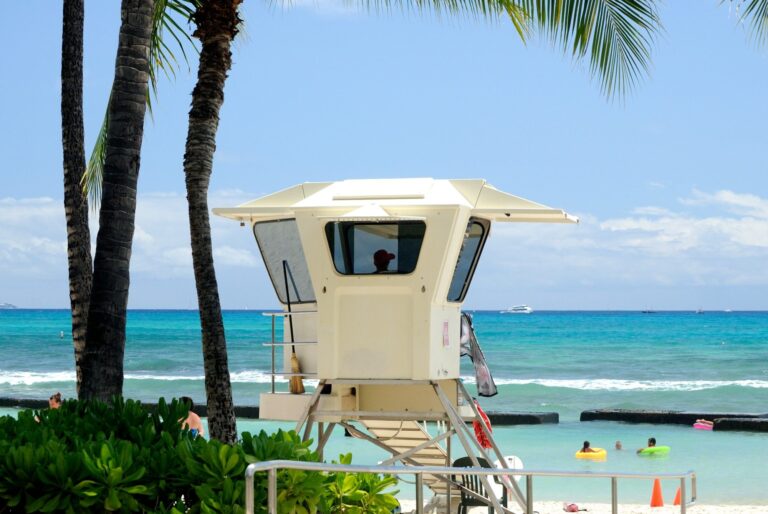
- 4. Swim at a lifeguarded beach. The state’s first rules are to swim at a lifeguarded beach, with a buddy, and to read and obey posted signs (Hawaiʻi Ocean Safety). Skip the water at beaches with dangerous shorebreak: the average wave height when a spinal cord injury occurs is 3 feet, and wading in a strong shorebreak can be dangerous (Ocean Safety). If a current takes you, stay calm, float, go with it rather than fight it, and signal for help (Ocean Safety). Our guide to whether it is safe to swim on Oʻahu today covers the daily checks.
- 5. Check the sunscreen label. Under state law it is unlawful to sell, offer for sale or distribute for sale in Hawaiʻi any sunscreen that contains oxybenzone or octinoxate, or both, without a prescription from a licensed health care provider, and the ban has applied since January 1, 2021 (HRS 342D-21). The statute names those two ingredients and does not define “reef safe,” so read the active ingredients, not the front of the bottle.
- 6. Give wildlife room. NOAA says to stay at least 10 feet from sea turtles, on land and in the water (NOAA Fisheries), and at least 50 feet from resting Hawaiian monk seals (NOAA). Federal law prohibits swimming with, approaching or remaining within 50 yards of spinner dolphins in Hawaiʻi. Report a problem to the NOAA Marine Wildlife Hotline at (888) 256-9840.
Weather: Trade Winds and Rain
- 7. Expect wind, and rain that depends on the side. The National Weather Service describes the “persistence of northeasterly trade winds” as an outstanding feature of Hawaiʻi’s climate, with clouds and rain greater on windward coasts and slopes and leeward areas tending to be “sunny and dry” (NWS Honolulu). NOAA’s 1991 to 2020 normals put Waikīkī at 20.65 inches of rain a year and windward Kāneʻohe at 50.90 (NOAA NCEI). After heavy rain, the Department of Health’s guidance, as Hawaii News Now reported it on September 30, 2026, is to stay out of affected ocean water for at least 48 to 72 hours. For hikes, State Parks warns that flash floods are a danger in narrow gulches (DLNR). Plans for a wet day are in our rainy day guide, and month-by-month numbers are in the best time to visit Oʻahu.
Reservations: Diamond Head and Hanauma Bay
- 8. Reserve Diamond Head. State Parks says reservations are required and “anyone without a reservation will be turned away,” except local residents with a valid Hawaiʻi State ID. The last reservation is at 4 p.m., you must enter by 4:30 p.m., and everyone must be out through the tunnel by 6 p.m. Children 3 and younger do not pay (Hawaiʻi State Parks). Fees and booking steps are in our Diamond Head reservations guide.
- 9. Reserve Hanauma Bay, and know its days. The preserve is open Wednesday through Sunday, with entry from 6:45 a.m. to 1:30 p.m. Nonresidents 13 and older pay $25 plus an online fee, children 12 and under are free, and reservations open two days ahead at 7 a.m. Hawaiʻi time, first come, first served. About a quarter of access is kept for walk-in visitors (City and County of Honolulu). The steps are in our Hanauma Bay reservations guide.
Getting Around and Parking
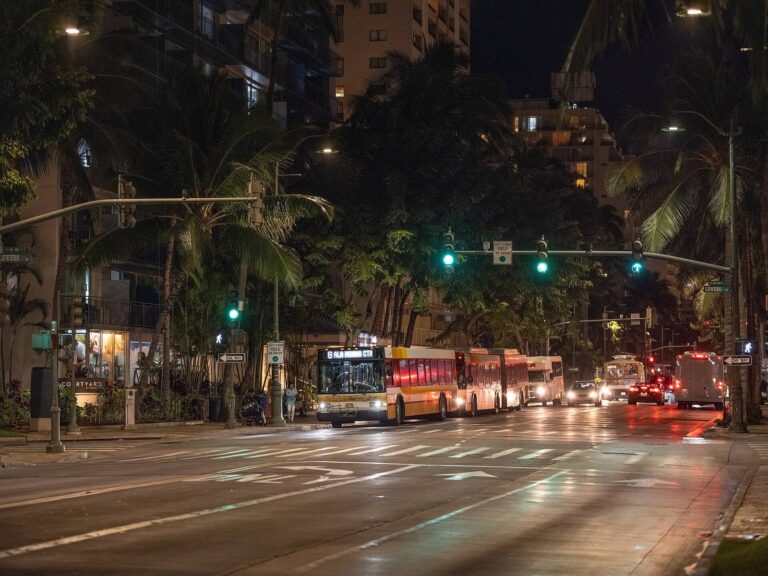
- 10. Decide where you need a car. TheBus costs $3.25 in cash with exact change and no transfers, or $3.00 for two hours on a HOLO card, which stops charging at $7.50 in a day (TheBus). A HOLO card is required to ride Skyline, and the W Line runs from the airport to Waikīkī (HDOT). Our getting around guide compares TheBus, Skyline, rideshare and a car, and renting a car on Oʻahu covers the days you leave town.
- 11. Price the parking before you rent. Waikīkī street meters charge $3 an hour from 6 a.m. to 10 p.m. every day under the city ordinance (ROH 15-22.4), payable by card, the Park Smarter app or text (City DTS). The City has warned of fake QR stickers on Waikīkī meters (City DTS, April 6, 2023). Hotel garages and free spots are in our Waikīkī parking guide.
Rental car
Rent a car for the days you leave Waikīkī
DiscoverCars compares the rental agencies at the Honolulu airport in one search. Compare Oahu rental cars on DiscoverCars.
We may earn a commission if you book through this link, at no extra cost to you.
Costs That Are Not on the Price Tag
| Cost | Number | Source |
|---|---|---|
| Hotel room tax, combined | 18.712% | State TAT 11%, Oʻahu TAT 3%, GET 4.712%, as Halekulani states it |
| Mandatory resort fee | Taxed like the room | Hawaiʻi Department of Taxation: included in gross rental proceeds |
| Shop and restaurant tax | Up to 4.712% added | Hawaiʻi Department of Taxation: a seller may pass it on, but need not |
| Waikīkī street meter | $3 an hour, 6 a.m. to 10 p.m. | Revised Ordinances of Honolulu 15-22.4 |
| TheBus, cash | $3.25, exact change, no transfers | TheBus |
| TheBus and Skyline on a HOLO card | $3.00 for 2 hours; $7.50 a day cap | TheBus |
- 12. Compare hotels by total price. Since May 12, 2025, the FTC’s rule requires short-term lodging to show the total price including mandatory fees up front, though taxes may be left out of that price until you pay (FTC). The state room tax rose from 10.25% to 11.00% on January 1, 2026 (Department of Taxation). Published Waikīkī resort fees ran from $30 to $65 a night plus tax when we checked on September 26, and Halekulani says it charges none. Hotel by hotel, see our Waikīkī resort fees guide.
- 13. Expect tax on top of the shelf price. Hawaiʻi has no sales tax. It charges a general excise tax on the business, and a seller may pass it on to you but need not (Department of Taxation). On Oʻahu the rate with the county surcharge is 4.712%, so a $20 item can ring up near $21 at a register that adds it.
Respect: Kapu Signs and Sacred Sites
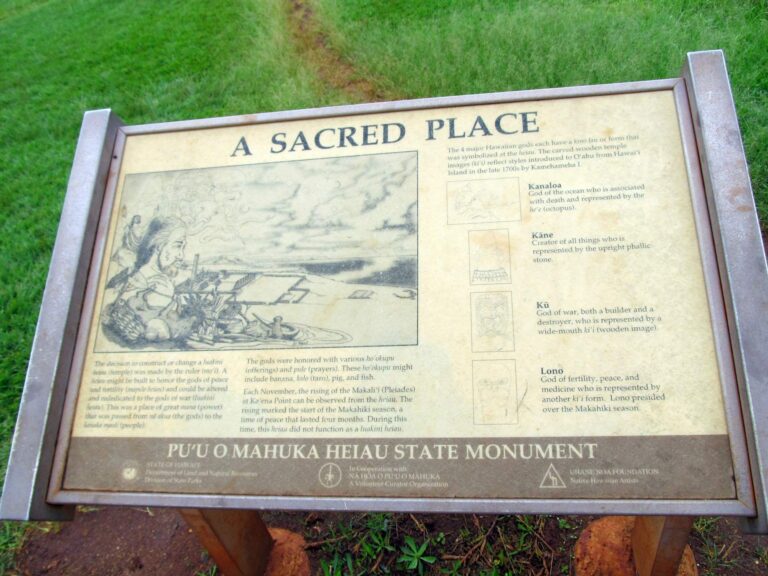
- 14. Treat kapu as off limits. The State Parks brochure on sacred sites says to respect the boundaries and kapu (off limits) areas, and where a site is not marked, to use the outer edge of the stone or wood structure as your limit for viewing. Do not walk on or over stacked-stone walls or platforms. It is unlawful to take, dig up, destroy or alter any historic site on state land, with a fine of $10,000 under HRS 6E-11, and the brochure says wrapping a rock in a ti leaf is not a traditional offering (DLNR, Nā Wahi Pana). On trails, follow posted signs (DLNR).
Hawaii Travel Tips: Questions
What should I know before going to Hawaii for the first time?
Carry REAL ID or a passport, fill out the state agricultural declaration, reserve Diamond Head and Hanauma Bay ahead, swim at lifeguarded beaches, and expect tax on top of listed prices.
Is reef-safe sunscreen required in Hawaii?
State law bans selling sunscreen with oxybenzone or octinoxate without a prescription, in force since January 1, 2021. The statute is about sale and names those two ingredients, and it does not define “reef safe.”
Do I need reservations for Diamond Head and Hanauma Bay?
Yes for nonresidents at both. Diamond Head turns away anyone without a reservation except residents with a Hawaiʻi State ID. Hanauma Bay takes reservations two days ahead at 7 a.m. and keeps about a quarter of access for walk-ins, and it is closed Monday and Tuesday.
What time zone is Hawaii in, and does it change?
Hawaiʻi Standard Time, which does not change: Hawaiʻi does not observe daylight saving time. The gap with the mainland does change when the mainland switches clocks.
Sources, checked Oct 14, 2026
- Identification and REAL ID (TSA)
- Ticketing and check-in times (Daniel K. Inouye International Airport, HDOT)
- Agriculture inspection (Daniel K. Inouye International Airport, HDOT)
- Akamai Arrival, agricultural declaration (State of Hawaiʻi)
- Daylight saving time (NIST)
- Hawaiʻi Ocean Safety
- Ocean hazards: strong currents (Hawaiʻi Ocean Safety)
- Ocean hazards: dangerous shorebreak (Hawaiʻi Ocean Safety)
- HRS 342D-21, sunscreen sales (Hawaiʻi Revised Statutes)
- Guidelines and distances (NOAA Fisheries)
- Hawaiian monk seal (NOAA Fisheries)
- Climate summary (NWS Honolulu)
- NOAA U.S. Climate Normals 1991 to 2020 (NCEI data service, pulled Oct 13, 2026)
- Brown water advisories and DOH guidance (Hawaii News Now, Sep 30, 2026)
- Hiking in Hawaiʻi (DLNR State Parks)
- Diamond Head State Monument FAQ (Hawaiʻi State Parks)
- Hanauma Bay Nature Preserve (City and County of Honolulu)
- Fares and passes (TheBus)
- Bus and Skyline (Daniel K. Inouye International Airport, HDOT)
- Parking meters (City and County of Honolulu DTS)
- Revised Ordinances of Honolulu 15-22.4 (parking time limits and rates)
- Fake QR code stickers on parking meters (City and County of Honolulu DTS, Apr 6, 2023)
- Rule on unfair or deceptive fees, FAQ (FTC)
- Announcement 2025-03, TAT law changes (Hawaiʻi Department of Taxation)
- An Introduction to the Transient Accommodations Tax (Hawaiʻi Department of Taxation)
- FAQs, taxes and resort fees (Halekulani)
- General Excise Tax information (Hawaiʻi Department of Taxation)
- Nā Wahi Pana: Respecting Hawaiian sacred sites (DLNR State Parks brochure)
Researched from the sources above, checked Oct 14, 2026. We never claim a visit we did not make; first-hand notes are marked as Stew’s. How we research and review.

Leave a Reply