
Culture · North Shore
The Polynesian Cultural Center: What to Know
If you are weighing a day at the Polynesian Cultural Center in Lāʻie, read this first. Here is what the center says about itself, who owns it, what one Native Hawaiian scholar has written about it, and where we would send you instead for Hawaiian history and culture.
Some links on this page are affiliate links. If you book or buy through them, we may earn a commission at no extra cost to you.
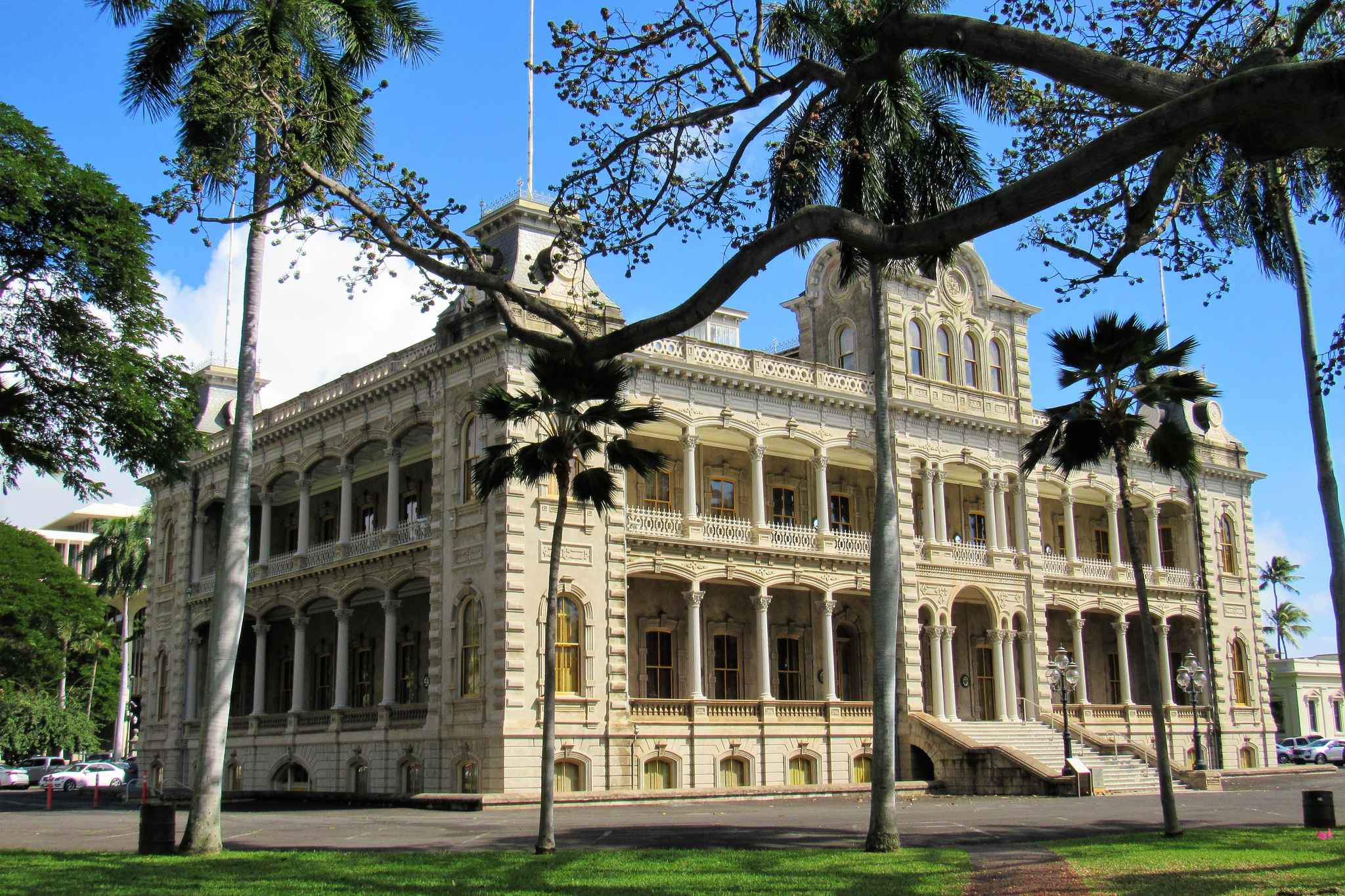
ʻIolani Palace in Honolulu, home of the Hawaiian Kingdom’s last monarchs. Photo: Farragutful, CC BY-SA 4.0, via Wikimedia Commons.
The Short Version
The Polynesian Cultural Center at a Glance
- What it isA cultural attraction in Lāʻie, on Oahu’s North Shore, with island village areas, a canoe show, a luau and an evening show. It was dedicated in 1963.
- Who owns itThe Church of Jesus Christ of Latter-day Saints. The center describes itself as affiliated with the Church, and most of its workforce are students at neighboring BYU–Hawaiʻi.
- What it coversSix Polynesian cultures, by its own description: Hawaiʻi, Samoa, Aotearoa (New Zealand), Fiji, Tahiti and Tonga. Hawaiʻi is one of the six.
- What we’d do insteadBishop Museum and ʻIolani Palace in Honolulu, Waimea Valley on the North Shore, the free Kuhio Beach hula show in Waikiki, or a luau run by the Hawaiian Council.
What the Polynesian Cultural Center Is, in Its Own Words
The center was dedicated on October 12, 1963, in Lāʻie, on Oahu’s North Shore. On its history page it describes its purpose as “faithfully perpetuating the cultures of Polynesia while also helping to support the educational development and growth of students at Brigham Young University-Hawaiʻi.”
A day there moves through village areas for six island nations, which the center’s About page lists as “Hawaiʻi, Samoa, Aotearoa (New Zealand), Fiji, Tahiti, and Tonga,” plus a lagoon show called Huki: A Canoe Celebration. In the evening come the Aliʻi Lūʻau and the show HĀ: Breath of Life, a large production with more than 100 performers. The New York Times has described HĀ as “a vivid, energetic production that highlights song and dance from the indigenous cultures of the South Pacific.”
Who Owns It, and Where the Money Goes
The center’s About page says it is “affiliated with The Church of Jesus Christ of Latter-day Saints,” and its history page calls it “a sister entity to the university,” Brigham Young University–Hawaiʻi, next door. The Church owns the center through its Corporation of the President. Church president David O. McKay authorized it in the early 1960s “to provide employment and scholarships for students at BYU-Hawaii and to preserve Polynesia’s culture,” according to its Wikipedia entry.
Most of its workforce are BYU–Hawaiʻi students, according to the center. Its About page describes the students as working through the university’s work-study program for “wages, scholarship support, and professional experience.”
The center’s Candid (GuideStar) profile says its revenue is “generated primarily by admissions paid by visitors to the village complex,” plus food sales. The same profile notes that it is “not required to file an annual return with the IRS because it is a religious organization,” so there is no public yearly financial filing to check.
Polynesia, Not Just Hawaiʻi
The center is built as a showcase of Polynesia as a whole, and it says so. Of the six island nations it presents, Hawaiʻi is one; the other five village areas are about Samoa, Aotearoa, Fiji, Tahiti and Tonga, each with its own language, dance and history. That is a fair thing for a Polynesian center to do. It also means that a visitor who books it as their introduction to Hawaiian culture will spend most of the day learning about other places.
What a Native Hawaiian Scholar Has Written About It
A detailed published critique comes from Hokulani K. Aikau, a Native Hawaiian scholar who was an associate professor of Indigenous and Native Hawaiian politics at the University of Hawaiʻi at Mānoa when her book came out. A Chosen People, a Promised Land: Mormonism and Race in Hawaiʻi (University of Minnesota Press, 2012) examines the Church’s history in Lāʻie and the center directly. What follows is her view, as summarized in Chad Blair’s review for Honolulu Civil Beat (August 2012).
- According to the review, the Church’s Labor Missionary Program built the Church College of Hawaii (now BYU–Hawaiʻi) in 1956 and the Polynesian Cultural Center in 1963.
- Aikau writes that the center can reinforce “an image of Polynesians as childlike and in need of saving and protecting from the corruption of modernity and capitalism.”
- In the review’s summary, she argues that the center leverages faithfulness as “a mechanism for producing compliant workers” and “sells race.”
- She notes that the loʻi (taro patches) farmed by Lāʻie families were bulldozed to build the center.
Her conclusion is mixed, and the review says so. It notes that the students who work there report pride in showcasing their culture and connecting “with cultural traditions that are in danger of being lost,” and it describes Aikau as “torn by its purpose and consequence.” She ends her study, the review says, with “the revelation that it is a far more complex matter.” These are her views, and her book is the place to read them in full.
Where to See Hawaiian Culture Instead
Here is where we land. The Polynesian Cultural Center is not a true representation of Hawaiian culture, and by its own description it is not trying to be one: it presents six Polynesian cultures, on land owned by a church, with Hawaiʻi as one of the six. Nothing here is a judgment of the students who perform there or of the Church’s members. For Hawaiian history and culture, told in Hawaiian places or by Hawaiian organizations, these are the five we would choose, and three of them are in Honolulu or Waikiki.
Bishop Museum
Founded in 1889 by Charles Reed Bishop in memory of his wife, Princess Bernice Pauahi Bishop, the last direct descendant of the Kamehameha royal line. It is an independent nonprofit, and it counts serving Native Hawaiians as a primary part of its mission. Hawaiian Hall and the Pacific collections are the core of a visit. Open daily 9 a.m. to 5 p.m., closed Thanksgiving, Christmas Eve, Christmas Day and New Year’s Day. Adult tickets use dynamic pricing, recently about $34 to $39; the current price is on the museum’s site.
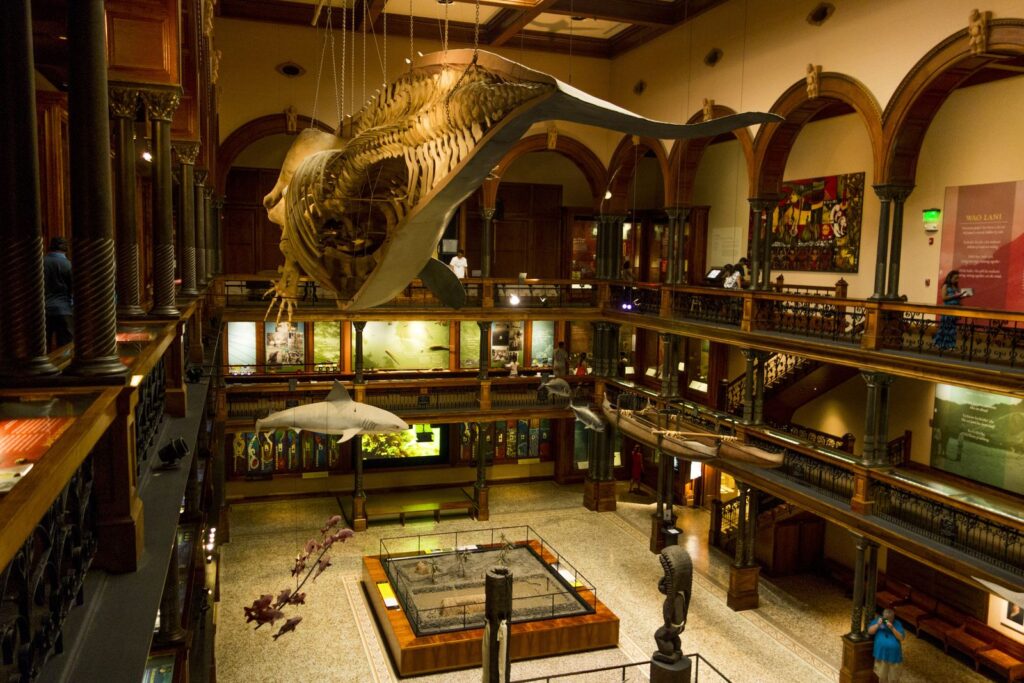

Bishop Museum General Admission Ticket
★★★★★ 4.5 · 252 reviews · From $38.95
Check AvailabilityWe may earn a commission if you book through this link, at no extra cost to you.
ʻIolani Palace
The restored home of the Hawaiian Kingdom’s last monarchs, and the only official state residence of royalty on U.S. soil. It is run by the Friends of ʻIolani Palace, a nonprofit founded in 1966 by Princess Liliʻuokalani Kawānanakoa Morris, whose mission is to preserve and share the palace “for the benefit of native Hawaiians, the people of Hawaii, and the world.” Guided tours are $20 for adults and $5 for children 5 to 12; self-guided audio tours are $13 and $5; children 4 and under are free. Hawaiʻi residents get free self-led audio tours on Kamaʻāina Sundays (Oct 11, Nov 8 and Dec 13 in 2026). Book on the palace’s site.
Waimea Valley
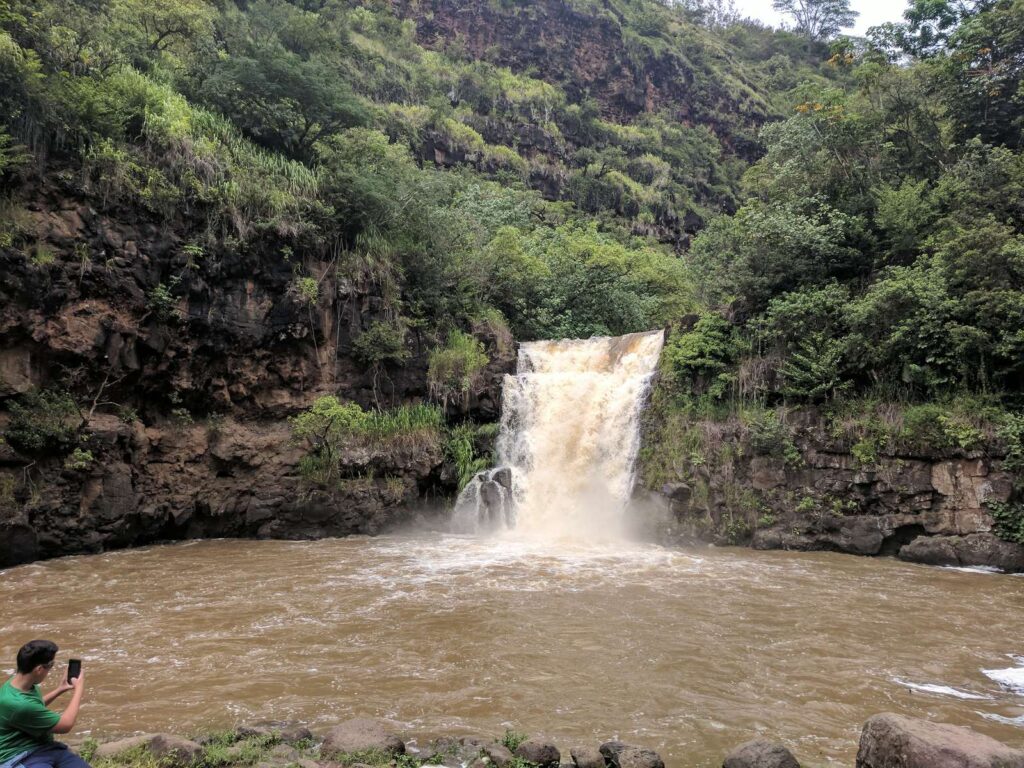
A botanical garden, a waterfall and restored Hawaiian cultural sites, including the Hale o Lono heiau, across a traditional ahupuaʻa, the land division that runs from mountain to sea. The valley returned to Native Hawaiian ownership in 2006 through the Trust for Public Land and the Office of Hawaiian Affairs, and since 2007 it has been owned and managed by Hiʻipaka LLC, a Native Hawaiian nonprofit. Admission is $26 for adults, $20 for seniors and students, and $18 for children 4 to 12, per the valley’s site. It is on the North Shore too, so if you are driving that way anyway, this is the stop.
Kuhio Beach Hula Show
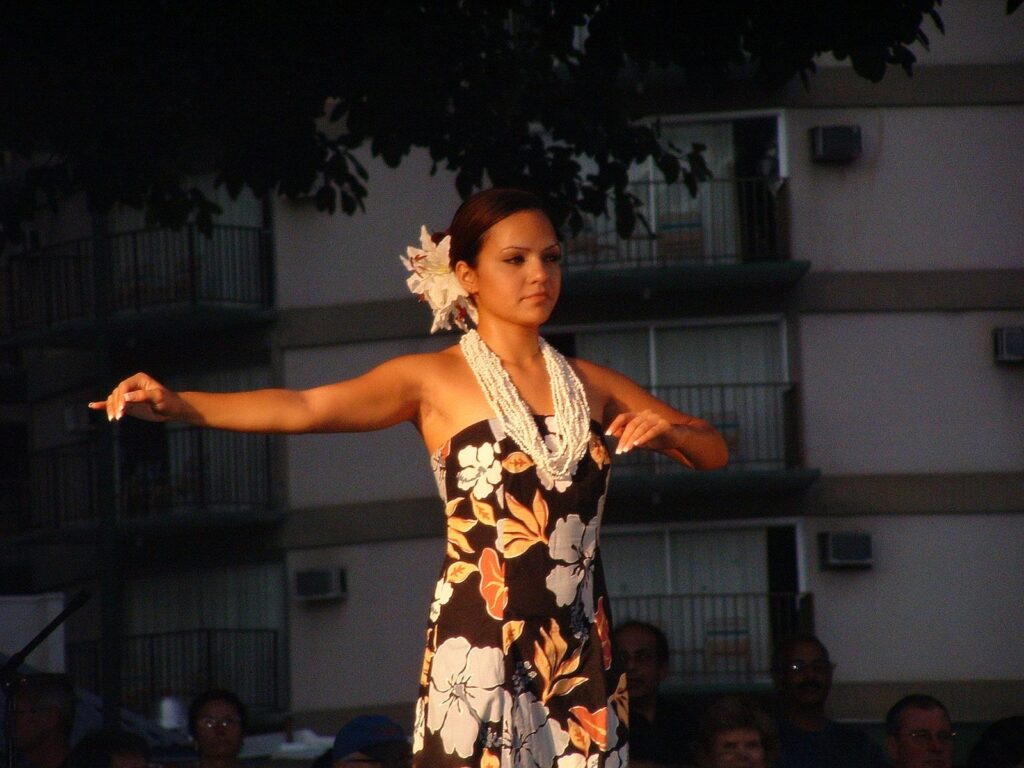
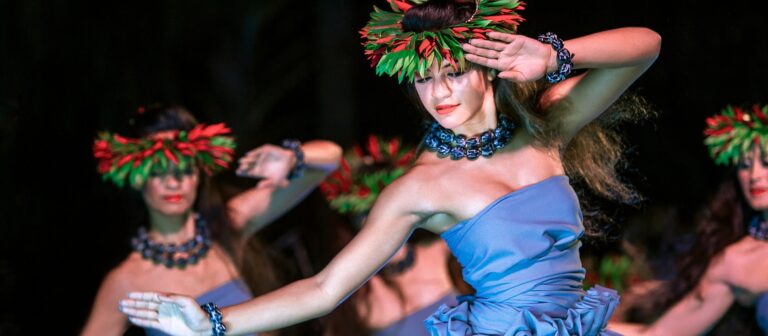
Local hālau hula (hula schools) perform at the Kuhio Beach Hula Mound near the Duke Kahanamoku statue, after a torch lighting. It is free and outdoors on Saturday evenings, 6:30 to 7:30 p.m. (some Saturdays are skipped for parades and other events), so check the current schedule. It is presented by the City and County of Honolulu with the Hawaiʻi Tourism Authority and Waikiki partners.
05 · If a luau is the point
Book a Hawaiian Council Luau
The Hawaiian Council, a Native Hawaiian nonprofit founded in 2001 as the Council for Native Hawaiian Advancement, produces two luaus: Nā Lei Aloha at the Hyatt Regency Waikiki and Kaula at Ko Olina. Our full comparison of Oahu luaus covers both, with prices and what each includes. For what is on the plate, see our guide to traditional Hawaiian food.

Luau Nā Lei Aloha: Boutique Premium Dinner Show in Waikiki
★★★★★ 4.6 · 238 reviews · From $124.61
Check AvailabilityWe may earn a commission if you book through this link, at no extra cost to you.
If You Still Plan to Go
If you book it anyway, plan the drive. Lāʻie is on the far side of the island from Waikiki. The center’s own directions say to allow at least 60 to 75 minutes of driving each way, and warn that commuter traffic from Honolulu to the North Shore is heavy from 3:30 to 6:30 p.m. on weekdays, which is exactly when evening-show guests are heading up. An evening there also means the long drive back after dark.
If it is the North Shore itself that draws you, you can have that day without the center. Our guide to the North Shore covers the beaches, food trucks and Haleʻiwa town, and our circle island tour comparison lays out the drive around the island, with or without a guide. For the rest of the island, start with our things to do in Oahu guide.
Polynesian Cultural Center Questions
Who owns the Polynesian Cultural Center?
The Church of Jesus Christ of Latter-day Saints, through its Corporation of the President. The center describes itself as affiliated with the Church and as a sister entity to Brigham Young University–Hawaiʻi, next door in Lāʻie.
Is the Polynesian Cultural Center Hawaiian?
It presents six Polynesian cultures, by its own description: Hawaiʻi, Samoa, Aotearoa (New Zealand), Fiji, Tahiti and Tonga. Hawaiʻi is one of the six. The center is owned by the Church of Jesus Christ of Latter-day Saints, not by a Hawaiian organization.
Who works at the Polynesian Cultural Center?
Most of its workforce are BYU–Hawaiʻi students, according to the center. They work through the university’s work-study program for wages, scholarship support and professional experience.
How far is the Polynesian Cultural Center from Waikiki?
The center is in Lāʻie, on the North Shore. Its own directions say to allow at least 60 to 75 minutes of driving from Waikiki, and warn that weekday traffic from Honolulu to the North Shore is heavy from 3:30 to 6:30 p.m.
Where can I see Hawaiian culture on Oahu instead?
Bishop Museum’s Hawaiian Hall and ʻIolani Palace in Honolulu, Waimea Valley on the North Shore (owned and managed by a Native Hawaiian nonprofit), the free Kuhio Beach hula show in Waikiki on Saturday evenings, and the Hawaiian Council’s luaus, Nā Lei Aloha in Waikiki and Kaula at Ko Olina.
Sources
- Polynesian Cultural Center, About Us, History, and Directions and Parking FAQ pages (polynesia.com), read September 2026.
- Candid (GuideStar) profile, Polynesian Cultural Center, EIN 99-0109908, read September 2026.
- Wikipedia, “Polynesian Cultural Center”, including its citation of the New York Times, read September 2026.
- Chad Blair, “Hawaii’s Mormons: ‘Chosen People, Promised Land’”, Honolulu Civil Beat, August 31, 2012, reviewing Hokulani K. Aikau, A Chosen People, a Promised Land: Mormonism and Race in Hawaiʻi (University of Minnesota Press, 2012).
- Bishop Museum, ʻIolani Palace, Waimea Valley, the Office of Hawaiian Affairs and the Waikiki Improvement Association, for each alternative’s hours, prices and ownership, read September 2026.
Leave a Reply