
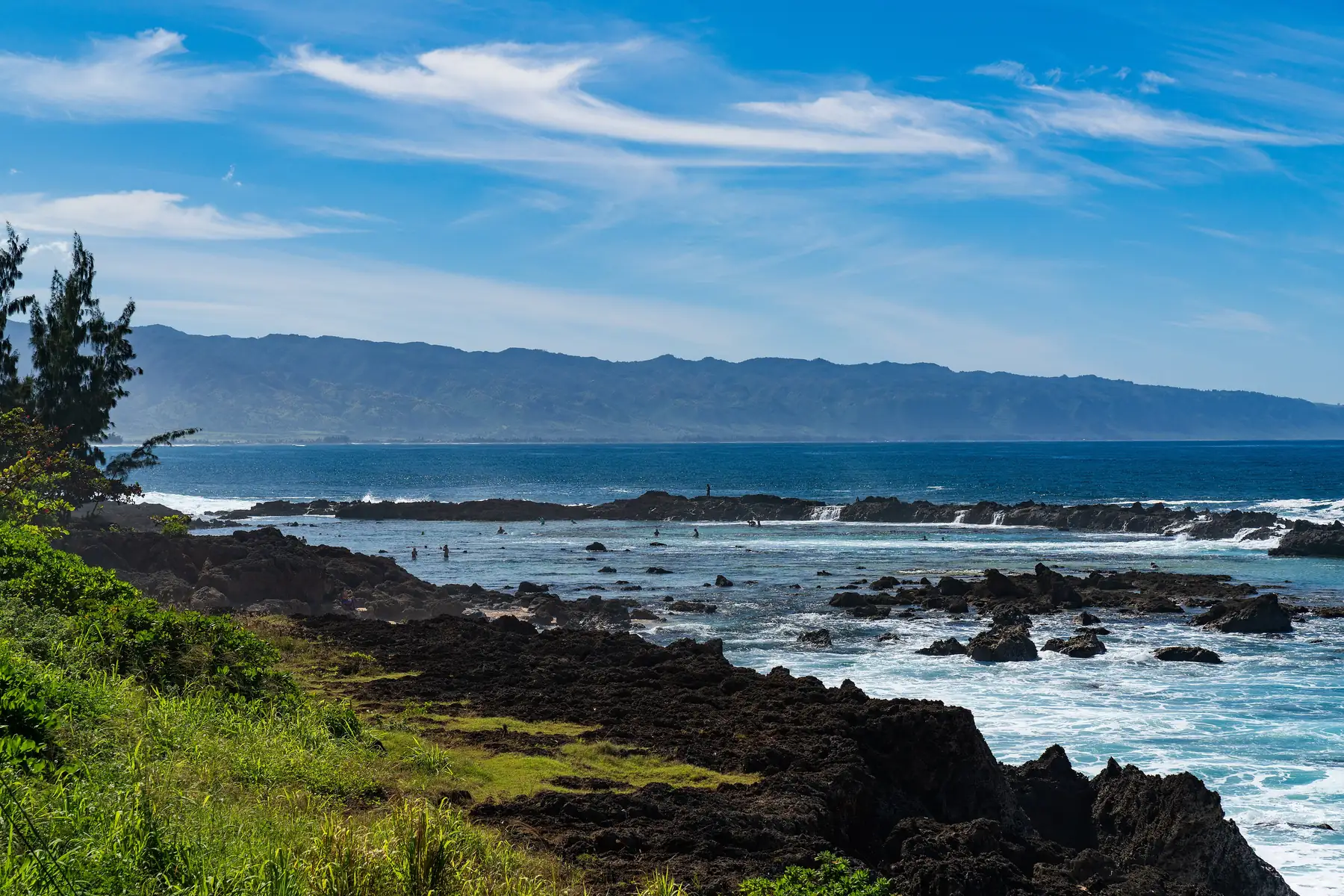
Snorkeling · North Shore
Shark’s Cove
Shark’s Cove is a lava-rock cove on Oahu’s North Shore, and on a calm summer day it is some of the best snorkeling on the island. In winter, the same water is dangerous. Here is when to go, when to stay out, the rules inside its marine conservation district, and how to get there with or without a car.
Some links on this page are affiliate links. If you book or buy through them, we may earn a commission at no extra cost to you.
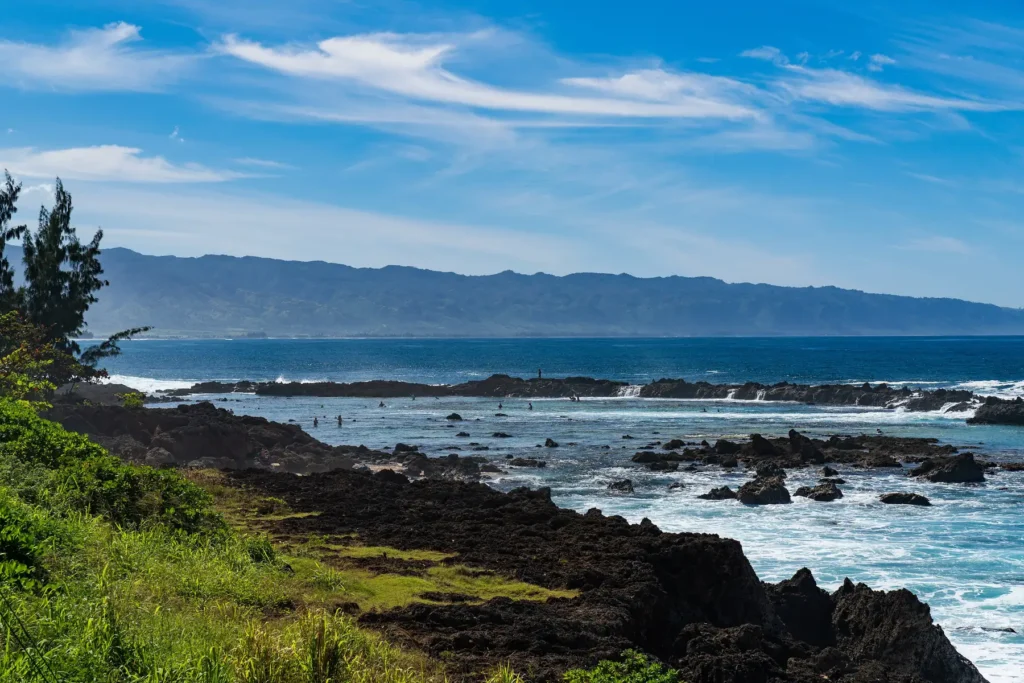
Shark’s Cove at Pupukea Beach Park. Photo: Tony Webster, CC BY 2.0, via Wikimedia Commons.
Shark’s Cove sits at the north end of Pupukea Beach Park, and its Hawaiian name is Kapoʻo. It is part of the Pupukea Marine Life Conservation District, which is why the fish are thick and unafraid. Three Tables, the other famous snorkel spot in the park, is a short walk south.
Shark’s Cove in One Pass
Shark’s Cove Quick Facts
| Where | Pupukea Beach Park, 59-727 Kamehameha Hwy, North Shore |
| Snorkel season | Roughly May through September, calm days only |
| Winter | November through April: dangerous surf, stay out |
| Lifeguard | Tower 28, since March 2026, 8 a.m. to 6:30 p.m. |
| Depth | Shallow near shore, about 20 ft at the mouth, 45 ft outside |
| Entry | Over lava rock; wear water shoes |
| Parking | Free city lot across from Foodland Pupukea; fills early |
| Bus | Route 60 stops at the park |
| Rules | Marine conservation district: no touching, taking or feeding |
Summer vs Winter: When Shark’s Cove Is Safe
This is the one thing to get right. The state’s ocean safety office calls May through October the calm season on the North Shore, and November through April the season of “consistent huge and dangerous swells.” The state’s aquatic resources division is blunter about the cove itself: calm from about May through October, “but surges are possible,” and in winter “current and wave conditions become extremely dangerous.”
Plan your Shark’s Cove day for May through September. October is often calm, but early winter swells can arrive. From November on, treat it as a place to look at, not swim, and snorkel on the south shore instead: our Hanauma Bay guide covers the calmest option. Big swells can show up outside the usual months too, so check conditions the morning you go and ask the lifeguard.
Winter Warning
Calm From the Parking Lot Is Not Calm
Winter waves can wash over the tide pool wall and pull people into the cove. If surf is breaking at the mouth, or the lifeguard says no, stay out of the water and off the outer rocks. Our guide to whether it is safe to swim on Oahu today explains the warning signs and surf alerts.
What’s in the Water
The cove is shallow near shore and drops to about 20 feet at its mouth, sloping to about 45 feet outside. Visibility inside the cove is often poor and clears quickly once you swim out past the mouth, where the fish are. State surveys have recorded more than 80 fish species here, along with green sea turtles, Hawaiian monk seals, eagle rays and whitetip reef sharks. The caves along the edges are deeper dive features, not snorkel swim-throughs.
The Kapoʻo tide pools on the ocean side are protected too: a 2021 rule change added them to the conservation district. They are safest at low tide on a calm summer day. Rock-boring sea urchins make up about 95 percent of the animals in the pools, per the state’s 2025 survey, so wear water shoes and watch where you step. They also get crowded: surveyors counted 158 people in the pools at once one November afternoon.
Three Tables, a short walk south in the same park, is named for the flat reef sections that show at low tide. It has a sandy entry and good snorkeling around and just outside the tables, in about 15 feet of water. The same lifeguard tower covers it.
The Rules Inside the Conservation District
- Take nothing. No shells, sand, coral or rocks, and no taking or injuring marine life. The Pupukea rules (HAR 13-34) cover the cove, the tide pools and Three Tables.
- Don’t feed the fish. Putting food in the water to attract marine life is against the rules here.
- Give wildlife space. Stay at least 10 feet from sea turtles, in the water and on land, and 50 feet from monk seals, 150 feet from a mother with a pup.
- Sunscreen. Hawaiʻi bans the sale of sunscreen with oxybenzone or octinoxate. Bring a mineral one and a rash guard.
- Book permitted tours only. In February 2026 the state fined an operator $10,000 for running unpermitted snorkel tours here.
The state has also proposed reservations, visitor caps and a winter closure of the cove and tide pools. None of that is in effect as of September 2026.
Getting to Shark’s Cove
By car. Plan on about an hour from Waikiki, longer in traffic. Park in the free city lot across Kamehameha Highway from Foodland Pupukea; it is small and fills early, so arrive in the morning. Shark’s Cove fits a North Shore day on the Oahu Drive Map, and our guide to what to do on the North Shore covers the rest of the coast.
By bus. TheBus Route 60 stops at Kamehameha Highway and Pupukea Beach Park, right at the cove. It doesn’t run from Waikiki: take a bus to Ala Moana Center first, then allow about 2 to 2.5 hours on Route 60, which runs the long way around through Kāneʻohe. That is a full day each way, so most visitors rent a car; our rental car guide covers where to pick one up.
Rental Car
Compare Oahu Rental Rates
DiscoverCars searches the island’s rental agencies in one go. Compare Oahu rental cars on DiscoverCars.
We may earn a commission if you book through this link, at no extra cost to you.
Gear, Food and the Lot Across the Street
You can rent a mask and fins at North Shore Surf Shop, across the highway from the cove, or at Surf N Sea in Haleʻiwa; bring your own if you have them. Water shoes matter more than fins here.
The food trucks across from the cove are a North Shore lunch stop. The city is in the process of buying that lot for an Ocean Safety and EMS base, so the trucks will eventually move; as of September 2026 the sale had not closed.

North Shore Day: Waimea Waterfall and Turtle Snorkeling
★★★★★ 4.9 · 2,050 reviews · From $168
Check AvailabilityWe may earn a commission if you book through this link, at no extra cost to you.
The tour above covers the North Shore in a day from Waikiki, with a waterfall and a turtle snorkel stop. Its listing doesn’t name the snorkel beach, so if Shark’s Cove is the point of your trip, drive yourself. Our full guide to snorkeling on Oahu has the island’s other spots by season.
Shark’s Cove Questions
Is Shark’s Cove safe to snorkel?
In summer, on a calm day, yes: roughly May through September. From about November through April, North Shore swells make it dangerous, even when it looks calm from the parking lot. A lifeguard tower has watched the cove since March 2026, so check conditions with them first.
Are there sharks at Shark’s Cove?
Whitetip reef sharks are among the marine life recorded here, along with turtles, eagle rays and more than 80 kinds of fish. The name doesn’t mean it is more dangerous than other reefs; the surf is the bigger hazard.
Does Shark’s Cove have a lifeguard?
Yes. Honolulu Ocean Safety installed Tower 28, named Kapoʻo (Shark’s Cove), in March 2026. It covers the cove, Three Tables and Keʻiki Beach, 8 a.m. to 6:30 p.m. daily.
Is parking free at Shark’s Cove?
Yes. There is a free city lot across Kamehameha Highway from Foodland Pupukea. It is small and fills early, so arrive in the morning.
Can you take the bus to Shark’s Cove?
Yes. TheBus Route 60 stops at Pupukea Beach Park, right at the cove. It doesn’t start in Waikiki: ride to Ala Moana first, then allow about 2 to 2.5 hours on Route 60 each way.
Can you touch or feed the fish?
No. Shark’s Cove is inside the Pupukea Marine Life Conservation District, where taking or touching marine life, moving rocks or coral, and feeding fish are all against state rules.

Leave a Reply