
Manoa · Game Day
Hawaii Football on Oahu: A Visiting Fan’s Guide to the 2026 Season
The Rainbow Warriors play in a 15,000-seat stadium on a university campus two miles from Waikiki. It is the smallest venue in major college football, and that is the reason to go rather than a reason to skip it.
Some links on this page are affiliate links. If you book or buy through them, we may earn a commission at no extra cost to you.
What you are actually walking into
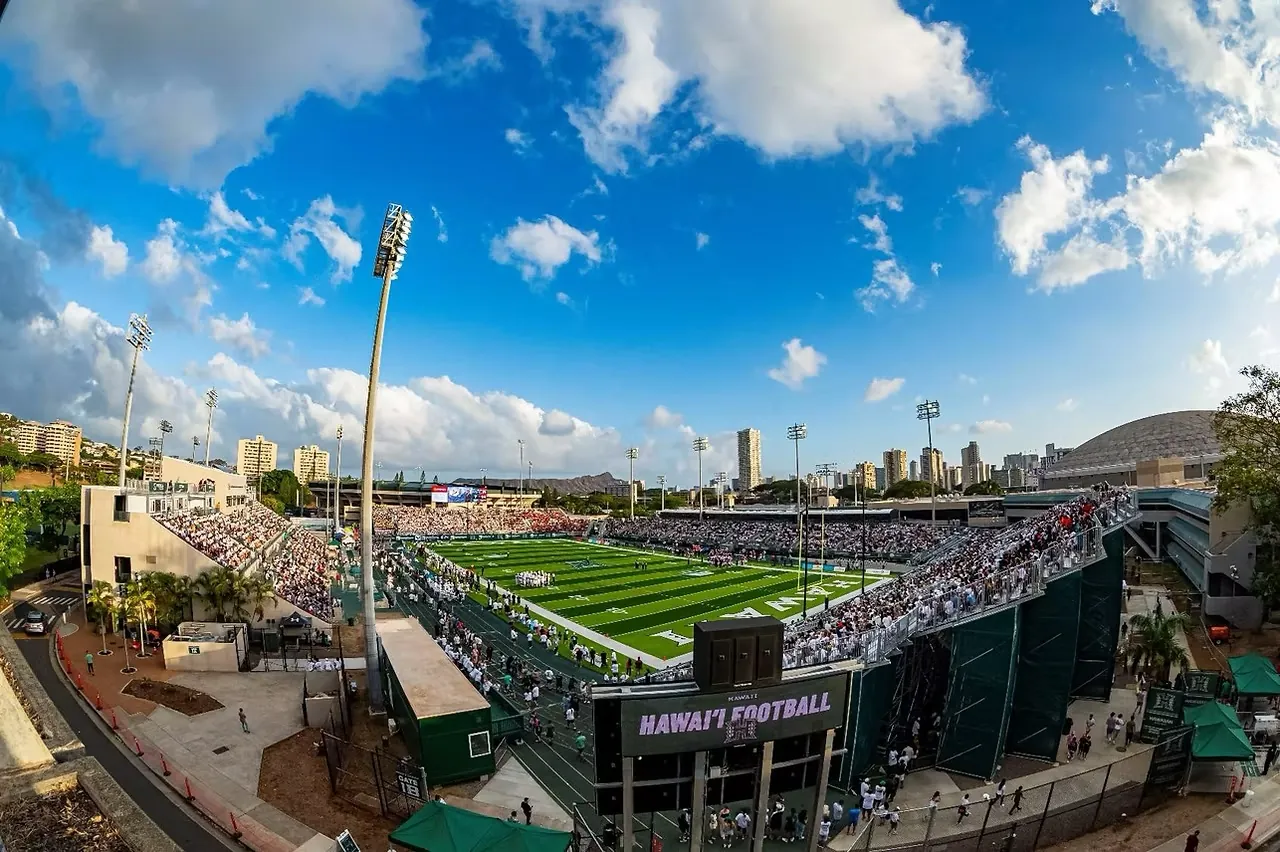
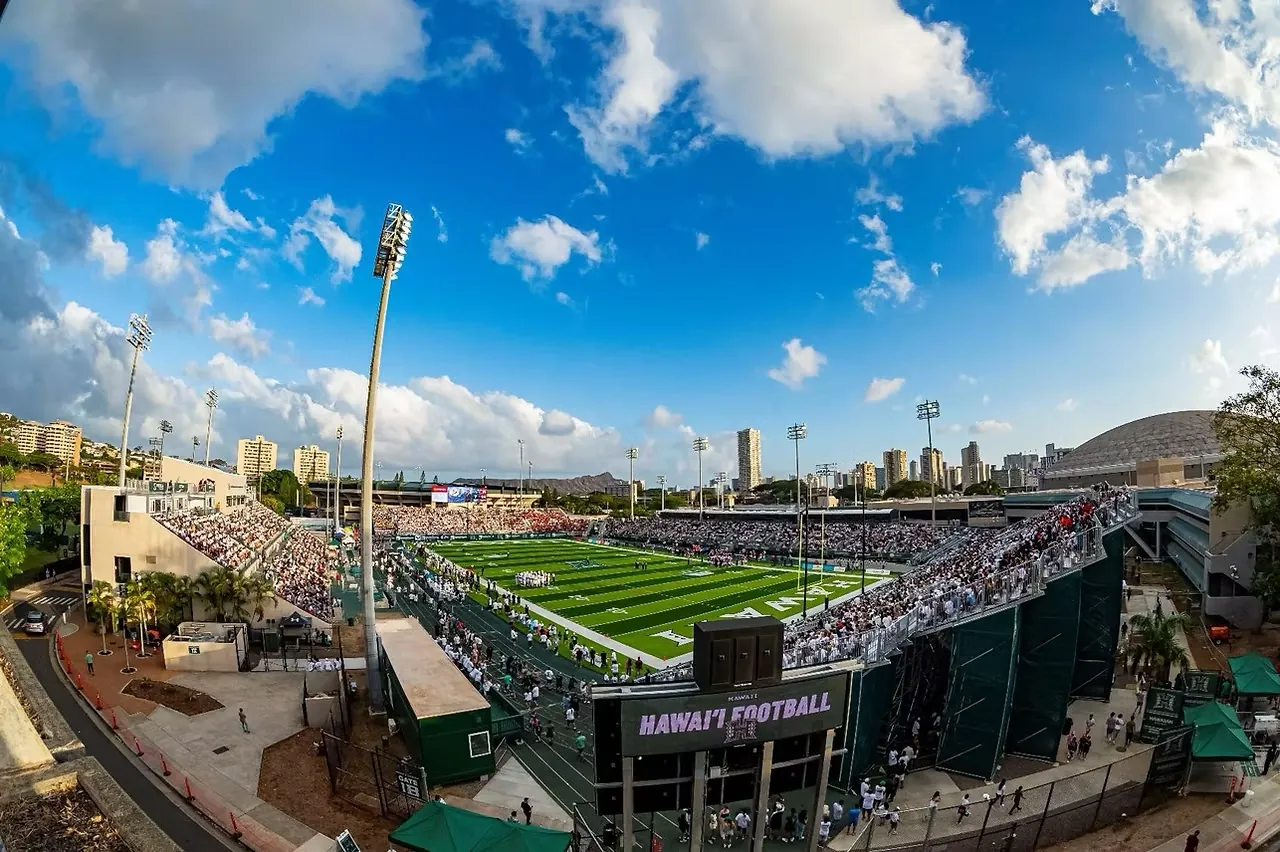
If your only reference for college football is a 90,000-seat bowl in the SEC, the Clarence T.C. Ching Athletics Complex will not look like a stadium at all. Capacity is 15,000. There is a track around part of the field. The press box sits three stories up in a building that also houses the beach volleyball program. The complex opened in 2015 as the university’s all-purpose track, soccer and beach volleyball venue, and football moved in for the 2021 season after the old Aloha Stadium was condemned. The replacement stadium in Halawa is not expected until roughly 2029, so Ching is the venue for this entire season.
What you get in exchange is proximity. The furthest seat at Ching is closer to the field than a good seat at most Power Four schools. Five of the six 2026 home games kick at 6:00 PM, which means you watch football under lights at 80 degrees with trade winds coming down the Manoa valley, and you still have the entire day free beforehand. No other program in the country offers that particular trade.
Timmy Chang enters his fifth season as head coach, and Hawaii plays in the Mountain West. The 2026 home slate mixes conference opponents with three non-conference games, and every single home date falls on a Saturday, which makes trip planning unusually simple.
The 2026 home schedule
Six home games, all at the Ching Complex, all Saturdays. Times are Hawaii Standard Time, which does not observe daylight saving. Two kickoffs were still listed as TBA when this was written, so confirm before you book flights.
| Date | Opponent | Kickoff (HT) | Notes |
|---|---|---|---|
| Sat, Sept 5 | UNLV | 4:00 PM | Home openerLabor Day weekend |
| Sat, Sept 12 | New Mexico State | 6:00 PM | Non-conference |
| Sat, Oct 3 | San Jose State | 6:00 PM | Dick Tomey Legacy Game |
| Sat, Oct 17 | New Mexico | TBA | Mountain West |
| Sat, Nov 14 | North Dakota State | 6:00 PM | Non-conference |
| Sat, Nov 28 | Sacramento State | 6:00 PM | Season finaleThanksgiving weekend |
The six away games are at Stanford (Aug 29), Wyoming (Sept 26), Arizona State (Oct 10), Northern Illinois (Oct 24), UTEP (Nov 7) and Nevada (Nov 21). Those road Saturdays matter for planning: if your trip lands on one of them, there is no game to attend, and the sports bars in Waikiki become your stadium.
Which weekend to pick
All six games are the same 15,000 seats. The island around them is not the same in September as it is in late November, and that difference should drive your choice more than the opponent does.
Sept 5 and Sept 12: hottest, flattest, cheapest to fly
Early September is the tail of Hawaii’s hurricane season and the most humid stretch of the year. Highs run in the upper 80s and the ocean is at its warmest. South shore surf is winding down, so Waikiki is calm and good for swimming, and the North Shore is flat enough that its famous breaks look like a lake. Airfare is usually softest right after the summer peak, with the caveat that Sept 5 is Labor Day weekend and prices spike for the holiday itself. The Sept 5 opener also kicks at 4:00 PM rather than 6:00, so you get the only daylight game of the season and a warmer, brighter stadium.
Oct 3 and Oct 17: the sweet spot
October is the best value month on Oahu and the best of these six weekends. Crowds thin out between summer and the holidays, hotel rates drop, humidity eases, and the water is still warm. Trade winds are reliable. The Oct 3 game is the Dick Tomey Legacy Game, honoring the coach who ran Hawaii from 1977 to 1986 and remains the most respected figure in the program’s history, so the crowd carries more weight than a mid-season non-conference date usually would. If you are choosing purely on the quality of the surrounding trip, pick one of these two.
Nov 14 and Nov 28: surf season, higher prices
By mid-November the North Shore has switched on. Winter swells start arriving, Waimea and Pipeline come alive, and the professional surf contest window opens. If watching serious big-wave surfing is part of why you want to come to Oahu, these are your dates, and it is a genuinely different island than the one September visitors see. The costs are real: Nov 28 falls on Thanksgiving Saturday, which is one of the most expensive and crowded weeks of the year for Hawaii travel, and you should book flights and rooms months out. Nov 14 gets you most of the same surf with none of the holiday premium, which makes it the smarter of the two.
Getting to the Ching Complex
The stadium is at 1105 Lower Campus Road on the UH Manoa campus (Google Maps), about two miles inland from Waikiki. Driving takes 10 to 15 minutes without traffic. The complication is not the drive. It is the parking.
Read this before game day
Lower campus parking must be pre-purchased
If you drive onto lower campus on game day without a pass bought in advance, your car gets towed at your expense. This is the single most common mistake visiting fans make, because at most stadiums you can turn up and pay at the gate. You cannot here. Lower campus passes start around $25 and sell through the athletics ticketing site.
Upper campus is the walk-up option at $15, but it is card or mobile wallet only. Do not plan on paying cash anywhere on campus.
Parking gates open four hours before kickoff, so 2:00 PM for a 6:00 PM start. Stadium gates open two hours before. Beyond the two general lots, the athletics department sells reserved options including a Standard Pass, Fast Break, the Green Lot, Level 2, the White Lot and VIP valet, all of which need buying ahead.
Skipping the car entirely
For a single game from Waikiki, not driving is usually the better call. Rideshare drops off at the Center for Disability Studies on lower campus, and drivers exit through the Varsity Gate. Expect surge pricing in the 20 minutes after the final whistle, and expect to walk a few blocks toward University Avenue to get a reasonable fare.
TheBus Route 13 connects Waikiki directly to the UH Manoa campus for a couple of dollars, and Routes 4, 6 and 18 plus the Route A CityExpress also serve the area. The ride from Waikiki takes 25 to 40 minutes depending on traffic. Buses are cash-exact or HOLO card, and service thins out late, so check the last departure if you are relying on it after a 6:00 PM kickoff that ends near 9:30.
The other option is to stay close enough to walk, which is covered below.
Getting around
You will want a car for the rest of the week
A rental is unnecessary for the game itself, and parking a car in Waikiki costs $40 to $60 a night at most hotels. It is close to essential for everything else on this island, from the North Shore to the windward coast. Many visiting fans rent for part of the trip only.
Compare rental cars on Oahu →Game day rules
What catches visitors out
- Clear bag policy. One clear bag per person, maximum 12 by 6 by 12 inches, or a small clutch up to 5.5 by 8.5 inches. Backpacks, camera bags, fanny packs and oversized purses are all refused at the gate.
- No reusable bottles, coolers, umbrellas or strollers. Outside food and drink are also out, as are cameras with lenses over six inches.
- No tobacco, vapes or e-cigarettes anywhere in the complex.
- Box office hours. It opens two hours before kickoff and closes at halftime. Mobile tickets are strongly encouraged, so buy online and load them to your phone before you leave the hotel.
- Alcohol sales stop before the fourth quarter, and in-seat vendors stop after halftime. Beer service is limited to one at a time for wristbanded guests.
- Re-entry is allowed, but only at designated gates.
Where to stay, ranked by distance to the stadium
Almost every visiting fan books Waikiki by default. That works, but it is not the only sensible answer, and the closer options are cheaper and quieter. Here is the honest geography.
Tier 1: walk or a five-minute ride
Moiliili, Kaimuki and Manoa itself sit within a mile or two of campus. There are very few conventional hotels here, so this tier means vacation rentals, condos and small guesthouses. The payoff is real: you walk to the stadium, you skip the parking problem entirely, and you eat where people who live in Honolulu eat rather than where visitors do. The tradeoff is that you are not on the beach, and you will drive or bus to get to one. For a fan whose trip centers on the game, this is the smartest tier and the one nobody books.
Tier 2: Ala Moana, the middle ground
Ala Moana sits between Waikiki and downtown, roughly two and a half miles from campus and a short ride from the stadium. You get full-service hotels, Ala Moana Center for food and shopping, and Ala Moana Beach Park, which is a calmer and more pleasant swimming beach than Waikiki. Rates typically run below equivalent Waikiki properties. If you want a real hotel without the Waikiki markup or the Waikiki crowds, stay here.
Tier 3: Waikiki, the default
Waikiki is two miles from the stadium, which is a 10 to 15 minute drive, a 25 to 40 minute bus ride, or a rideshare that will surge after the game. Everything else about it is easy: hundreds of hotels at every price point, the beach out the front door, and enough restaurants and bars that the four away Saturdays are covered. Most fans should stay here, and the honest reason is convenience for the other six days rather than proximity to the game. Our guide to the best hotels on Oahu breaks the options down by neighborhood and budget, and there is a separate rundown of family-friendly hotels if you are bringing kids.
Before the game
A 6:00 PM kickoff leaves the entire day open, and this is where a Hawaii football trip beats a mainland one. You can be in the water at 8:00 AM, eat lunch somewhere good, and still be in your seat for warmups.
Tailgating
Tailgating returned to campus in 2025 and is confined to the Zone 13 lots on upper campus. You need a tailgate parking pass bought in advance, the lot opens at 2:00 PM, and tailgate activity has to wrap up 30 minutes before kickoff. Tailgating anywhere else on campus, including inside the parking structures, is prohibited, and restrictions apply to cooking equipment and alcohol, so read the current rules on the athletics site before you load a cooler. It is a modest scene by mainland standards, which is the recurring theme of this stadium.
Eating near campus
The blocks around UH Manoa are a student neighborhood, which means cheap and good rather than polished. Two nearby institutions are reliable and open late enough to matter:
- Rainbow Drive-In, 3308 Kanaina Ave in Kapahulu, has been serving plate lunch since 1961. Order the mixed plate or the loco moco. It is about a mile and a half from the stadium and the most efficient pre-game meal on the island.
- Waiola Shave Ice, 2135 Waiola St in Moiliili, is the original location of the shave ice most people on Oahu will argue is the best. Get it with ice cream on the bottom and azuki beans. It is under a mile from campus.
For a fuller list, our roundups of the best burgers on Oahu and Waikiki food trucks cover the options within striking distance, and the best mai tai guide handles the drinking end.
A morning that fits a 6:00 PM kickoff
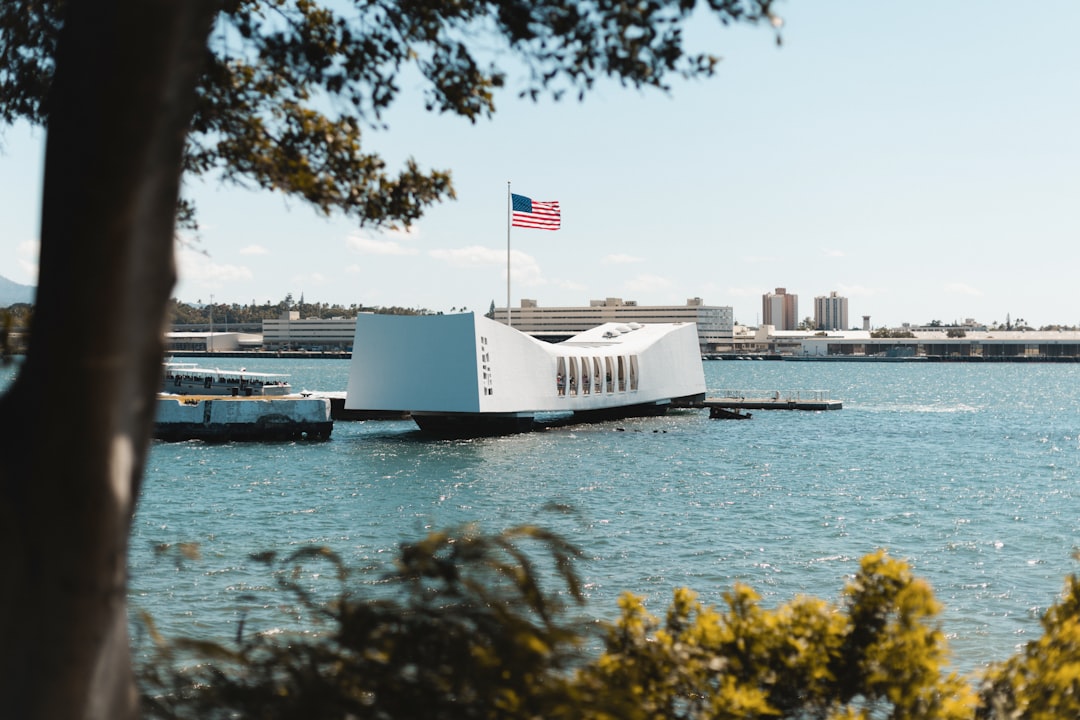
Pearl Harbor is the strongest use of a game-day morning. It is a 30 minute drive west of Waikiki, the USS Arizona Memorial program runs on timed tickets that release in advance, and you are comfortably done by early afternoon. We have a full guide to getting to Pearl Harbor from Waikiki, including the ticket timing that trips people up. Alternatives that fit the same window: Diamond Head before the heat, a morning at one of the island’s better beaches, or one of the short hikes that do not eat your whole day. Skip the North Shore on game day. It is an hour each way and you will feel rushed.
After the game
A 6:00 PM kickoff ends around 9:30. Campus empties fast, and the neighborhood around it is residential and quiet, so most of the post-game options are back toward Waikiki, Kapahulu or Kaimuki. Rainbow Drive-In is open late and sits directly between campus and Waikiki, which makes it the obvious stop. Kaimuki, ten minutes east, has the densest cluster of good restaurants and bars in Honolulu outside of downtown, and it stays open later than the campus area does.
If you want the crowd rather than a quiet meal, Waikiki is where the win or the loss gets processed. This is also the answer on the six away Saturdays, when kickoff is often mid-morning Hawaii time because the game is being played three or five time zones ahead. A 9:00 AM local kickoff for the Wyoming game means watching football over breakfast, which is a genuinely strange and enjoyable way to follow a road team.
Building the rest of the trip around a Saturday game
One game anchors a week. The practical shape looks like this:
- Arrive Thursday or Friday. You lose most of the arrival day to the flight and the time change, and West Coast flights land in the afternoon.
- Saturday is game day. Morning activity close to town, early dinner, stadium by 5:00 PM.
- Sunday recovers. Beach, brunch, nothing with a start time.
- Monday through Wednesday go north and east. The North Shore and the windward coast are the reason to come to this island, and they need full days and a car.
Five to seven days is the right length. Our breakdown of how many days to spend on Oahu gets into the tradeoffs, and the itinerary builder will lay out the non-game days around whichever Saturday you pick. If you are renting a car for the back half of the week, the circle island road trip is the single best day on this list.
Fits a game-day morning
Pearl Harbor and USS Arizona Memorial Tour from Waikiki
We may earn a commission if you book through this link, at no extra cost to you.