
Gardens · Mānoa Valley
Lyon Arboretum, Mānoa: Hours, Reservations and the Trail to ʻAihualama Falls
Lyon Arboretum is a University of Hawaiʻi rainforest garden at the back of Mānoa Valley, about 5 miles from Waikīkī. It is free, with a $10 suggested donation, open weekdays from 9 a.m. to 3 p.m., and needs no reservation. It also closes on short notice and has a modest waterfall of its own. Here is how to check before you drive up, where to park, and what the walk to ʻAihualama Falls is like.
Some links on this page are affiliate links. If you book or buy through them, we may earn a commission at no extra cost to you.
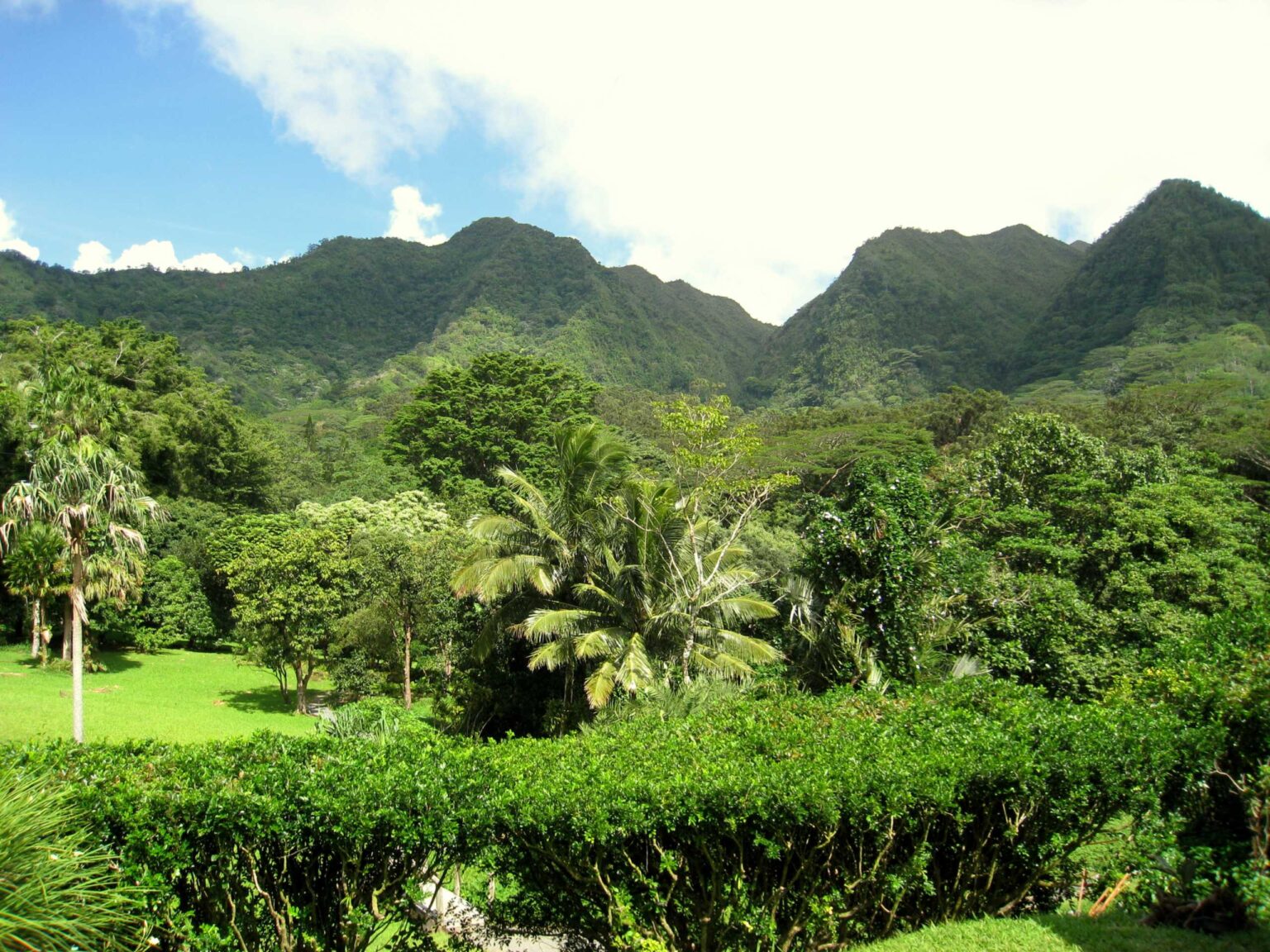
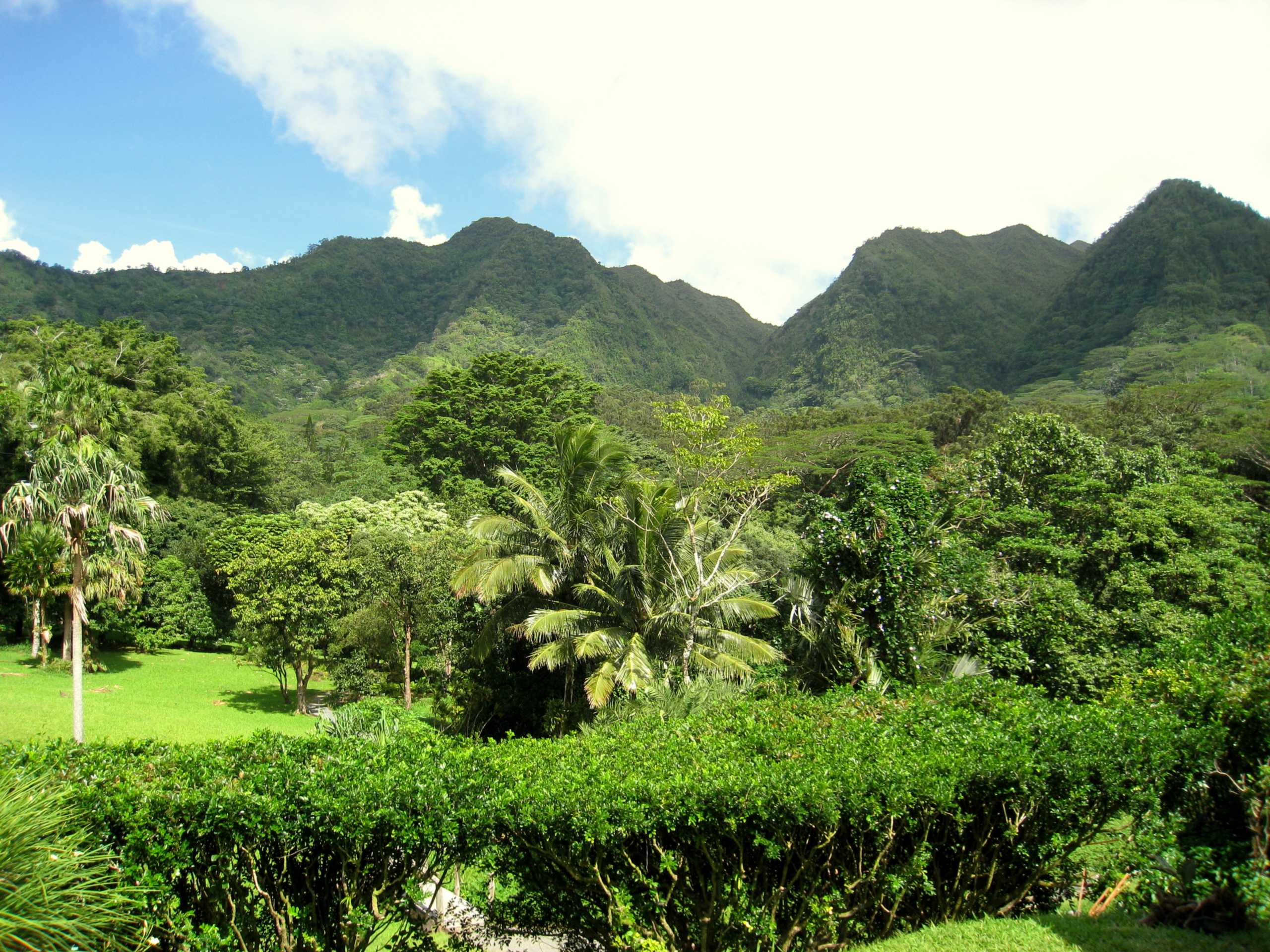
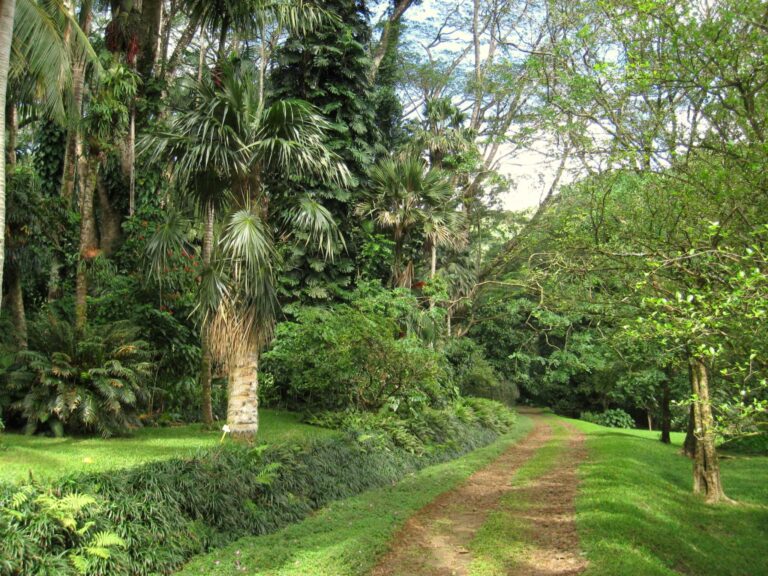
The grounds and the ridge above Lyon Arboretum. Photo: Daderot, Public domain, via Wikimedia Commons.
Quick Answer
Open Monday to Friday, 9 a.m. to 3 p.m., closed weekends and State and federal holidays. Admission is free with a $10 suggested donation, and no reservation is required, but every visitor signs in at the Visitors Center. Closures can be posted a day or two ahead, so check the arboretum’s calendar the morning you go. Parking in the arboretum’s lot is free and limited; the overflow lot below it charges $7 ($5 for kamaʻāina and military).
- Hours
- Monday to Friday, 9 a.m. to 3 p.m.; closed weekends and State and federal holidays
- Admission
- Free; $10 per person suggested donation
- Reservations
- None required at this time; every visitor signs in
- Lifeguards
- None. No swimming: Lyon warns of leptospirosis in its streams and ponds
- Parking
- Free lot, limited stalls; overflow at Paradise Park for $7 ($5 kamaʻāina and military)
- Phone
- (808) 988-0456
- Size
- 194 acres, over 7 miles of trails
Facts from Lyon Arboretum’s own pages and calendar, checked Oct 26, 2026.
Hours, Admission and Reservations
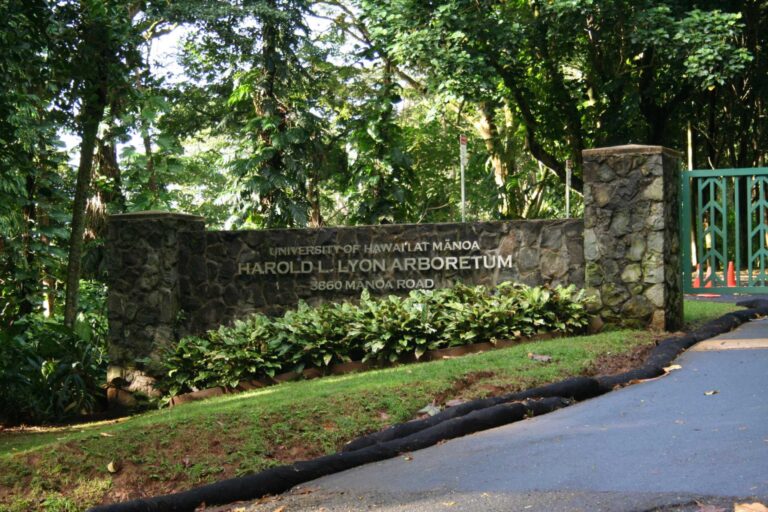
Lyon Arboretum is open Monday through Friday, 9 a.m. to 3 p.m., and closed on weekends and State and federal holidays (Lyon Arboretum). Admission is free, with a suggested donation of $10 per person (Lyon). Every visitor signs in at the Visitors Center.
Do you need a reservation? No. Lyon says no reservations are required at this time, parking included, and tells visitors to watch its homepage for changes. Two exceptions: organized groups of 8 or more must arrange the visit through the Lyon Education Department, and parking for the Fall Plant Sale on December 4 and 5 is reserved by time slot (see the tours section).
Closures are the catch. Lyon says construction has closed the arboretum intermittently, and that its Seed Conservation Lab renovation will bring “frequent closures with short notice” (Lyon). Its public calendar marks 32 of the 213 weekdays from January 1 to October 26, 2026 as closed, by our count of the calendar feed, holidays included (Lyon calendar). Notices often go up a day or two ahead. On October 26 it listed no weekday closure for the rest of 2026, but Thanksgiving (Thursday, November 26) and Christmas (Friday, December 25) are State and federal holidays, so expect the gates shut on both. Check the calendar the morning you go, or call (808) 988-0456.
Lyon says it regularly runs classes or special events on Saturdays, despite the weekend closure (Lyon).
What You Can See
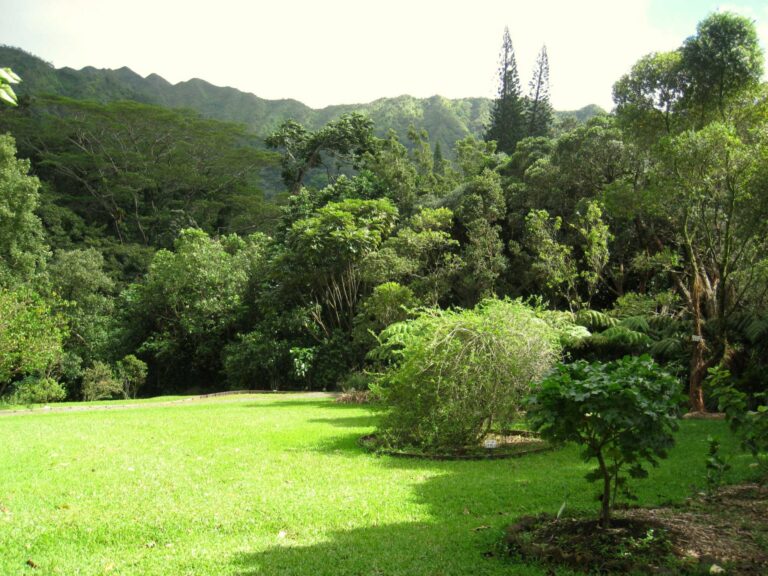
Lyon covers 194 acres from about 450 to 1,850 feet in elevation, with more than 7 miles of trails and more than 6,000 plant taxa (Lyon; fast facts). Its collections are known for heliconias, gingers, aroids and figs, and it keeps one of the world’s largest palm collections (Lyon). At sign-in you can collect trail, bird and garden guides and choose a route (Lyon). The grounds, by area (gardens page; maps page):
- Near the Visitors Center: the Stemmermann and Mapes memorial gardens (Mapes is Japanese-style), the Young Memorial Garden with its gazebo and pond, and the Betty Ho path lined with antique Chinese pots and bromeliads.
- Native Hawaiian Garden: indigenous and endemic plants that grow at about 500 feet, mostly collected from the wild on Oʻahu.
- Beatrice H. Krauss Ethnobotanical Garden: over 60 species, including the 27 canoe plants Polynesian settlers brought to Hawaiʻi.
- Bromeliad Garden and Inspiration Point: uphill from the Rain Shelter near the end of the parking lot. Lyon calls the slope to Inspiration Point more strenuous than its other walks.
- Hawaiian Section: off the Main Trail about midway to ʻAihualama Falls, with a view of upper Mānoa and, on a rainy day, the upper sections of Mānoa Falls.
- Also on the trail guide: a vanilla orchid to find on trees in Vanilla Valley, royal palms designated Exceptional Trees, a cycad forest, ginger collections that bloom from May to September, and a “haunted” seismograph station decommissioned in 1974.
The Trail to ʻAihualama Falls
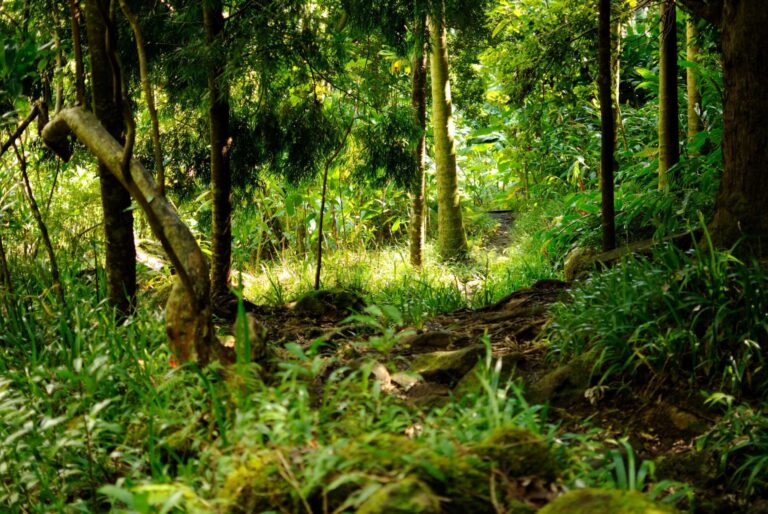
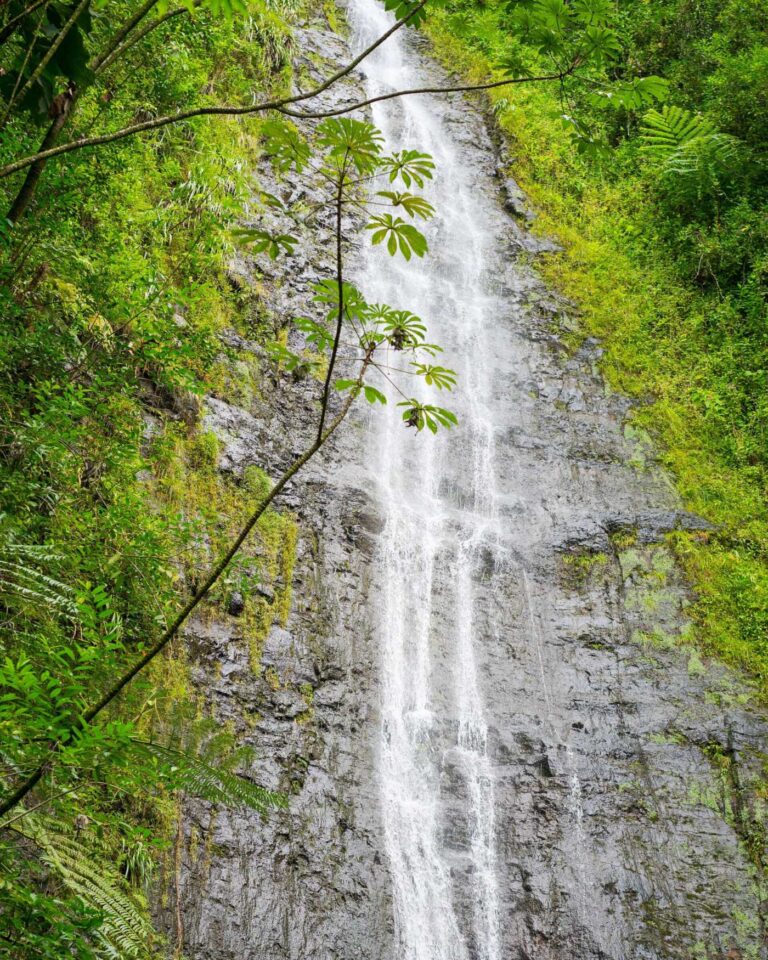
Lyon has a waterfall of its own, ʻAihualama Falls, and says nearby Mānoa Falls is “more famous by far.” To reach it, follow the Main Trail “all the way back into the valley.” The trail “becomes more rugged farther into the forest,” and Lyon asks for sturdy footwear for roots and possible mud (Lyon).
Expect a trickle. Lyon calls the falls “relatively dry” and says that unless it has rained recently, visitors should expect very little flow. Its trail guide says they flow best when it rains (Lyon; Lyon maps). Lyon publishes no distance, time or elevation gain for the walk, so we give none. The trail guide draws the Main Trail as a wide cobblestone, gravel or grass path and the forest trails as narrower and less maintained (trail guide PDF), and the maps page warns that not all trails are well marked or maintained. Lyon says to go onto unmaintained or rigorous trails only if you are an advanced hiker (Lyon). Ask at the Visitors Center about trail closures before you set out.
It is not the State’s ʻAihualama Trail. The State lists a separate ʻAihualama Trail, 1.4 miles one way with 665 feet of climb. It starts at the signed junction on the Mānoa Falls Trail just before the falls viewing platform and climbs fourteen switchbacks toward the Pauoa Flats Trail (Nā Ala Hele). The record lists falling rocks, landslides and sudden drop-offs, and says a pig control hunt with hunting dogs runs there on Wednesdays and Sundays. For the Mānoa Falls Trail itself, see our Mānoa Falls hike guide.
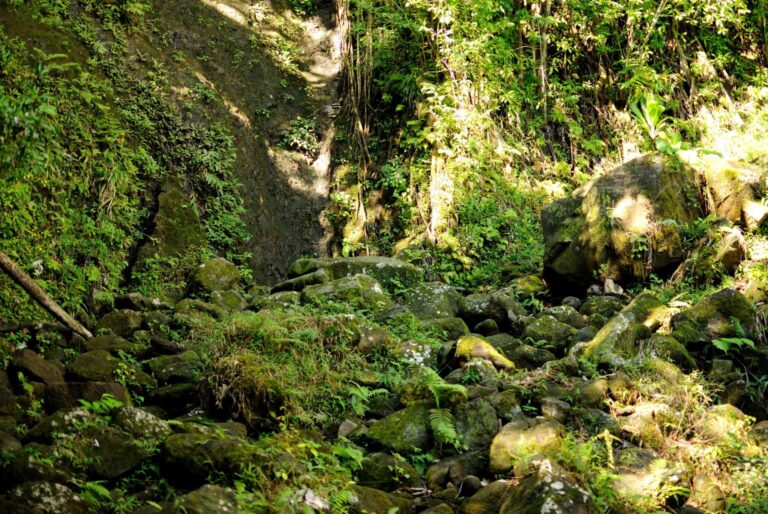
Rain, Mud and Staying Safe
It rains here. Lyon puts its average at 165 inches a year, with a range of 90 to 210, and an average temperature of 78°F (Lyon fast facts). NOAA’s 1991 to 2020 normals for the arboretum’s own gauge are lower: 151 inches a year over 210 days with measurable rain, against 21 inches and 36 days in Waikīkī (NOAA NCEI). October averages 12.9 inches over 18.6 rain days. For dry options on a wet day, see our rainy day guide.
Lyon asks for closed-toe shoes with good traction, a hat, sunscreen, a rain poncho or jacket, a water bottle and insect repellent. It warns that trails may be narrow, slippery and uneven, and that branches fall in wind (Lyon).
No swimming, and no drinking from the stream. Lyon tells visitors to avoid entering streams or ponds, especially with open cuts or wounds, because leptospirosis and other harmful bacteria may be in the water or soil. It also says not to drink stream water or eat plants, and lists a bathing suit among the things to leave at home (Lyon; gardens page). There are no lifeguards.
Facilities and Accessibility
The Visitors Center has restrooms, maps and a small gift shop that sells bottled water. Two public water fountains stand near the main trailhead and near the entrance to the main greenhouse (Lyon; safety page). Lyon’s packing list includes snacks and a camera. The shop sells a $7 Exploration Kit for kids and a $5 Garden Guide for adults (Lyon shop).
Most trails are not wheelchair-accessible. The Betty Ho, Stemmermann, Young Memorial and Mapes gardens can be seen from the paved sidewalks around the Visitors Center, and the Visitors Center and gift shop have wheelchair-accessible entrances. There are two accessible parking stalls at the Visitors Center lot, and a placard is required (Lyon accessibility).
Getting There and Where to Park
By car: the entrance is at the end of Mānoa Road, just beyond Paradise Park. Lyon says it is just five miles from Waikīkī (Lyon); our routing from central Waikīkī measures 5.3 miles and about 18 minutes without traffic (OSRM). From King Street, turn left on Punahou Street, take the left fork onto Mānoa Road and stay on it (Lyon directions).
Parking: free for arboretum visitors, with limited stalls that Lyon says “fill up quickly.” Park in marked stalls only, not on the access road. If the lot is full, Lyon points to overflow parking at the Paradise Park lot for $7, or $5 for kamaʻāina and military, or to the Mānoa neighborhood. Either way you walk up the access road, past the Mānoa Falls trailhead and through the gates to the Visitors Center, about 7 to 10 minutes (Lyon directions).
Not a Mānoa Falls lot: the arboretum’s stalls are for arboretum visitors only, and Lyon says everyone else, including those going to the Mānoa Falls trail, will be towed (Lyon). If the falls are your goal, our Mānoa Falls hike guide covers the trailhead and its lot.
By bus: Lyon says to take TheBus Route 5 to the last stop and walk about 0.6 mile up past Paradise Park (Lyon directions). On a weekday, Route 5 runs 19 trips into the valley, from 5:36 a.m. to 9:18 p.m. at the start of the route (TheBus schedule data, through Dec 5). No stop is in Waikīkī, so board at Ala Moana Center. Fares are in our Getting Around Oahu guide.
- Car tip: our guide to renting a car on Oahu covers pickup spots and what to skip at the counter.

Manoa Falls Rainforest Self-Guided Hike
★★★★★ 4.6 · 244 reviews · From $53
Check AvailabilityWe may earn a commission if you book through this link, at no extra cost to you.
Lyon Arboretum or Mānoa Falls?
The two Mānoa Valley choices share one road. Lyon is the weekday garden walk with a modest waterfall of its own; the Mānoa Falls Trail is the State’s 0.8-mile path to the bigger falls, open every day. For a weekend, Foster Botanical Garden is open daily, and Hoʻomaluhia is 400 free acres on the windward side. More trails are on our Oahu hikes hub, and more ideas are in things to do on Oahu.
| Place | Cost | Open | Know before you go |
|---|---|---|---|
| Lyon Arboretum | Free; $10 suggested | Weekdays, 9 to 3 | Closes on short notice; sign in |
| Mānoa Falls Trail | Free to hike; paid parking | Sunrise to sunset | 0.8 mile each way; no swimming |
| Foster Botanical Garden | $5 visitors, $3 residents | Daily, 9 to 4 | Downtown; old trees and orchids |
| Hoʻomaluhia Botanical Garden | Free | 9 to 4, closed Thursdays | 400 acres under the Koʻolau |
Tours, Classes and the Fall Plant Sale
Self-guided is the default: you sign in, collect the trail, bird and garden guides and pick a route (Lyon). Docent tours are walk-up. They cost $15 per person for small groups of up to 7, with children under 12 free, and they run only if a docent is available that day; you sign up at the gift shop when you arrive (Lyon; homepage). Groups of up to 20 book guided tours ahead through the Education Department at (808) 988-0461 or LyonEdu@hawaii.edu.
Classes: community classes are usually on Fridays or Saturdays, with sign-up through Eventbrite from the calendar (Lyon classes).
Fall Plant and Craft Sale, December 4 and 5: 9 a.m. to 3 p.m. both days, around the Visitors Center and greenhouse. Lyon manages attendance with 1-hour reservation slots, each covering one vehicle and its passengers, with booking opening on Eventbrite through its website on November 9 at 10 a.m. Walk-ups are welcome from 10:30 a.m. to 2:30 p.m. each day but must be dropped off at the entrance gate or park in the upper Mānoa neighborhood. Bring your own bag, and Lyon suggests cash (Lyon, Sep 17, 2026). Check the homepage before planning a regular visit for those two days.

Diamond Head and Manoa Falls Hike and Adventure Tour
★★★★★ 4.6 · 18 reviews · From $149
Check AvailabilityWe may earn a commission if you book through this link, at no extra cost to you.
A Watershed Experiment That Became a Garden
Lyon’s history page places the site in the ʻili (land division) of Haukulu and ʻAihualama, with stone platforms, loʻi and Polynesian-introduced plants marking earlier use. By the early 1900s cattle and farming had hurt the forest. The Hawaiian Sugar Planters’ Association, which needed water for cane, hired the plant pathologist Dr. Harold Lyon, who concluded that damaged watersheds could be restored with introduced plants. In 1918 the association agreed to buy 124 acres in upper Mānoa as a test site, and full-scale planting ran from 1920 to about 1945 (Lyon history).
In 1953 the University of Hawaiʻi regents accepted the land for $1, to be kept “as an arboretum and botanical garden only.” Lyon died in 1957, the regents renamed it for him seven days later, and it stayed closed to the public until 1972. In 1956 he had written: “Here then is a golden opportunity to build in upper Mānoa Valley, a vast botanical garden of native and introduced plants and at the same time carry through a project in water conservation that would prove of immense value to Honolulu.” Lyon’s history page prints the line.
Rules to Know
Lyon bans pets (service animals only), drones, smoking and vaping, taking any soil, rocks, water, animals or plants, and large picnics or sports on the lawns. Visitors may be on the grounds only during posted public hours. Amateur photography is welcome; commercial photo and video need approval in advance (Lyon safety and policies).
Lyon Arboretum Questions
What are Lyon Arboretum’s hours?
Monday through Friday, 9 a.m. to 3 p.m. It is closed on weekends, State and federal holidays and on intermittent days posted on its calendar, sometimes a day or two ahead.
Do you need a reservation for Lyon Arboretum?
No. Lyon says no reservations are required at this time, parking included. Groups of 8 or more must arrange visits through its Education Department, and the December 4 and 5 plant sale uses reserved parking slots.
How much does Lyon Arboretum cost?
Admission is free. Lyon suggests a $10 donation per person. A walk-up docent tour is $15 per person, with children under 12 free.
Where do you park at Lyon Arboretum?
In the arboretum’s own free lot, which has limited stalls. When it is full, use the Paradise Park lot ($7, or $5 for kamaʻāina and military, per Lyon) or the Mānoa neighborhood and walk up, about 7 to 10 minutes. Mānoa Falls hikers who use the arboretum stalls are towed.
Does Lyon Arboretum have a waterfall?
Yes, ʻAihualama Falls, reached by the Main Trail back into the valley. Lyon calls it relatively dry and says it flows best after rain.
Can you take the bus to Lyon Arboretum?
Yes. TheBus Route 5 ends on Mānoa Road opposite Kumuone Street, and Lyon puts the walk from there at about 0.6 mile. The route starts at Ala Moana Center; no stop is in Waikīkī.
Is Lyon Arboretum the same as Mānoa Falls?
No. Mānoa Falls is a 0.8-mile State trail whose trailhead sits just below the arboretum’s gates. Lyon is a separate University of Hawaiʻi garden with its own trails and its own waterfall, open weekdays only.
Sources, checked Oct 26, 2026
- Lyon Arboretum home (University of Hawaiʻi)
- Lyon Arboretum: visit, hours and admission
- Lyon Arboretum: directions and parking
- Lyon Arboretum: safety and policies
- Lyon Arboretum: tours
- Lyon Arboretum: accessibility
- Lyon Arboretum: maps and points of interest
- Lyon Arboretum: trail guide (PDF)
- Lyon Arboretum: about our gardens
- Lyon Arboretum: horticulture, grounds and collections
- Lyon Arboretum: about and fast facts
- Lyon Arboretum: history and mission
- Lyon Arboretum: shop
- Lyon Arboretum: calendar of events and closures
- Lyon Arboretum: community classes
- Lyon Arboretum: 2026 Fall Plant Sale (Sep 17, 2026)
- ʻAihualama Trail, trail record 213 (Nā Ala Hele, DLNR)
- TheBus GTFS schedule data (feed Aug 9 to Dec 5, 2026)
- U.S. Climate Normals 1991 to 2020, Lyon Arboretum and Waikīkī gauges (NOAA NCEI)
- Drive distance, our calculation (OSRM, Oct 26, 2026)
Researched from the sources above, checked Oct 26, 2026. We never claim a visit we did not make; first-hand notes are marked as Stew’s. How we research and review.
Leave a Reply