Wildlife · Oahu
Whale Watching On Oahu
Humpback whales winter off Oahu from November through May, and January through March is when you will see the most. You do not need a boat: the free lookouts on the island’s east side face straight into the channel the whales use. Here is when to go, where to stand, and which tour to book if you want to get closer.
Some links on this page are affiliate links. If you book or buy through them, we may earn a commission at no extra cost to you.

North Pacific humpback whales spend the winter in Hawaiian waters to mate and give birth, then swim back to Alaska to feed. Maui gets the attention because the shallow water between Maui, Lānaʻi and Molokaʻi is the main breeding ground. But the whales use the channels around every island, and the Kaiwi Channel between Oahu and Molokaʻi runs right past Oahu’s southeast corner. That is why the best whale watching on Oahu is a ten-minute stretch of Kalanianaʻole Highway, and it costs nothing.
The first whales usually show up in November and the last leave in May. Plan around January through March if the whales are the reason for the trip. Our guide to the best time to visit Oahu covers what else each month brings. Mornings are better than afternoons: the trade winds build through the day and put whitecaps on the water, and a spout is much harder to pick out of a white chop.
Season & Rules
When to Go and How Close You Can Get
Peak: January through March. Good: December and April. Hit or miss: November and May. Off season: June through October.
The 100-yard rule: federal law keeps everyone at least 100 yards from a humpback, by any means: boats, kayaks, paddleboards, swimmers and drones. Aircraft stay 1,000 feet away. It applies all year. From shore there is no limit, which is one more reason the lookouts work.
What you are looking for: the spout first, a burst of mist that hangs over the water for a few seconds. Then watch that spot for a tail, a fin slap or a full breach.
Where to See Whales From Shore
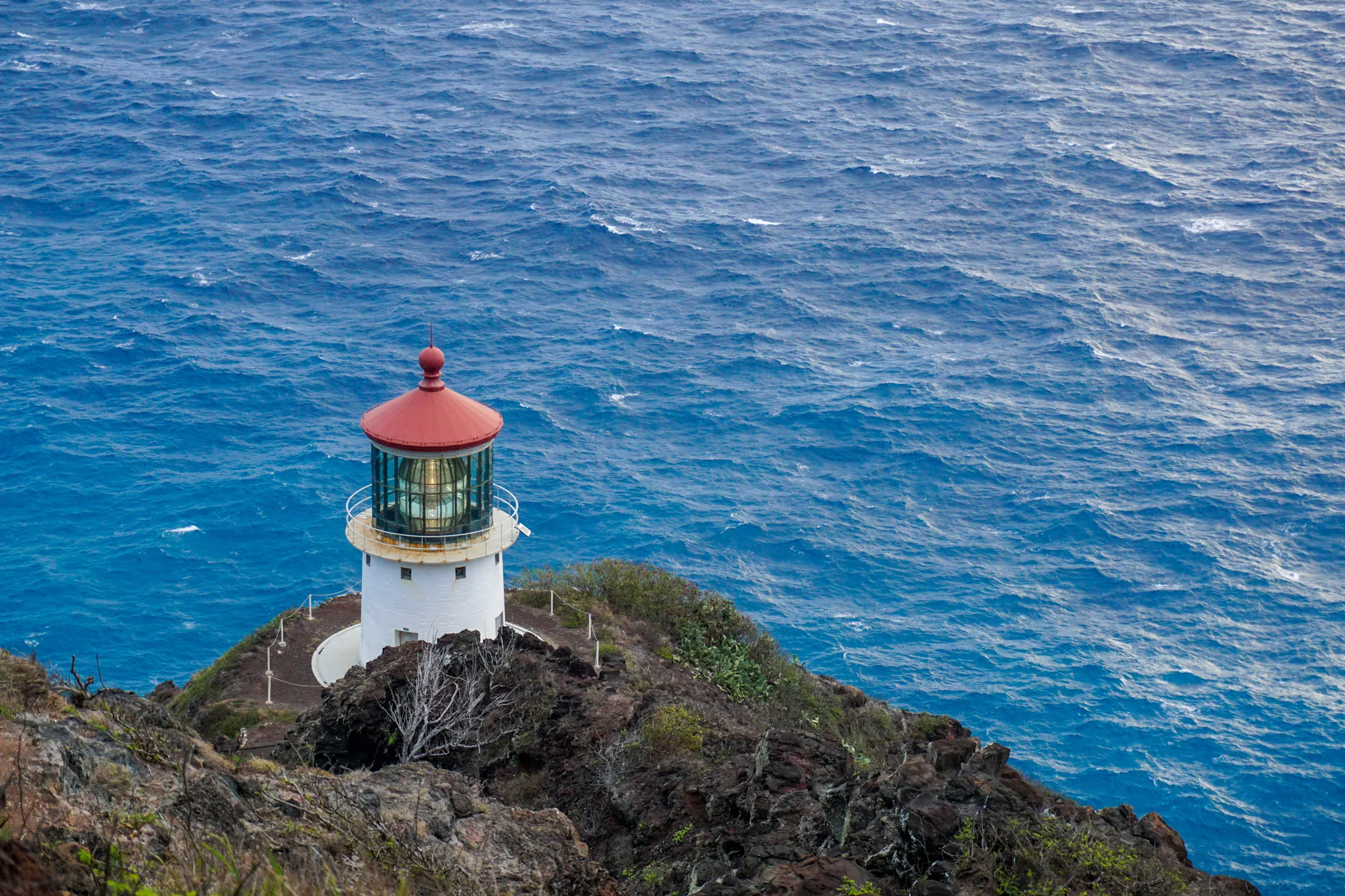
Makapuʻu Lighthouse Trail
The paved trail to the Makapuʻu lookout is the best free whale watching on Oahu. It climbs about 500 feet over a mile to a view straight down the Kaiwi Channel, and State Parks keeps an interpretive sign and a viewing scope along the trail for exactly this. Spouts show to the naked eye. For breaches and tail slaps, bring binoculars. There is no shade on the way up, so go early and plan on 20 to 30 minutes at the top. The trailhead lot on Highway 72 is free.
Lānaʻi Lookout
A roadside pull-off on Kalanianaʻole Highway just past Hanauma Bay, with a low wall and a wide view of open ocean. On a clear day you can pick out Lānaʻi and Molokaʻi on the horizon. It is one of the counting stations for NOAA’s Sanctuary Ocean Count, which tells you something about the sightlines. Park, walk a few steps, and scan. Stay off the lower ledges when the surf is up.
Hālona Blowhole Lookout
The next pull-off east has a paved lookout over the blowhole and the same open water, and it is also on the Ocean Count site list. The lot is bigger than Lānaʻi Lookout’s. Like every lookout lot on this road, leave nothing in the car.
Diamond Head Road Lookouts
The pull-offs on the ocean side of Diamond Head Road, near the Diamond Head lighthouse, are ten minutes from Waikiki and need no reservation (the crater hike does). Whales run closer to the east side, so sightings here are less frequent. It is the spot for an early hour when you do not want to drive to Makapuʻu, and it is another Ocean Count station.
Drive it
The east-side lookouts are one stretch of road
Hanauma Bay, Lānaʻi Lookout, Hālona and Makapuʻu sit within a ten-minute drive of each other, in that order heading east from Waikiki. The Oahu Drive Map lays out that leg with drive times and parking for each stop. Build your route and email it to yourself so the directions are on your phone at the first pull-off. For everything else on the island, see our list of things to do in Oahu.

Waikiki Whale Watch with Guaranteed Sightings
★★★★★ 4.6 · 1,335 reviews · From $53.31
Check AvailabilityWe may earn a commission if you book through this link, at no extra cost to you.
Whale Watching Tours From Oahu
Two-Hour Whale Cruises
Two-hour cruises leave from Ala Wai Harbor at the ʻEwa end of Waikiki and from Kewalo Basin near Ala Moana during whale season, and start around $40 on Viator. It is the no-car option: hotels at the ʻEwa end of Waikiki are a short walk from the Ala Wai docks. Several operators guarantee a sighting. Before you book, read whether the guarantee means a free second trip or a refund. The channel is rougher than it looks from the beach, so take motion-sickness medicine before you board if you need it.
West Side Whale Sails
The leeward coast around Waiʻanae is usually calmer than the south shore, and spinner dolphins live along it all year, so a winter sail out of Waiʻanae Boat Harbor often gets both. Expect about $89 for a two-hour sail and about an hour’s drive from Waikiki. If you are staying at Ko Olina, it is the obvious pick.
Sunset Cruises
On a sunset cruise the whales are a bonus rather than the point, but from January through March a breach at golden hour is common enough to plan around. Most leave from Kewalo Basin and run along the Waikiki shoreline. Sightings are less frequent here than in the Kaiwi Channel. For a mai tai at sunset with a chance of whales, this is the right format.

2-Hour Oahu Whale Watch from Ala Wai Harbor, Waikiki
★★★★★ 4.6 · 2,000+ reviews · From $43
Check AvailabilityWe may earn a commission if you book through this link, at no extra cost to you.
How to See More Whales
- Go early. Calm morning water makes spouts easy to spot. By early afternoon the trade winds usually have the channel in whitecaps.
- Bring binoculars. A spout reads from a mile out with the naked eye. A breach at that distance is a splash unless you have magnification.
- Watch one patch of water. Humpbacks surface several times in a row. After the first spout, keep your eyes on that spot for the next few minutes instead of sweeping the horizon.
- Count with the locals. NOAA’s Sanctuary Ocean Count runs on the last Saturday of January, February and March, from 8 a.m. to noon. The 2027 dates are January 30, February 27 and March 27. Volunteers count from shore sites including Makapuʻu, Lānaʻi Lookout and Hālona, and sign-up is at oceancount.org.
- Pair it with the drive. The east-side lookouts are on the way to Waimānalo and Kailua, so a whale stop fits the first hour of a circle-island drive without changing the plan.
Whale Watching Questions
When is whale watching season on Oahu?
Humpback whales are in Hawaiian waters from about November through May. January through March is the peak, when the most whales are here. December and April are good; November and May are hit or miss.
Can you see whales from shore on Oahu?
Yes. The east side is the place: the Makapuʻu Lighthouse Trail, Lānaʻi Lookout and the Hālona Blowhole lookout all face the Kaiwi Channel, where humpbacks pass all winter. Bring binoculars and go in the morning, before the wind puts whitecaps on the water.
How close can you get to humpback whales in Hawaii?
No closer than 100 yards, by any means: boats, kayaks, paddleboards, swimmers and drones. Aircraft must stay 1,000 feet away. The rule is federal and applies year-round. If a whale surfaces closer than that on its own, stay put and let it move off.
Is whale watching better on Maui than Oahu?
Maui has more whales, because the shallow channel between Maui, Lānaʻi and Molokaʻi is the main breeding ground. You do not need to fly there to see them, though. From January through March, Oahu’s east-side lookouts and a two-hour boat from Waikiki both produce regular sightings.
How much is a whale watching tour on Oahu?
Two-hour cruises from Waikiki start around $40 per person on Viator. The west-side sails out of Waiʻanae run about $89 and pair whales with the spinner dolphins that live on that coast year-round.