
Snorkeling · All Four Shores
Snorkeling on Oahu
The best snorkeling on Oahu depends on the month. North Shore reefs are calm in summer and dangerous in winter, while Hanauma Bay, the Waikiki reef and the Ko Olina lagoons work most of the year. Here are the spots by shore and season, which ones have lifeguards, the rules in the water, and the turtle tour to book.
Some links on this page are affiliate links. If you book or buy through them, we may earn a commission at no extra cost to you.
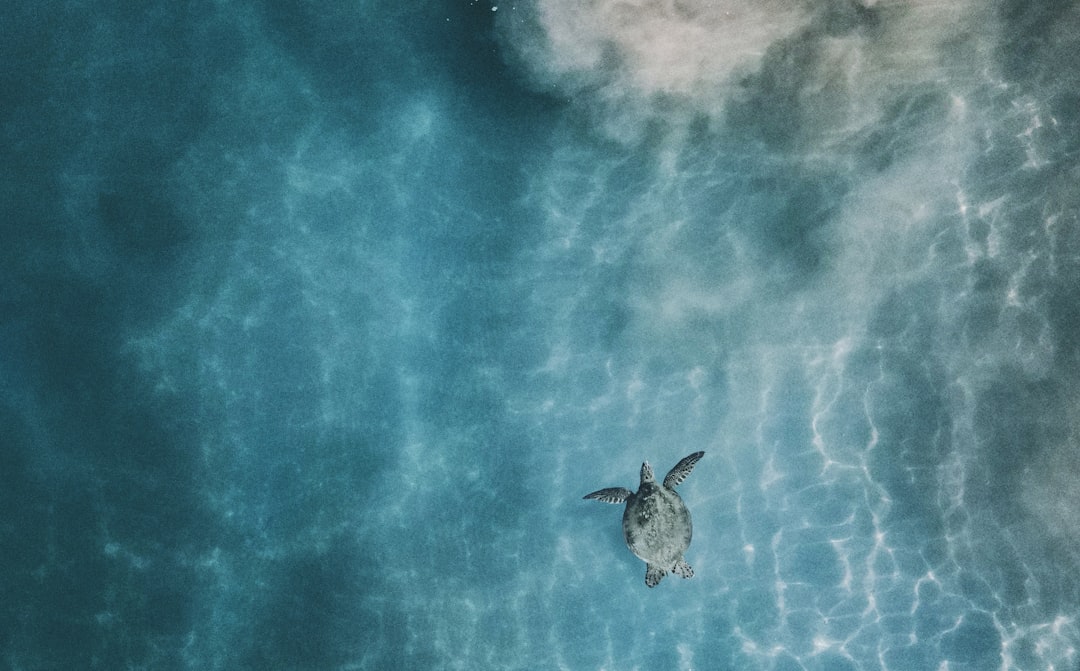
Give every turtle at least 10 feet, in the water and on land.
Oahu’s four coasts take their surf in different seasons. From about November through April, big swells hit the north shores and wrap to the west side; in summer the surf moves south. Hanauma Bay and the Ko Olina lagoons are the most sheltered water on the island.
Pick the shore by the month, then the spot by how well you swim. For sandy swimming beaches rather than reef, see the best beaches on Oahu.
Quick Answer
Best Snorkeling on Oahu by Shore and Season
First snorkel, any month: Hanauma Bay, Wednesday to Sunday, by reservation. Waikiki, no car: the reef off Kapiʻolani Park or Sans Souci, both lifeguarded. Summer: Three Tables and Shark’s Cove on the North Shore. Winter: stay south, or in the Ko Olina lagoons. Turtles: a guided boat to Turtle Canyon. Strong swimmers, flat day: Electric Beach.
Oahu Snorkel Spots at a Glance
| Spot | Shore | Best season | Level | Lifeguard | Entry | Main hazard |
|---|---|---|---|---|---|---|
| Hanauma Bay | Southeast | Year-round, Wed to Sun | Beginner | Yes | Sand beach | Crowds; book ahead |
| Waikiki reef, Kapiʻolani Park | South | Year-round | Beginner | Yes | Sand, then reef | Sharp reef; summer swell |
| Sans Souci / Kaimana | South | Year-round | Beginner | Yes | Sand | Rip currents |
| Three Tables | North | Summer only | Intermediate | Yes | Sand, then reef | Winter surf and current |
| Shark’s Cove | North | Summer only | Intermediate | Yes | Lava rock | Surge, sharp rock |
| Waimea Bay | North | Summer only | Intermediate | Yes | Sand | Shorebreak |
| Kuilima Cove | North | Calm days | Beginner | No | Sand | Currents outside the cove |
| Ko Olina lagoons | West | Year-round | Beginner | No | Sand | No lifeguards |
| Electric Beach (Kahe Point) | West | Calm days only | Advanced | Yes | Shore, then swim out | Strong currents |
| Kailua and Popoia | Windward | Calm-wind days | Intermediate | Beach only | Sand, then paddle | Reef is offshore |
| Lanikai and Nā Mokulua | Windward | Calm-wind days | Intermediate | No | Sand, then paddle | No lifeguard |
| Turtle Canyon | Off Waikiki | Year-round | Beginner | Tour guides | From a boat | Open water |
Lifeguard towers are staffed 8 a.m. to 6:30 p.m. daily, per the city’s tower list. Level is our call from the documented hazards, not an official rating.
Snorkeling Waikiki and the South Shore
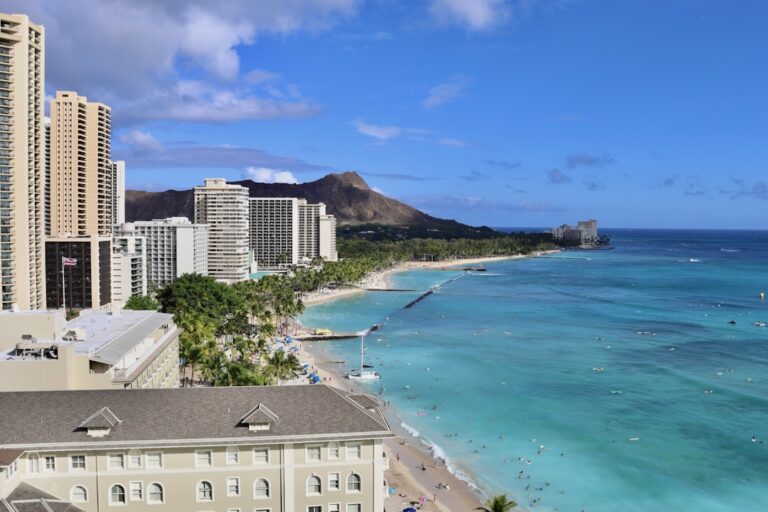
The south shore has the easiest snorkeling on the island: Hanauma Bay on the east end, and two lifeguarded reefs at the Diamond Head end of Waikiki, both on our Waikiki map. Summer south swells, the same ones in our Waikiki surf map, make the outer reef edge dangerous.
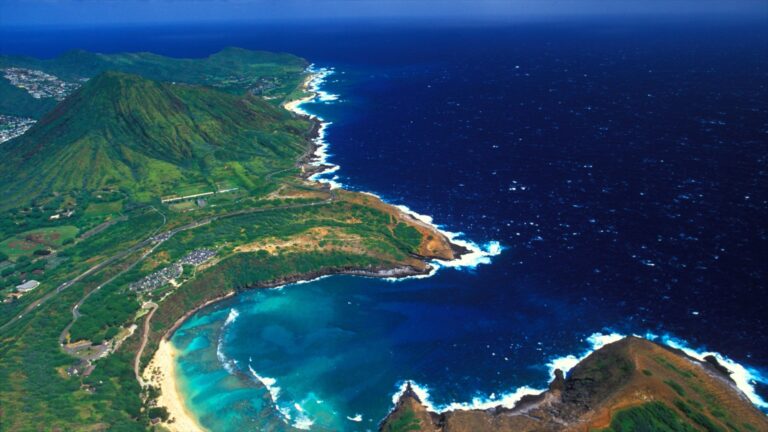
Hanauma Bay
A flooded volcanic crater, protected since 1967. Hawaiʻi Magazine readers named it Oahu’s best snorkeling in 2024, 2025 and 2026. Reservations open 2 days ahead at 7 a.m. Hawaiʻi time and can sell out in five minutes. Entry is $25 for visitors 13 and older. Closed Monday and Tuesday. Our Hanauma Bay reservations guide has the rest.
Waikiki Reef at Kapiʻolani Park
The Waikiki Marine Life Conservation District runs from the Kapahulu groin to the Natatorium. Off the Aquarium seawall, a reef flat under 3 to 4 feet of water runs about 35 yards out to a dredged channel. The fish are in the small caves along the channel, by the Natatorium wall and at the outer edge, 15 to 20 feet down.
Sans Souci at Kaimana Beach
Sans Souci sits just past the Natatorium, outside the conservation district. A wide reef keeps the water near shore shallow, sandy and free of strong currents. Stay inside the reef: the Kapua Channel runs out to the Old Man’s surf break, and rip currents are documented here. A monk seal pup was born on this beach in May 2026; give a mother and pup 150 feet.
North Shore Snorkeling: Summer Only
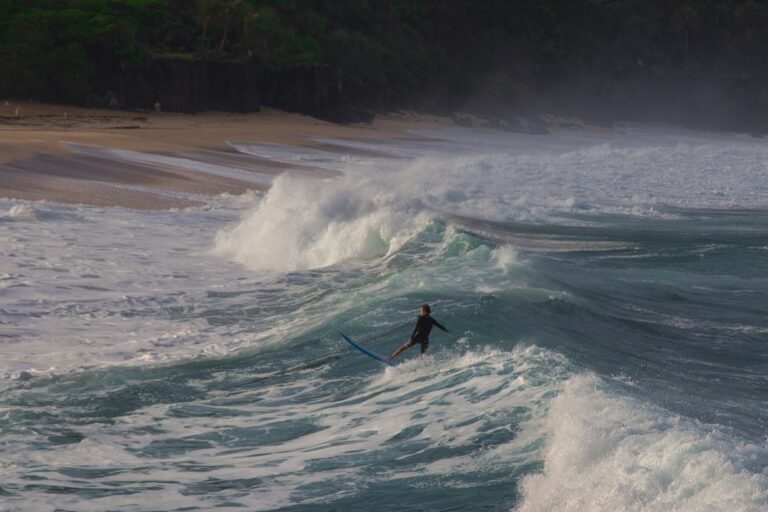
The state’s ocean safety office calls May through October the calm season on the North Shore, and November through April the season of huge, dangerous swells. Snorkel here from about May through September, and check conditions daily. Shark’s Cove, Three Tables and Waimea Bay sit in the Pupukea Marine Life Conservation District, where feeding fish and taking anything are illegal. For the rest of the coast, see what to do on the North Shore.
Three Tables
Named for the three or four flat reef sections that show at low tide, about 15 feet down near the tables. Walk in from sand; DLNR puts the good snorkeling around and just outside the tables. The Shark’s Cove lifeguard tower covers it, and it has its own comfort station.
Shark’s Cove (Kapoʻo)
A lava-rock cove up to 20 feet deep at its mouth, with poor visibility inside that improves quickly outside. You climb in over rock and urchins fill the tidepools, so wear reef shoes; surges happen even in summer. Expect company: on one November day in 2025, the state counted 158 people in the tidepools at once. Tower 28 opened in March 2026, and there are restrooms, showers and a free city lot across from Foodland.
Waimea Bay
Mainly a swimming and surfing beach. The snorkeling is off the rocky point on the right side of the bay, where DLNR notes good coral growth in about 20 feet of water. Summer only; the winter shorebreak is dangerous. Restrooms, showers and a small lot that fills early.
Kuilima Cove
A small, shallow, sandy cove at The Ritz-Carlton Oʻahu, Turtle Bay. There is no county lifeguard, and resort beach attendants are not lifeguards. Stay inside the cove: currents run strong beyond it, and a rip can form in high surf. Resort parking is $48 a day; the small public access lot fills on weekends.
West Side: Ko Olina Lagoons and Electric Beach
North swells wrap to the west side in winter. The leeward coast offers two very different snorkels: calm resort lagoons, and a strong-current reef off a power plant.
Ko Olina Lagoons
Four lagoons, Koholā, Honu, Naiʻa and Ulua, privately owned but open to the public on foot, with public parking in marked areas from sunrise to sunset, first come, first served. Under Ko Olina’s lagoon rules there are no lifeguards, and alcohol, smoking, pets, scuba, drones and non-reef-safe sunscreen are banned. The water is calm and the entry is sand.
Electric Beach (Kahe Point)
The Kahe power plant across the highway still runs, and snorkelers swim out to its outflow, about 50 to 100 yards offshore in 15 to 30 feet of water. In 2022, six snorkelers were swept offshore here and rescued. Go only on a flat day, stay out of the direct outflow and watch for boats.
Windward: Kailua, Lanikai and Nā Mokulua
The windward side faces the trade winds. Pick a calm-wind morning and reach the reef by kayak.
Kailua Beach and Popoia
The bottom off Kailua slopes into deep water without coral heads, so paddle out to Popoia (Flat Island), about a quarter mile off the boat ramp. The beach park has lifeguards, restrooms, showers, a boat ramp and a buoy-marked swim area. The lot fills early on weekends.
Lanikai and Nā Mokulua
Modest coral patches near the rocks, on a reef that runs about half a mile. Lanikai has no public lots, restrooms, showers or lifeguards, and no street parking on Aʻalapapa or Mokulua Drives. Launch from Kailua instead: Kailua Beach Adventures runs a kayak and snorkel trip to the islands, about 5.5 hours, ages 8 and up.
Island Rules
Landing on Nā Mokulua and Popoia
Both are protected seabird sanctuaries. On Nā Mokulua you can land only on Moku Nui’s beach; Moku Iki is off limits. On either, stay below the high-water line, keep out of nesting areas and leave by sunset.
Oahu Snorkel Tours: Turtle Snorkeling off Waikiki
Turtle Canyon is a boat-only site about a mile off Waikiki, where turtles visit a reef cleaning station 15 to 30 feet down.
Our pick is Living Ocean Tours from Kewalo Basin, with the most reviews of the Turtle Canyon trips we checked: guides in the water, flotation, ages 3 and up, basic swimming required, free cancellation up to 24 hours out. For the North Shore without the drive, The Surf Bus runs a North Shore day trip from Waikiki; its Shark’s Cove snorkel happens only if the ocean allows.
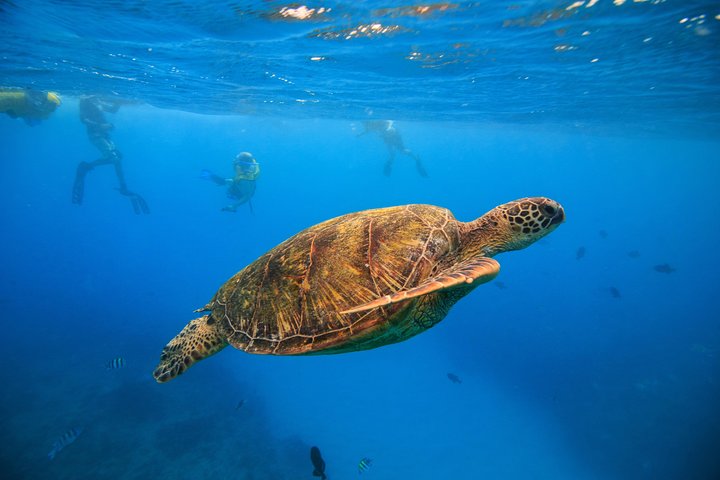
Waikiki Turtle Canyon Guided Snorkel: Turtle Guarantee
★★★★★ 4.8 · 4,895 reviews · From $62.30
Check AvailabilityWe may earn a commission if you book through this link, at no extra cost to you.
Rules in the Water: Turtles, Monk Seals and Coral
Oahu’s three marine life conservation districts, Hanauma Bay, Pupukea and Waikiki, ban taking marine life, shells, coral or rock. NOAA’s viewing guidelines apply everywhere.
- Sea turtles (honu). At least 10 feet, in the water and on land. Never touch, chase or feed them. Green sea turtles are a threatened species, and harassing one can bring fines in the tens of thousands of dollars and jail time.
- Hawaiian monk seals. 50 feet, and 150 feet from a mother with a pup. Knowingly harming one is a state felony with fines up to $50,000.
- Spinner dolphins. Federal law bars swimming with them or approaching within 50 yards, and NOAA recommends 50 yards from every dolphin. This guide lists no swim-with-dolphins tours.
- Fish feeding. Illegal at Hanauma Bay and in the Pupukea district. Don’t do it anywhere.
- Coral. Don’t touch it or stand on it. Keep your fins up over shallow reef.
- Sunscreen. Hawaiʻi bans the sale of sunscreen with oxybenzone or octinoxate, not its use, though the Ko Olina lagoons ban non-reef-safe sunscreen on their beaches. “Reef-safe” is an unregulated label, so bring a mineral sunscreen (zinc oxide or titanium dioxide) and a rash guard.
- Report a problem. NOAA Marine Wildlife Hotline, (888) 256-9840.
Snorkel Safety: Signs, Jellyfish and Currents
More Hawaiʻi visitors drown while snorkeling than during any other ocean activity, according to the state Department of Health.
- Read the signs. Oahu lifeguards post warning signs, not colored flags. Read every one at the entrance, and if a No Swimming sign is up, stay out.
- Never alone. Bring a buddy, and snorkel near a lifeguard tower when you can.
- Go early. Morning water is calmer and clearer, before the trade winds build.
- Box jellyfish. On the south and west shores they often arrive 8 to 10 days after the full moon. Check the Waikiki Aquarium’s box jellyfish calendar and skip those days.
- Rip currents. Don’t fight one. Swim parallel to shore until you are free, then angle back in. If you can’t, float and wave for help.
- Full-face masks. Lab studies show some can let you rebreathe carbon dioxide, and the Department of Health says any link to drownings is still being studied. A traditional mask and snorkel that fit well are the safer bet. Never use an OUSPT-brand mask: in March 2026 the Consumer Product Safety Commission told owners to stop using them.
- Check the day. Our guide to whether it is safe to swim on Oahu today covers the alerts. Our Waikiki water temperature guide has the month-by-month numbers, so you know whether to pack a rash guard.
Getting There, Parking and Gear
You need a car for most of this list. The Oahu Drive Map runs past Hanauma Bay and up to the North Shore, and our guide to renting a car on Oahu covers booking one. Leave nothing in the car at any beach lot. In Waikiki, walk; the Honolulu Zoo lot, entered from Kapahulu Avenue, is $1.50 an hour with a 4-hour limit.
On TheBus, Route 60 runs up the windward side to Pupukea and Waimea; plan on two hours or more from Waikiki. Route 40 passes Kahe Point on Farrington Highway. No bus runs from Waikiki to the Hanauma Bay entrance; the Roberts Hawaiʻi package in our reservations guide is the no-car option.
Snorkel Bob’s has one Oahu store, at 700 Kapahulu Avenue. At Hanauma, Dive Oahu rents a set for $25.
Snorkeling on Oahu Questions
Where is the best snorkeling on Oahu?
Hanauma Bay for most people, Wednesday to Sunday with a reservation. In summer, Three Tables and Shark’s Cove. For turtles, a guided boat to Turtle Canyon off Waikiki.
Can you snorkel on the North Shore in winter?
Rarely. From about November through April, huge swells make Shark’s Cove, Three Tables and Waimea Bay unsafe. Kuilima Cove is the most sheltered, but it has no lifeguard. In winter, snorkel the south or west shore.
Is there good snorkeling in Waikiki?
Yes, within limits. The reef off Kapiʻolani Park and Sans Souci are lifeguarded and walkable, but shallow and often cloudy. For turtles, take a boat to Turtle Canyon.
Where can you snorkel with turtles on Oahu?
On a guided boat trip to Turtle Canyon off Waikiki. Wherever you meet a turtle, stay at least 10 feet away and never touch, chase or feed it.
Which Oahu snorkel spots have lifeguards?
Hanauma Bay, both Waikiki spots, Shark’s Cove, Three Tables, Waimea Bay, Kahe Point and Kailua Beach do. Kuilima Cove, the Ko Olina lagoons and Lanikai do not.
Do I need reef-safe sunscreen in Hawaiʻi?
Hawaiʻi bans the sale of sunscreen with oxybenzone or octinoxate, not its use. On Oahu, only the private Ko Olina lagoons restrict what you wear. Bring a mineral sunscreen and a rash guard.
Leave a Reply