
Oahu · Trip Planning
Hawaii Sunscreen Ban: What It Covers and What to Buy on Oahu
Hawaiʻi law has barred the sale of sunscreen containing oxybenzone or octinoxate, without a prescription, since January 1, 2021. It names two ingredients, it covers sales rather than use, and “reef safe” is not a legal term. This guide gives the statute’s own words, the county rules that stop short of Oʻahu, and a label check built from NOAA, DLNR, the National Park Service and FDA.
Some links on this page are affiliate links. If you book or buy through them, we may earn a commission at no extra cost to you.
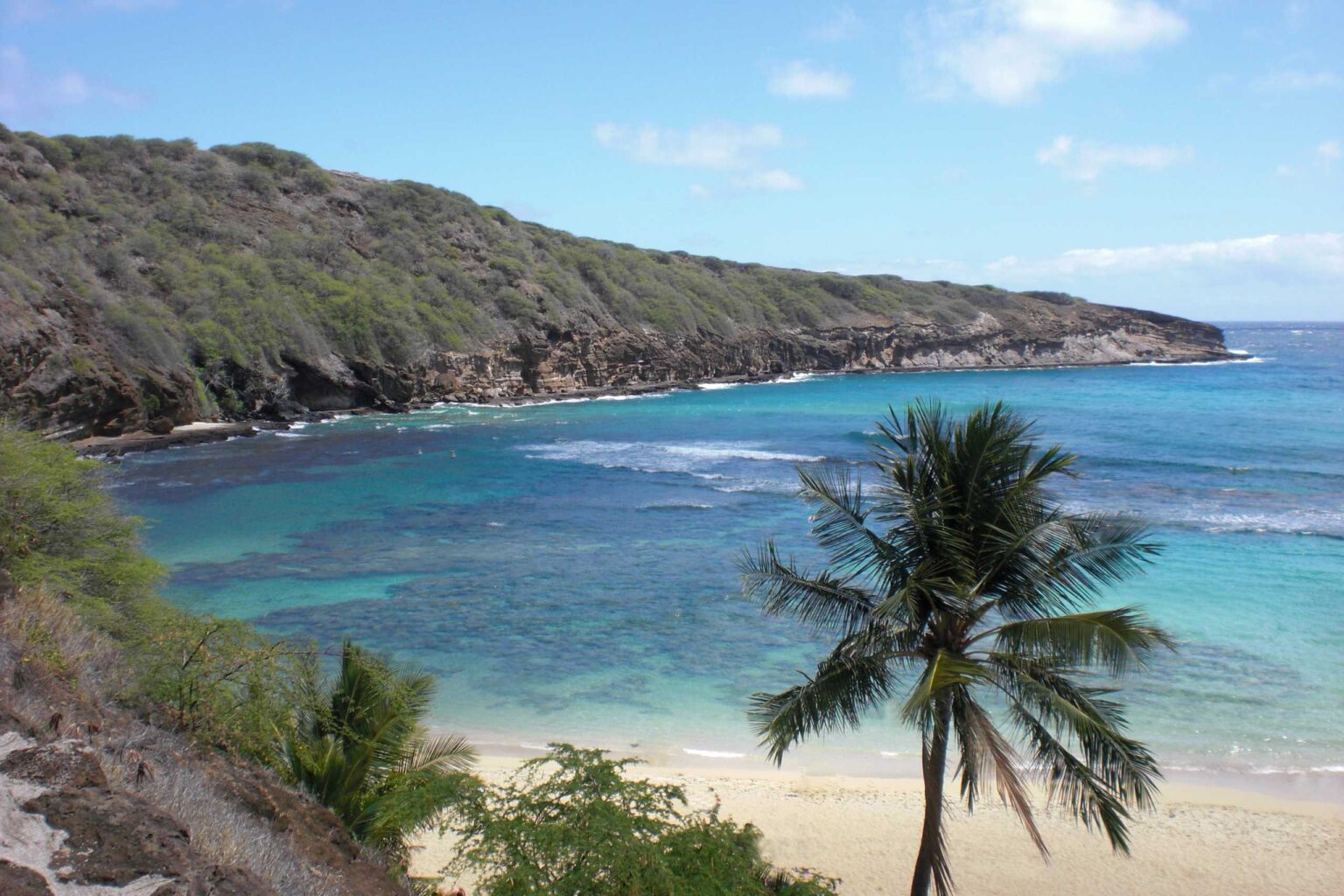
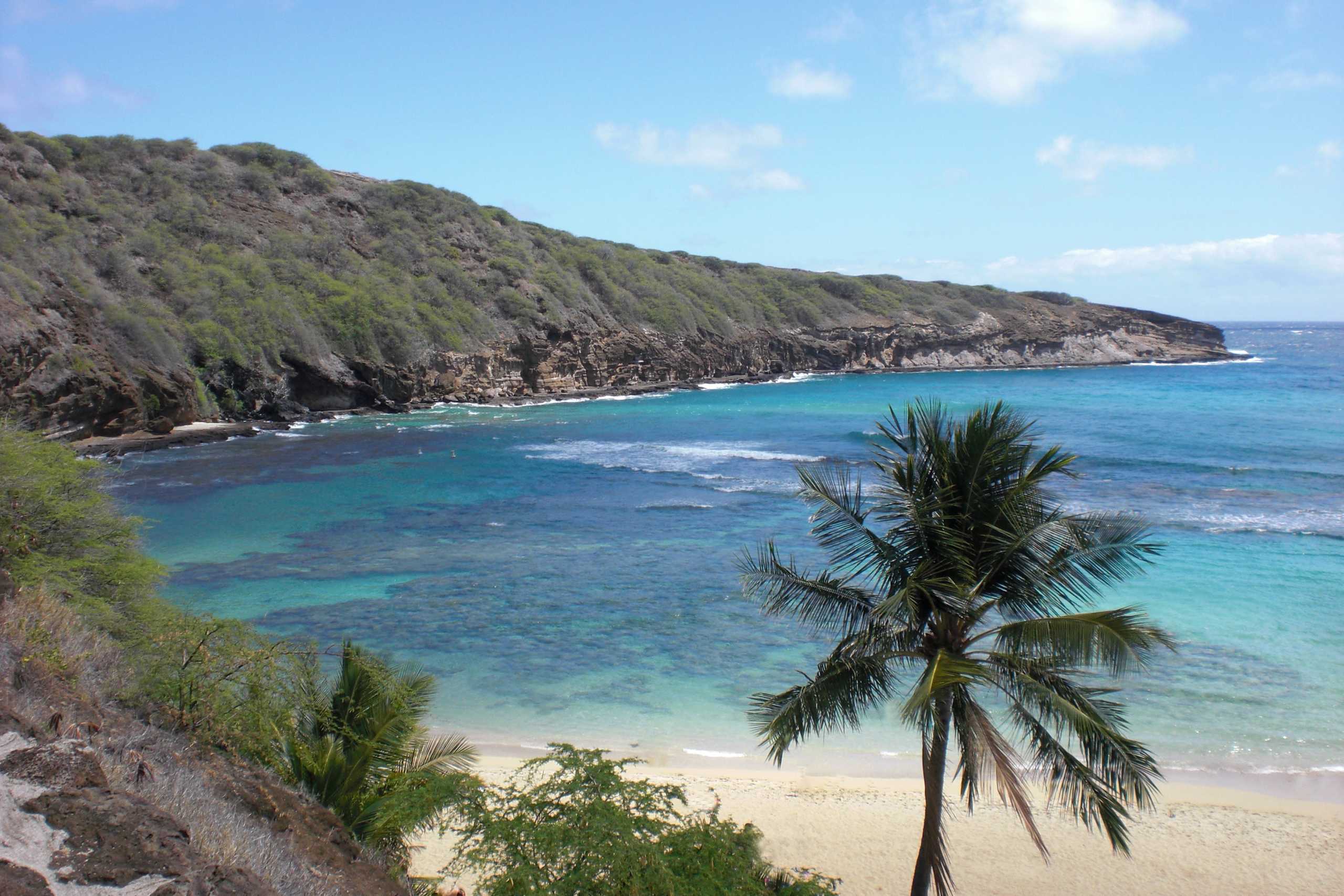
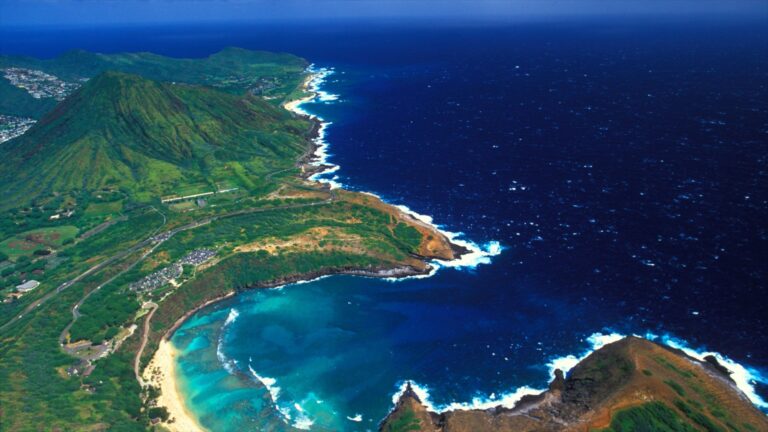
Hanauma Bay, with its reef showing through the water. Photo: Turnstange, CC BY-SA 3.0, via Wikimedia Commons.
Quick Answer
The rule in one line. Since January 1, 2021, it is unlawful in Hawaiʻi to sell, offer for sale or distribute for sale any sunscreen that contains oxybenzone or octinoxate, or both, without a prescription (HRS 342D-21, from Act 104 of 2018). Avobenzone and octocrylene are not covered. Maui County and Hawaiʻi County require mineral-only products; Oʻahu does not. The National Park Service’s test is the simplest one: pick a sunscreen whose only active ingredients are zinc oxide and titanium dioxide.
What Hawaiʻi’s Sunscreen Law Says
The ban is Act 104, which began as Senate Bill 2571 of 2018, titled “Relating to Water Pollution.” The Legislature’s page for the bill shows the Senate passing the final version on May 1, 2018 with 25 ayes and no noes, and records the Act with the date July 3, 2018 (Hawaiʻi State Legislature). It is now Hawaiʻi Revised Statutes section 342D-21, which says: “Beginning January 1, 2021, it shall be unlawful to sell, offer for sale, or distribute for sale in the State any sunscreen that contains oxybenzone or octinoxate, or both, without a prescription issued by a licensed healthcare provider” (HRS 342D-21).
| Item | What the statute says | Source |
|---|---|---|
| Law | Act 104 (SB 2571), 2018; codified as HRS 342D-21 | Legislature |
| In force | January 1, 2021 | HRS 342D-21 |
| Banned ingredients | Oxybenzone (also called benzophenone-3) and octinoxate (also called ethylhexyl methoxycinnamate or octyl methoxycinnamate) | HRS 342D-21 |
| Restricted acts | Selling, offering for sale and distributing for sale | HRS 342D-21 |
| Exception | A prescription from a licensed healthcare provider: a physician, an osteopathic physician or an advanced practice registered nurse | HRS 342D-21 |
| Products covered | A product “marketed or intended for topical use to prevent sunburn”; products marketed as face cosmetics are excluded | HRS 342D-21 |
The statute’s history on the Legislature’s site lists one session law, Act 104 of 2018, and no later amendment. Check the current text before you rely on this page, since the Legislature can change it.
What the Law Does Not Cover
Four limits matter to a visitor who is packing or shopping.
- It covers sales, not use. The text restricts selling, offering for sale and distributing for sale. It does not mention buying, bringing or applying sunscreen. Maui County’s ordinance, covered below, does reach use.
- It names two ingredients. Avobenzone and octocrylene are not in the statute. Two 2021 bills, SB 132 and HB 102, would have banned both from January 1, 2023. Each shows no Act number and was carried over to the 2022 session on December 10, 2021.
- “Reef safe” has no legal meaning. DLNR’s Division of Aquatic Resources says: “Some sunscreens may claim to be ‘reef safe’, but there is no agency which regulates that kind of claim.” The National Park Service adds that sunscreens labeled “reef-friendly” may still include ingredients that can harm corals (DLNR; NPS).
- A legal sunscreen can still carry ingredients that agencies flag. The table below sets the state ban beside NOAA’s and the Park Service’s lists.
| Ingredient | Banned by Hawaiʻi state law | On NOAA’s list of chemicals that can harm marine life | On the Park Service’s list to avoid |
|---|---|---|---|
| Oxybenzone | Yes | Yes | Yes |
| Octinoxate | Yes | Yes | Yes |
| Octocrylene | No | Yes | Not listed |
| Avobenzone | No | Not listed | Yes |
| Nano zinc oxide and nano titanium dioxide | No | Yes | Not listed |
Sources: HRS 342D-21, NOAA Ocean Service (page updated September 23, 2026) and National Park Service. NOAA adds that how these compounds affect reef ecosystems “remains an active area of research.”
Oʻahu, Maui and Hawaiʻi County: Which Rule Applies
The state law applies on every island, Oʻahu included. Two counties added a stricter rule on top. Maui County’s Ordinance 5306 took effect on October 1, 2022 to “prohibit the sale, use or distribution of nonmineral sunscreens without a prescription issued by a licensed healthcare provider,” in the words of the Maui County Council’s release (Maui County Council). The same release says Hawaiʻi County passed an ordinance banning the sale and distribution of nonmineral sunscreens, to take effect December 1, and that both counties’ enforcement agencies “will focus on educating the public rather than imposing penalties.” DLNR’s release on the Maui bill names zinc oxide and titanium dioxide as the mineral sunscreens that remain allowed (DLNR).
| Where | Rule | In force | Source |
|---|---|---|---|
| State of Hawaiʻi, all islands, including Oʻahu | No sale of sunscreen with oxybenzone or octinoxate without a prescription | Jan 1, 2021 | HRS 342D-21 |
| Maui County | No sale, use or distribution of nonmineral sunscreen without a prescription | Oct 1, 2022 | Maui County Council |
| Hawaiʻi County | No sale or distribution of nonmineral sunscreen | Dec 1, 2022 | Maui County Council |
On Oʻahu, then, the mineral-only rule is a recommendation, not a requirement. If your trip includes Maui or the Big Island, a mineral-only sunscreen is the one product that meets every rule on this page. For the rest of the Oʻahu basics, see our Hawaii travel tips guide, and for beach choices our best beaches on Oʻahu.
Why Hawaiʻi Banned These Two Ingredients
NOAA’s Ocean Service summarizes the August 2022 National Academy of Sciences review this way: “specific (chemical) UV filters found in chemical sunscreen can harm aquatic life, including corals.” It calls mineral sunscreen, which does not use those filters, “a better option because there are less effects to aquatic organisms” (NOAA Ocean Service).
DLNR’s Division of Aquatic Resources made the Hawaiʻi case in an announcement first published September 6, 2016. It says oxybenzone “causes deformities in coral larvae (planulae), making them unable to swim, settle out, and form new coral colonies,” and that researchers found oxybenzone concentrations in some Hawaiian waters at more than 30 times the level considered safe for corals. It adds that even a sunbather who only uses a beach shower washes chemicals toward the ocean (DLNR Division of Aquatic Resources).
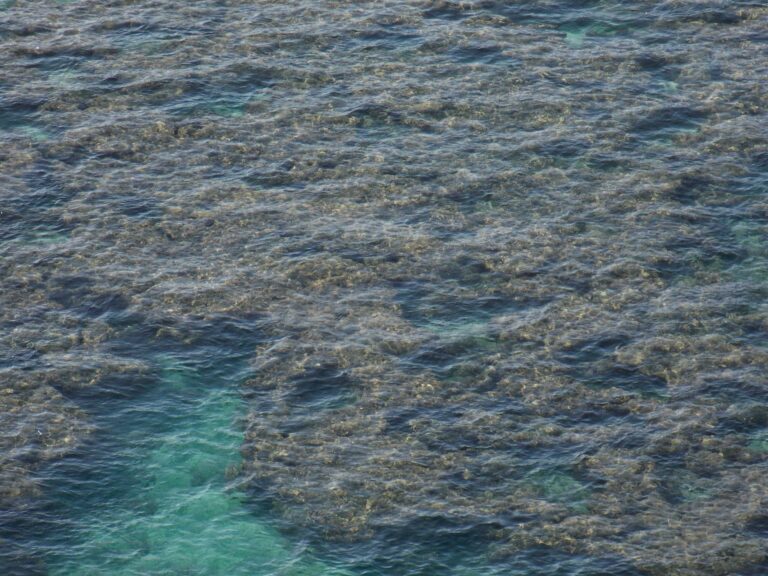
The National Park Service puts the scale in numbers: more than 1 million people enter the water over coral reefs in national parks each year, and an estimated 4,000 to 6,000 tons of sunscreen wash off people into the world’s oceans annually (NPS). The photo below shows part of the reef at Hanauma Bay.
What to Buy: How to Read a Sunscreen Label
Read the box headed “Active ingredients,” not the front of the bottle. FDA defines active ingredients as “the ones that are protecting your skin from the sun’s harmful ultraviolet (UV) rays,” and lists titanium dioxide and zinc oxide among the commonly used ones (FDA). Brand names are left out on purpose: the shelf changes, and the label is what counts.
| Check | What to look for | Source |
|---|---|---|
| Active ingredients | Only zinc oxide or titanium dioxide. The Park Service: “Always look at the label and select sunscreens with only zinc oxide or titanium dioxide.” | NPS |
| Ingredients to skip | Oxybenzone (benzophenone-3) and octinoxate (ethylhexyl methoxycinnamate), which the state bans from sale; avobenzone, which the Park Service lists; octocrylene, which NOAA lists | HRS 342D-21, NPS, NOAA |
| Nano claims | NOAA lists nano-titanium dioxide and nano-zinc oxide among chemicals that can harm marine life, so a label that says non-nano speaks to that concern. We found no official definition of the claim, so it is the maker’s word | NOAA |
| “Reef safe” on the front | Unregulated; check the active ingredients instead | DLNR |
| Protection | FDA: “choose a broad-spectrum sunscreen with an SPF of at least 15” | FDA |
| Water resistance | A water resistant label must state 40 or 80 minutes; FDA says no sunscreen is “waterproof.” DLNR recommends water resistant products, which are more likely to stay on your skin | FDA, DLNR |
| Reapplying | “At least every two hours, and more often if you’re sweating or swimming” | FDA |
Sunscreen Rules at Hanauma Bay and Ko Olina
The City’s four Hanauma Bay Nature Preserve pages, the main page, safety, marine life and conservation, say nothing about sunscreen as of October 25, 2026. The preserve does require every visitor to watch its educational video at every visit, so the sunscreen rule that applies there is the state sale law. Reservations and fees are in our Hanauma Bay reservations guide, and if the bay is closed or sold out, where to snorkel instead lists the options.
- Open
- Wednesday to Sunday; entry 6:45 a.m. to 1:30 p.m., out by 4 p.m.
- Entry
- $25 plus an online fee for nonresidents 13 and older
- Video
- Required at every visit, about nine minutes, in seven languages
- Sunscreen rule
- None stated on the City’s four Hanauma Bay pages, read Oct 25, 2026
Hours and fee from the City’s Hanauma Bay page; video length from its safety page.
Ko Olina is the Oʻahu place that does put sunscreen in writing. Its lagoon rules list “Use of non-reef-safe sunscreen” among the items prohibited along the shoreline and on its beaches (Ko Olina), without defining the term. Because no agency regulates it, the Park Service test above is the safest match: only zinc oxide or titanium dioxide. Find the lagoons on Google Maps or in our Ko Olina guide. For more spots, see snorkeling on Oʻahu, and for beach safety whether it is safe to swim today.

Hanauma Bay Guided Snorkel Tour
★★★★★ 4.8 · 76 reviews · From $104
Check AvailabilityWe may earn a commission if you book through this link, at no extra cost to you.
Sun Safety on Oʻahu: UV Index, Shade and Rash Guards
NOAA’s Climate Prediction Center charts a daily UV Index forecast for Honolulu. For 2025 (the Honolulu chart, from NOAA), the forecast was Very High or Extreme, a UV Index of 8 or higher, on 244 of the 361 days charted.
| UV Index band | UV Index | Forecast days, Honolulu 2025 |
|---|---|---|
| Extreme | 11 and higher | 121 |
| Very high | 8 to 10 | 123 |
| High | 6 to 7 | 78 |
| Moderate | 3 to 5 | 36 |
| Low | 0 to 2 | 3 |
EPA says that at 8 and above, “Extra protection needed”: be careful outside especially from late morning through mid-afternoon, and if your shadow is shorter than you are, seek shade (EPA UV Index scale, updated June 15, 2026). NOAA suggests shade between 10 a.m. and 2 p.m. and UPF sunwear; the Park Service says to avoid the sun between noon and 2 p.m. DLNR explains the island setting: direct sunlight in tropical latitudes has less atmosphere to cross, “and it’s easy to burn” (DLNR).
Rash guards cut the amount of sunscreen you need. DLNR says rash guards or wet suits “will reduce the area of exposed skin, and thus the amount of sunscreen needed for protection.” The Park Service says to wear a UV blocking shirt while swimming and use zinc oxide or titanium dioxide sunscreen on exposed skin (NPS). Cover with fabric first, then put mineral sunscreen on what is left.
Waikiki Turtle Canyon Guided Snorkel
★★★★★ 4.8 · 5,012 reviews · From $62
Check AvailabilityWe may earn a commission if you book through this link, at no extra cost to you.
Hawaii Sunscreen Ban Questions
Is sunscreen banned in Hawaii?
Only some of it. Since January 1, 2021, state law makes it unlawful to sell, offer for sale or distribute for sale any sunscreen that contains oxybenzone or octinoxate, or both, without a prescription from a licensed healthcare provider (HRS 342D-21). Other sunscreens may be sold.
Is reef-safe sunscreen required on Oahu?
No Oʻahu or state law requires a mineral sunscreen. The state law restricts the sale of two ingredients. Maui County and Hawaiʻi County require mineral-only products, and Ko Olina’s lagoon rules prohibit “non-reef-safe” sunscreen without defining the term.
Can I bring my own sunscreen to Hawaii?
The statute covers selling, offering for sale and distributing for sale. Its text does not mention bringing or applying sunscreen. Maui County’s ordinance does cover use. A mineral sunscreen with only zinc oxide or titanium dioxide as active ingredients meets every rule on this page.
Are avobenzone and octocrylene banned in Hawaii?
Not by state law as of October 25, 2026. The statute names only oxybenzone and octinoxate. SB 132 and HB 102 of 2021 would have added the other two from January 1, 2023; neither has an Act number. Maui County and Hawaiʻi County restrict nonmineral sunscreens as a class.
What does reef-safe sunscreen mean?
Nothing legally. DLNR says no agency regulates the claim. The National Park Service’s working test is a sunscreen whose only active ingredients are zinc oxide and titanium dioxide.
Does Hanauma Bay ban sunscreen?
The City’s Hanauma Bay Nature Preserve pages we read on October 25, 2026 state no sunscreen rule. Every visitor must watch the preserve’s educational video, about nine minutes long.
How strong is the sun in Honolulu?
NOAA’s 2025 forecast chart for Honolulu shows a UV Index of 8 or higher on 244 of 361 days. EPA says that at 8 and above, extra protection is needed.
Do rash guards replace sunscreen?
They shrink the area that needs it. DLNR says rash guards or wet suits reduce the exposed skin and the amount of sunscreen needed; the Park Service recommends a UV blocking shirt plus mineral sunscreen on exposed skin.
Sources, checked Oct 25, 2026
- HRS 342D-21, sale and distribution of sunscreen containing oxybenzone or octinoxate (Hawaiʻi State Legislature)
- SB 2571, Relating to Water Pollution, Act 104 of 2018 (Hawaiʻi State Legislature)
- SB 132, Relating to Water Pollution, 2021 (Hawaiʻi State Legislature)
- HB 102, Relating to Sunscreens, 2021 (Hawaiʻi State Legislature)
- Maui County’s sunscreen ordinance takes effect next month, Sept 20, 2022 (Maui County Council)
- Maui County Council passes historic bill prohibiting non-mineral sunscreens, Nov 19, 2021 (DLNR)
- Skincare Chemicals and Coral Reefs (NOAA Ocean Service, updated 09/23/26)
- DLNR asks ocean users to avoid sunscreens with oxybenzone, first published Sep 6, 2016 (Division of Aquatic Resources)
- Protect Yourself, Protect the Reef (National Park Service)
- Sunscreen (National Park Service, Oceans, Coasts and Seashores)
- Sunscreen: How to Help Protect Your Skin from the Sun (FDA, current as of 10/16/2026)
- UV Index Scale (EPA, updated June 15, 2026)
- UV Index annual time series (NOAA Climate Prediction Center)
- Daily UV Index, Honolulu, 2025 (NOAA Climate Prediction Center)
- Hanauma Bay Nature Preserve (City and County of Honolulu)
- Hanauma Bay safety and accessibility (City and County of Honolulu)
- Hanauma Bay marine life (City and County of Honolulu)
- Hanauma Bay conservation (City and County of Honolulu)
- Ko Olina lagoons, rules (Ko Olina)
Researched from the sources above, checked Oct 25, 2026. We never claim a visit we did not make; first-hand notes are marked as Stew’s. How we research and review.


Leave a Reply