
Gardens · Downtown Honolulu
Foster Botanical Garden: Hours, Trees and the Orchid Conservatory
Foster Botanical Garden is a 14-acre City garden in the Chinatown district of downtown Honolulu, and the oldest of the five Honolulu Botanical Gardens. Some of its trees went in the ground in the 1850s, 21 are protected Exceptional Trees, and a glass conservatory holds the orchids. It is open daily and costs $5 for visitors, $3 for Hawaiʻi residents. Here is what to see and how to reach it without a car.
Some links on this page are affiliate links. If you book or buy through them, we may earn a commission at no extra cost to you.
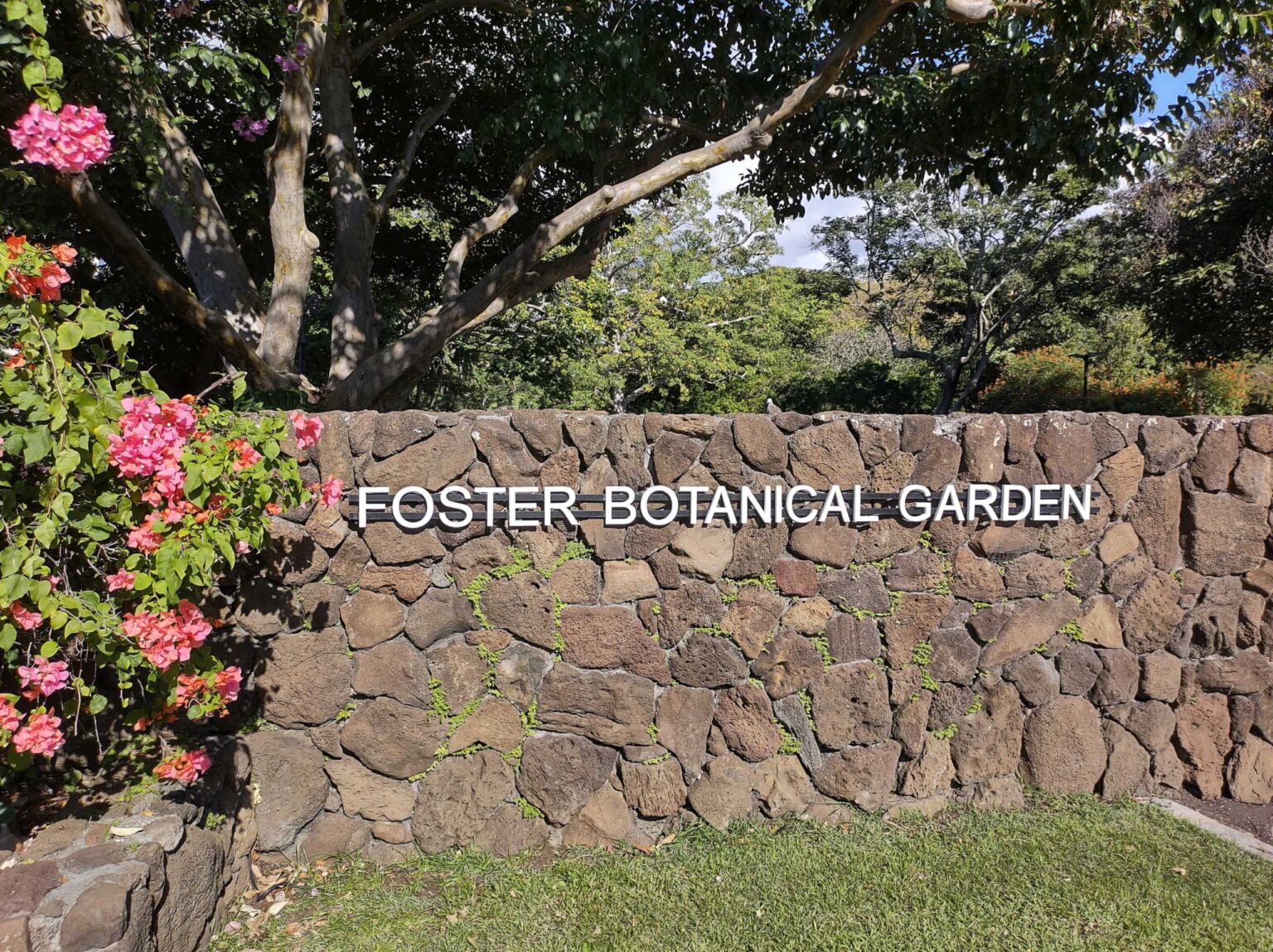
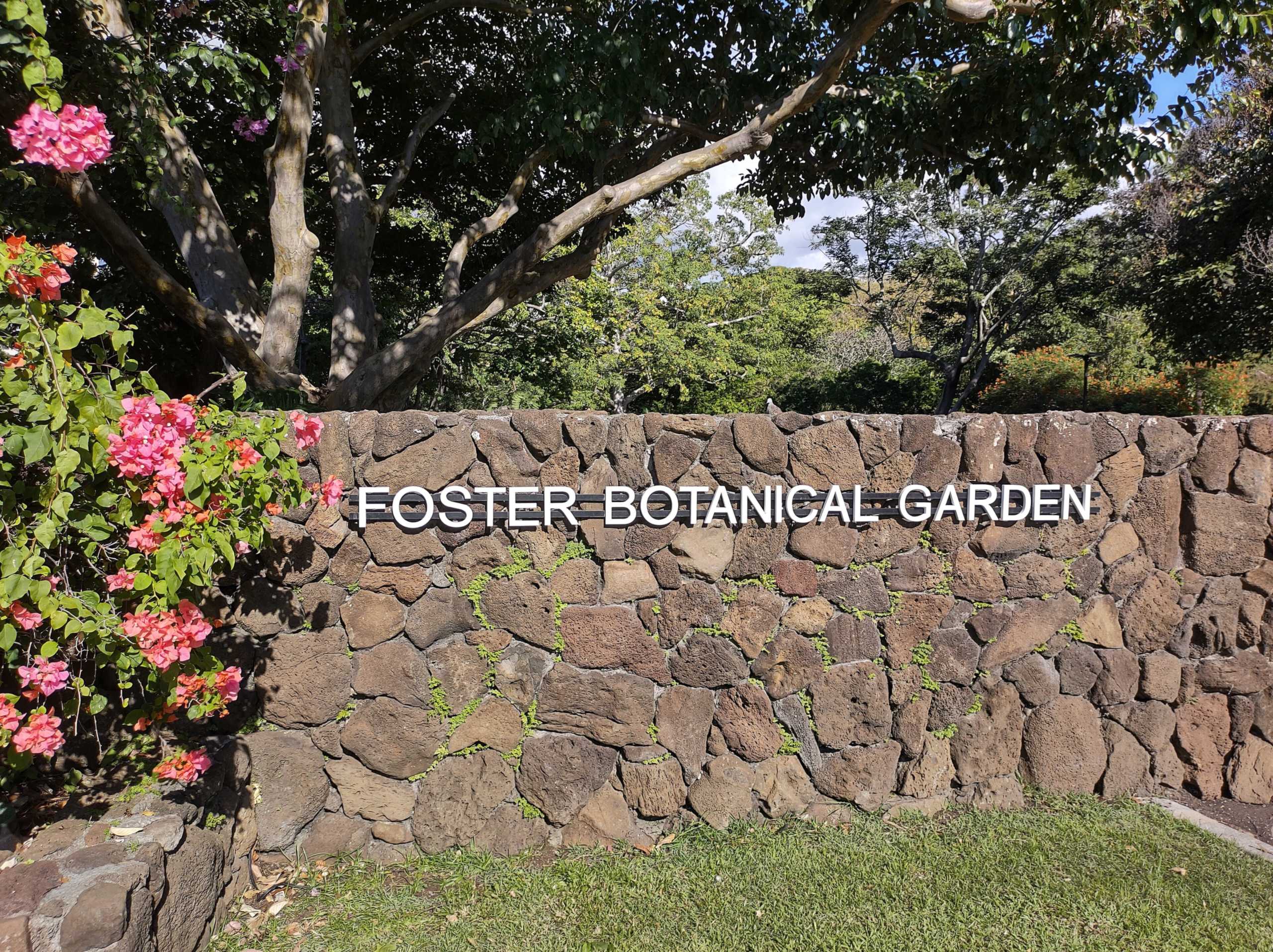
The entrance sign at Foster Botanical Garden. Photo: KlausVonVilver, CC BY-SA 4.0, via Wikimedia Commons.
Quick Answer
Open 9 a.m. to 4 p.m. every day except Christmas and New Year’s Day, with last admission at 3:30 p.m. Admission is $5 for adults, $3 for Hawaiʻi residents and $1 for children 6 to 12; younger children are free. Free docent tours start at 10:30 a.m. on set days. Allow about two hours: the City’s tour alone runs about 90 minutes. TheBus Route 4 stops at the garden by name.
- Hours
- 9 a.m. to 4 p.m. daily; last admission 3:30; closed Dec 25 and Jan 1
- Admission
- $5 adults, $3 Hawaiʻi residents, $1 ages 6 to 12; $25 annual family pass
- Lifeguards
- None: an inland garden with no water to swim in
- Parking
- Garden lot off Vineyard Boulevard, with accessible stalls
- Size
- 14 acres, the oldest of the five City gardens
- Phone
- (808) 768-7135
Facts from the City’s garden page, map and releases, checked Oct 14, 2026.
What Is Inside the Garden
Foster is the oldest of the City’s five botanical gardens (DPR). The physician and plant collector William Hillebrand leased five acres from Queen Kalama in 1855 and planted his collections there; Thomas and Mary Foster bought the property in 1880. Mary Foster left it to the City in 1930 on condition that it stay a public park, and it opened on November 30, 1931 (Honolulu Botanical Gardens). The National Register of Historic Places listed it in 1993.
The City names six highlights: the Conservatory, the Outdoor Butterfly Garden, the Palm Garden, the Prehistoric Glen cycad collection, the Exceptional Trees and the gift shop. Around them sit the Upper and Middle Terraces, the Lyon Garden of orchids and bromeliads, and the Economic Garden of fruit, spice, dye and beverage plants, where coffee, cinnamon, ylang-ylang and a kola tree grow. The City garden map labels every tree and path. The Daibutsu, a replica of the Great Buddha of Kamakura dedicated in 1968, sits on a central lawn.
The Exceptional Trees
Hawaiʻi’s Exceptional Tree Act of 1975 protects trees for their age, size, rarity or historic and cultural value (DPR), and the City counts 21 of them at Foster (DPR, Jan 2025). The garden’s own tree list gives their spots (virtual tour). The ones to find:
- Bo tree (Bo Terrace): Mary Foster planted it in 1913 from a cutting given by a Sri Lankan Buddhist leader. The City calls it a descendant of the tree the Buddha sat under.
- Cannonball tree (Middle Terrace): flowers and fruit grow straight from the trunk.
- Quipo (Middle Terrace): planted in 1930, with soft wood like balsa.
- Queen’s crape myrtle (Upper Terrace): the City calls the original planting the largest in the nation, about 80 feet tall.
- Loulu palm (Palm Garden): small but about 150 years old, a native Hawaiian palm from Hillebrand’s time.
- Baobab and gigasiphon (by the Daibutsu): the City says its gigasiphon, a critically endangered African tree, is the largest in cultivation in the world.
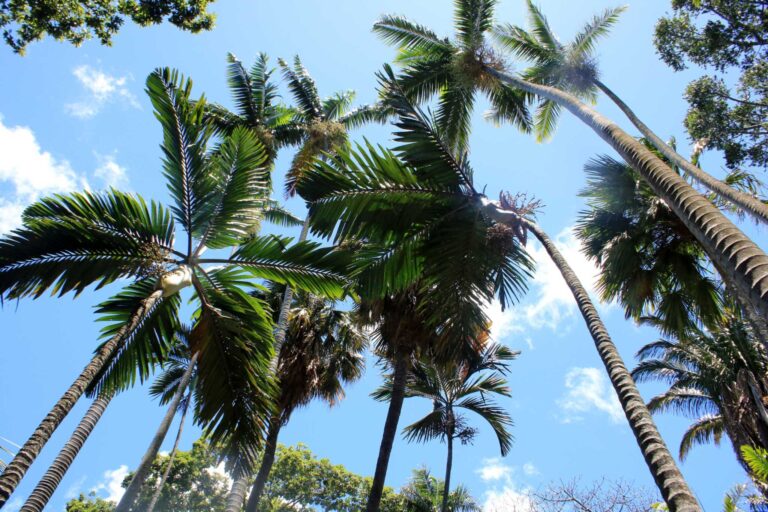
The Palm Garden also has a female double coconut planted in 1937. After years without fruit, she set seed in 2011 with pollen shipped from Singapore. The seed of the species can weigh up to 55 pounds (HBG).
Orchids, Butterflies and the Glen
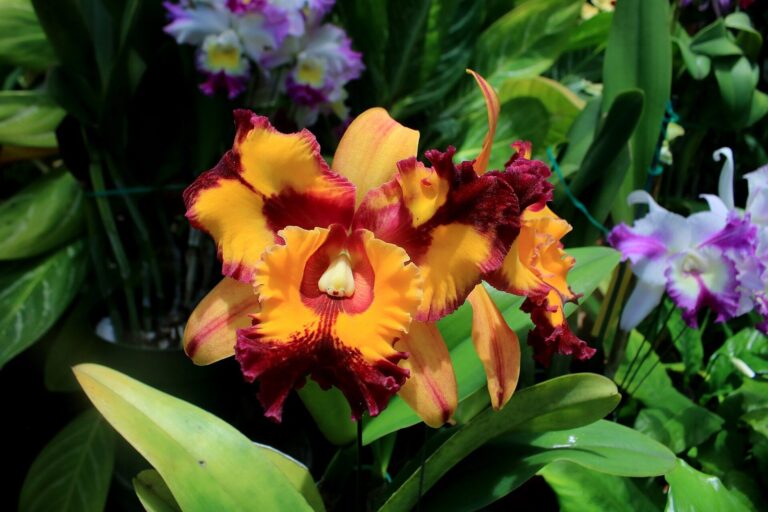
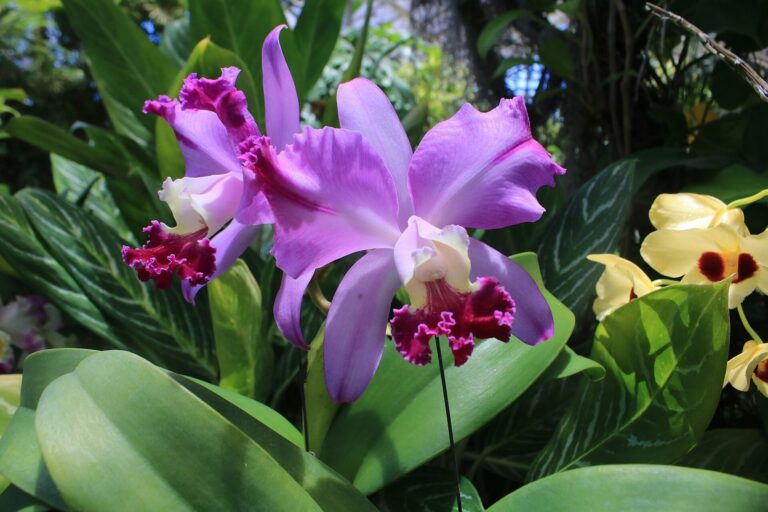
The Conservatory is a glass house of orchids and rare foliage plants. The garden’s first director, Harold Lyon, began its tradition of hybridizing cattleya orchids in 1931. Inside you will find a giant tiger orchid, pitcher plants and corpse flowers. One or two corpse flowers bloom each summer, nearly 25 in a decade, and the last bloom the City reported was in July 2024 (HBG; DPR). Outdoors, the Lyon Garden grows orchids on trees and rocks.
The open-air Butterfly Garden is planted for Hawaiʻi’s butterflies, with crown flower for monarchs. The Prehistoric Glen, planted in 1965, holds cycads, which the City calls living fossils for dating back some 250 million years.
Free Docent Tours and Events
Docent tours are free with admission, start at 10:30 a.m. and last about 90 minutes. The City lists Monday, Wednesday, Friday and Saturday, and its page says Thursdays were added from March 2026 (DPR). Tours run rain or shine. Reservations are recommended: call (808) 768-7135 or email hbg@honolulu.gov. Walk-ins join if there is space. Organized groups cannot book a docent tour, but the self-guided map comes with admission.
The big evening is Midsummer Night’s Gleam, a light show with food trucks and performances. This year it ran July 18, 3 to 9 p.m., for $5 (DPR). Classes are on the events page.
Rain, Shoes and Staying Safe
There is no water to swim in and no lifeguard. The City warns of slippery surfaces, loose rocks, falling branches, thorny plants and exposed roots, and recommends walking shoes. Some plants are poisonous, so do not handle them or put any in your mouth, and picking is prohibited. Tours run in the rain, but for a wet-day plan see our rainy day guide.
Accessibility and Facilities
The garden closed in February 2023 for an accessibility project and reopened that year. The City rebuilt the main entrance with ramps and handrails, refurbished the accessible parking stalls, renovated the restrooms and regraded the paths in concrete (DPR). The director told the Star-Advertiser that all pathways now meet the ADA (Star-Advertiser, Aug 2023). The City map puts the gift shop beside the entrance and restrooms by the Conservatory and the Lyon Garden. For an accommodation, call (808) 768-3003.
Getting There, Parking and Buses
By car: the garden is about 5 miles from central Waikīkī by our count, and has its own lot off Vineyard Boulevard with accessible stalls. By bus: Route 4 stops at Nuuanu Avenue and Foster Gardens in one direction (Nuuanu Avenue and Vineyard Boulevard in the other), about a 4-minute walk to the gate by our count. Route 151 stops at Aala Street and North Vineyard Boulevard, and Routes 2 and 13 stop at Liliha Street and Vineyard Boulevard, about 7 minutes away (TheBus schedule data). Route 2 runs to Waikīkī; fares are in our Getting Around Oahu guide.
By rail: not yet. Skyline runs from East Kapolei to the Kalihi Transit Center, and the next phase will add six stations to Civic Center, one of them in Chinatown (HART; Hōlau station). HART projects passenger service for 2031. Our Skyline guide covers the stations that are open.
By trolley: the Waikiki Trolley’s Historic Honolulu Line stops at the garden, with Foster stops listed from 10:48 a.m. to 3:48 p.m. (Waikiki Trolley). The last stop falls after the City’s 3:30 p.m. cutoff, so ride an earlier loop.

Waikiki Trolley Historic Honolulu Line
★★★★★ 4.9 · 2,947 reviews · From $35
Check AvailabilityWe may earn a commission if you book through this link, at no extra cost to you.
Foster, Hoʻomaluhia or Lyon Arboretum
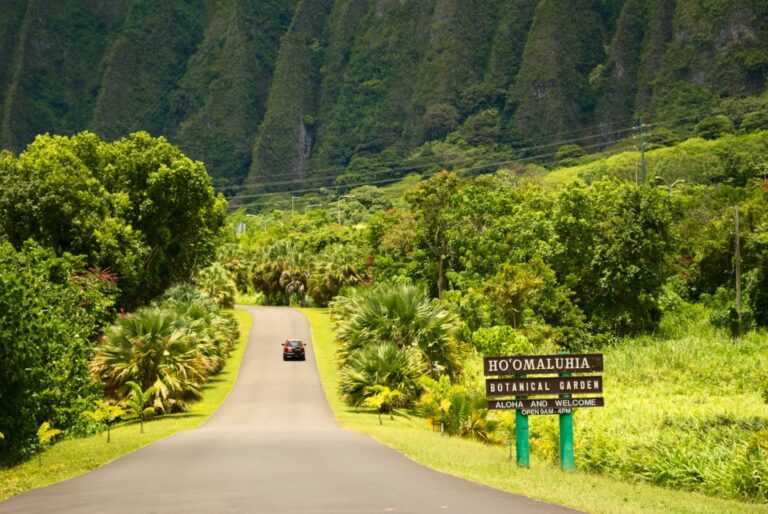
Foster suits a visitor without a car, a few spare hours or a taste for orchids and old trees. Hoʻomaluhia is 400 free acres under the Koʻolau, about 15 miles from Waikīkī by our count, with no bus to the gate and a closure every Thursday (DPR). Lyon Arboretum is a University of Hawaiʻi rainforest garden in Mānoa Valley with more than 7 miles of trails, open weekdays only (UH).
For a second stop, Liliʻuokalani Botanical Garden is about 0.65 mile from Foster on foot by our count. It is free and devoted to native Hawaiian plants (DPR). More options are in our things to do on Oahu guide.
| Garden | Admission | Open | Known for |
|---|---|---|---|
| Foster Botanical Garden | $5 visitors, $3 residents | Daily, 9 to 4 | Old trees, orchids, downtown |
| Hoʻomaluhia Botanical Garden | Free | 9 to 4, closed Thursdays | 400 acres, a lake, mountain views |
| Lyon Arboretum | Free; $10 suggested | Weekdays, 9 to 3 | 7 miles of trails, 6,000 taxa |
| Liliʻuokalani Botanical Garden | Free | Daily, 7 to 5 | Native Hawaiian plants |
What to Pair It With
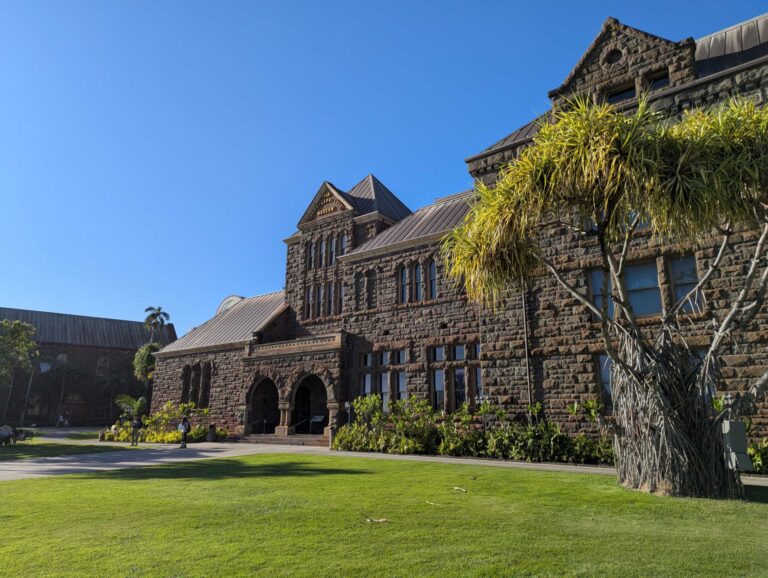
The garden sits in the Chinatown district, so a stroll there fits before or after. ʻIolani Palace and the King Kamehameha statue are about 0.8 mile away on foot by our count. In December, Honolulu City Lights at Honolulu Hale is about a mile off, and Bishop Museum is about 2 miles by car.

Semi-Private Honolulu Historical Tour
★★★★★ 4.8 · 12 reviews · From $144
Check AvailabilityWe may earn a commission if you book through this link, at no extra cost to you.
Rules, Permits and Weddings
Weddings, commercial photography and group events need a City permit. Foster allows up to 50 wedding guests, every guest pays admission, and permits end at 3:30 p.m. The cashier takes cash, Visa and MasterCard. Drones need City, FAA, utility and Marine Corps clearance (permit guidelines).
Foster Botanical Garden: Questions
What are Foster Botanical Garden’s hours?
9 a.m. to 4 p.m. every day. Last admission is 3:30 p.m., and it is closed Christmas Day and New Year’s Day.
How much does Foster Botanical Garden cost?
$5 for adults, $3 for Hawaiʻi residents and $1 for children 6 to 12. Younger children are free. An annual family pass is $25.
Where do you park at Foster Botanical Garden?
The garden has its own lot off North Vineyard Boulevard, with accessible stalls. For Midsummer Night’s Gleam the lot was reserved for accessible parking only.
Does Foster Botanical Garden have guided tours?
Yes, free with admission at 10:30 a.m. on set days, about 90 minutes. Reserve at (808) 768-7135; walk-ins join if there is space.
Is Foster Botanical Garden wheelchair accessible?
The City rebuilt the entrance with ramps and regraded the paths in 2023, and the director said all pathways now meet the ADA. Call (808) 768-3003 to ask for an accommodation.
Can you take the bus to Foster Botanical Garden?
Yes. TheBus Route 4 has stops named for Foster Gardens and Vineyard Boulevard on Nuuanu Avenue. Routes 2, 13 and 151 stop within about 7 minutes’ walk.
Sources, checked Oct 14, 2026
- Foster Botanical Garden (City DPR)
- Foster garden map (City DPR)
- Virtual tour of Foster Botanical Garden (HBG)
- Exceptional Tree Program (City DPR)
- Free guided tours resume (DPR, Jan 9, 2025)
- Accessibility project and reopening (DPR, Apr 27, 2023)
- Foster reopens as a spruced-up oasis (Star-Advertiser, Aug 27, 2023)
- Midsummer Night’s Gleam (DPR, Jun 8, 2026)
- Events and classes (City DPR)
- Wedding and photography permits (City DPR)
- Hoʻomaluhia Botanical Garden (City DPR)
- Liliʻuokalani Botanical Garden (City DPR)
- Lyon Arboretum, visit (University of Hawaiʻi)
- Skyline construction status (HART)
- Hōlau station, Chinatown (HART)
- Waikiki Trolley, Historic Honolulu Line
- TheBus GTFS schedule data (feed from Aug 9, 2026)
Researched from the sources above, checked Oct 14, 2026. We never claim a visit we did not make; first-hand notes are marked as Stew’s. How we research and review.
Leave a Reply