
Parks · Windward Oahu
Kualoa Regional Park and Mokoliʻi
Kualoa Regional Park is a City park of 153 acres at the north end of Kāneʻohe Bay, facing the islet of Mokoliʻi. It is not Kualoa Ranch, the private tour operation a short walk up the same highway. Here are the water, the lifeguard tower, camping permits, parking, the rules, and what the City says about getting out to the islet.
Some links on this page are affiliate links. If you book or buy through them, we may earn a commission at no extra cost to you.
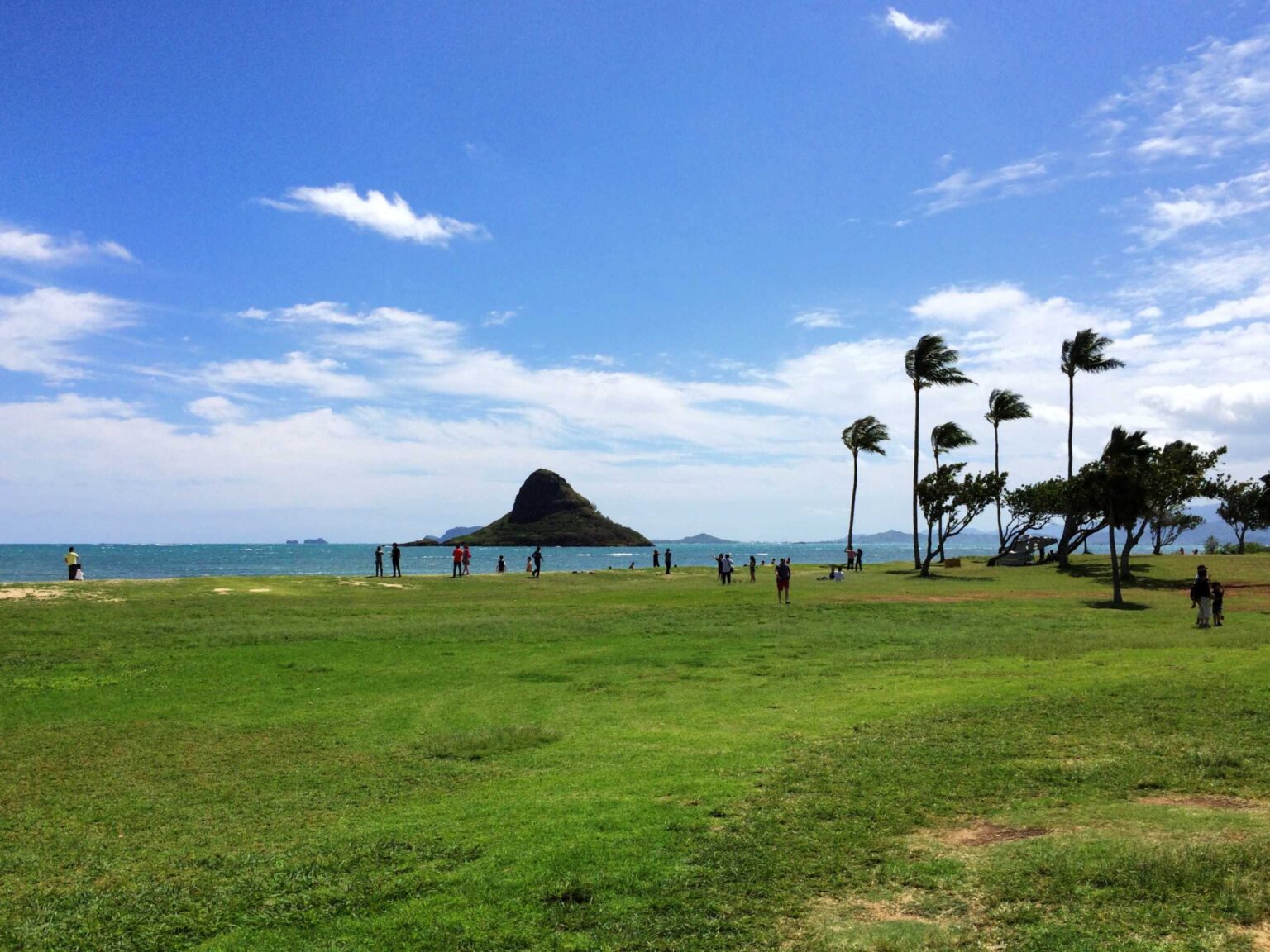
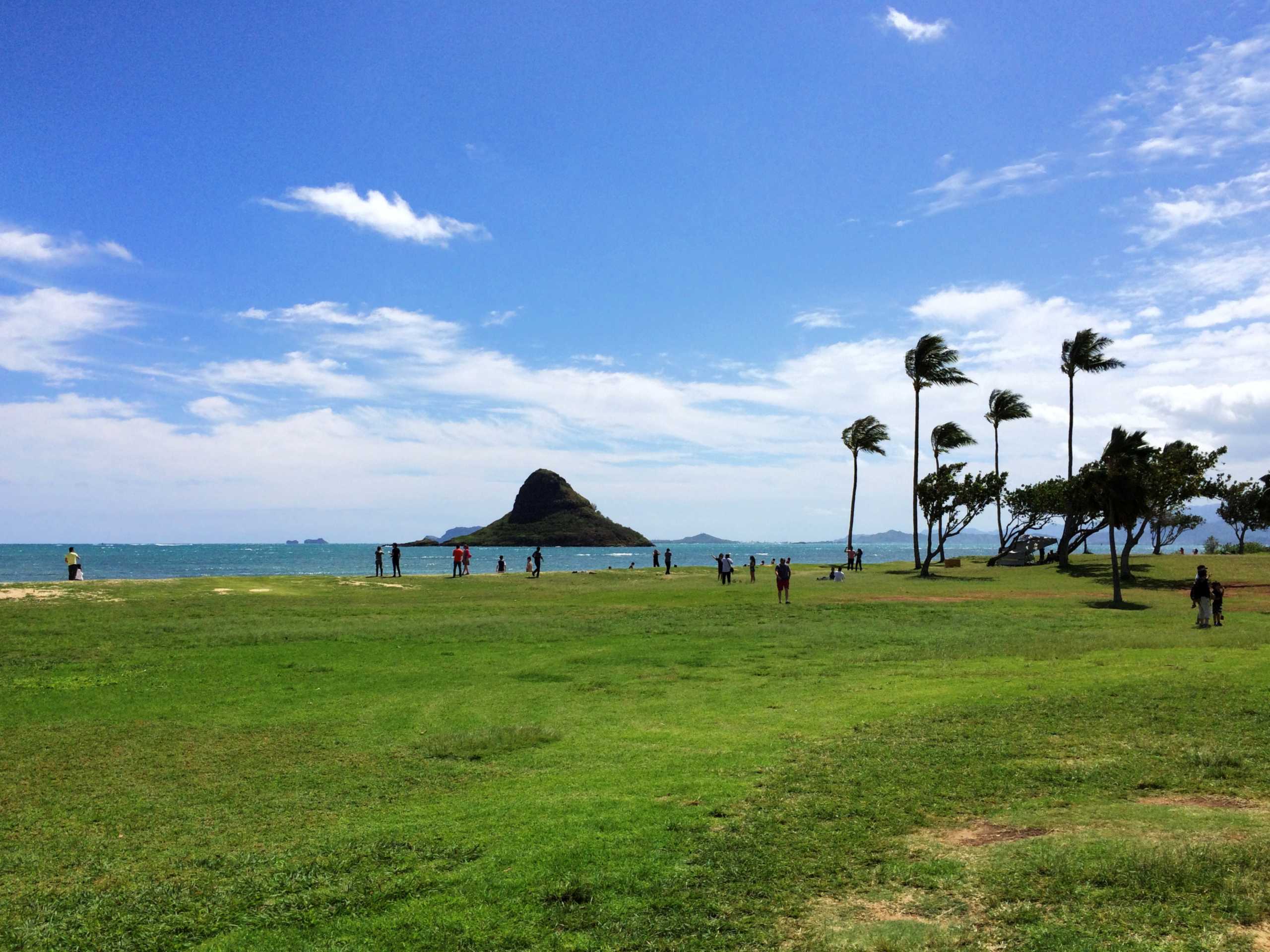
Kualoa Regional Park with Mokoliʻi offshore. Photo: Daniel Ramirez, CC BY 2.0, via Wikimedia Commons.
Quick Answer
Kualoa Regional Park belongs to the City and County of Honolulu, not to Kualoa Ranch. It has a lifeguard tower (Tower 9, 8 a.m. to 6:30 p.m.), two permitted campgrounds, a lawn facing Mokoliʻi, and a parking lot the City closes from 8 p.m. to 7 a.m. Waikīkī is about 50 minutes by car, 23 miles by our routing. TheBus Route 60 stops at the park.
- Hours
- Parking lot closed 8 p.m. to 7 a.m.; the City posts no separate park hours
- Lifeguards
- Tower 9, 8 a.m. to 6:30 p.m. daily
- Parking
- Park lot off Kamehameha Highway; no fee is listed by the City
- Size
- About 153 acres, including the islet Mokoliʻi
- Camping
- 21 campsites at two campgrounds, City permit required
- Managed by
- City Department of Parks and Recreation
- Phone
- Park staff (808) 768-8974
Facts from the City’s park, closure-hours and lifeguard pages, checked Oct 13, 2026.
Kualoa Regional Park Is Not Kualoa Ranch
Kualoa Regional Park and Kualoa Ranch are two different places on the same stretch of Kamehameha Highway, and search results blur them. The park is public land run by the City Department of Parks and Recreation: 153 acres of lawn, beach and campgrounds, including the islet Mokoliʻi (DPR). Kualoa Ranch is a private ranch at 49-560 Kamehameha Highway that sells movie-site, zipline, UTV, horseback and ocean tours. Our Kualoa Ranch tours guide compares them.
The two sit a short walk apart, and TheBus has a separate stop for each (TheBus schedule data). TheBus and the state Department of Health’s water alerts call the park Kualoa Beach Park, the same place. Camping permits come from the City; ranch tours are booked with the ranch.
The View: Mokoliʻi and the Koʻolau
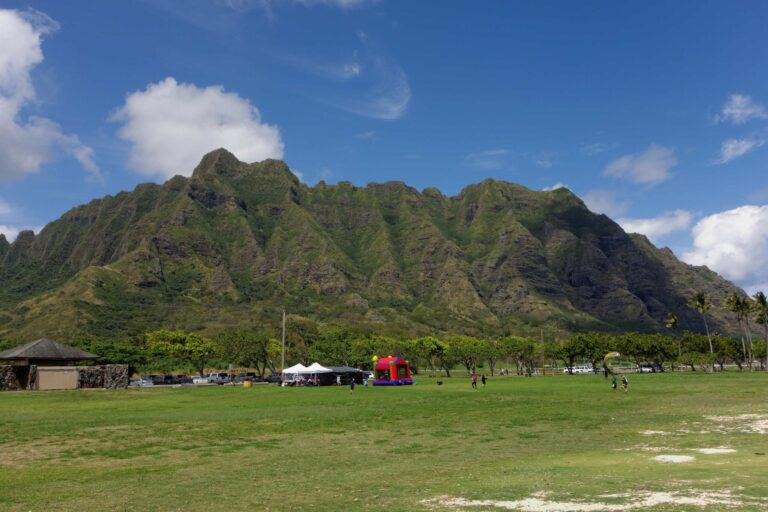
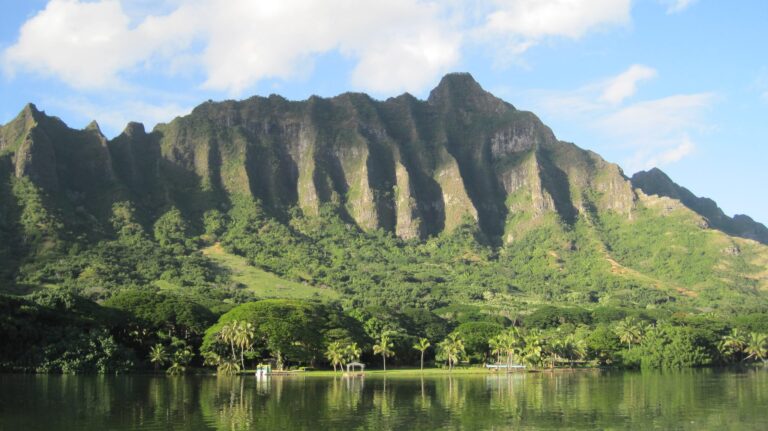
The park sits on the northern point of Kāneʻohe Bay with the Koʻolau Mountains behind it. Kualoa means “long back” in Hawaiian, a reference to that mountain spine (DPR). From the beach, Mokoliʻi sits offshore, about a third of a mile out (Wikipedia). The City translates the name as “little lizard.” In the legend, Hiʻiaka killed a moʻo, a dragon-like creature, and threw its tail into the sea, where it became the islet (Senate Resolution 36).
Searchers know the islet as Chinaman’s Hat, for its shape. A 2007 Senate resolution, which did not pass, asked the Hawaii Tourism Authority to use Mokoliʻi instead, calling the nickname offensive to many people of Chinese ancestry. This guide uses Mokoliʻi.
The City describes Kualoa as a puʻuhonua, a place of refuge. Hōkūleʻa was assembled, blessed and first entered the water here on March 8, 1975, and each March the City hosts the free Kualoa/Hakipuʻu Waʻa Festival near Campground A (DPR).
Swimming and Water Conditions
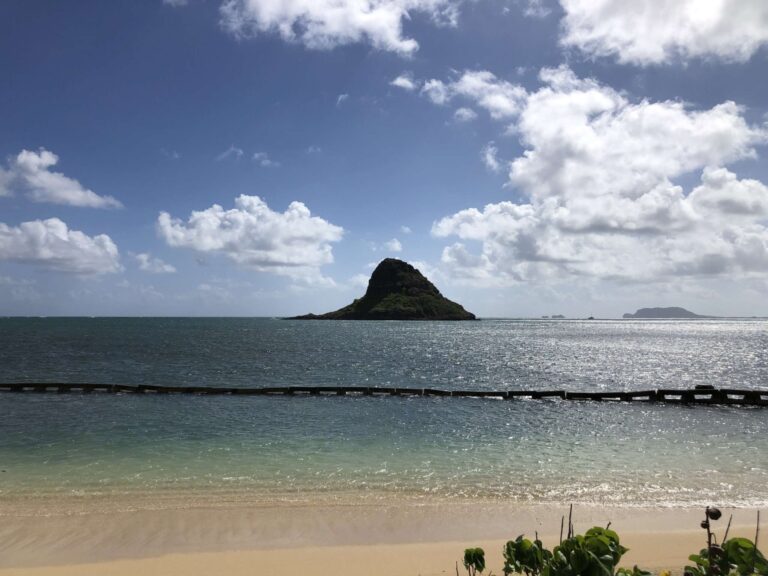
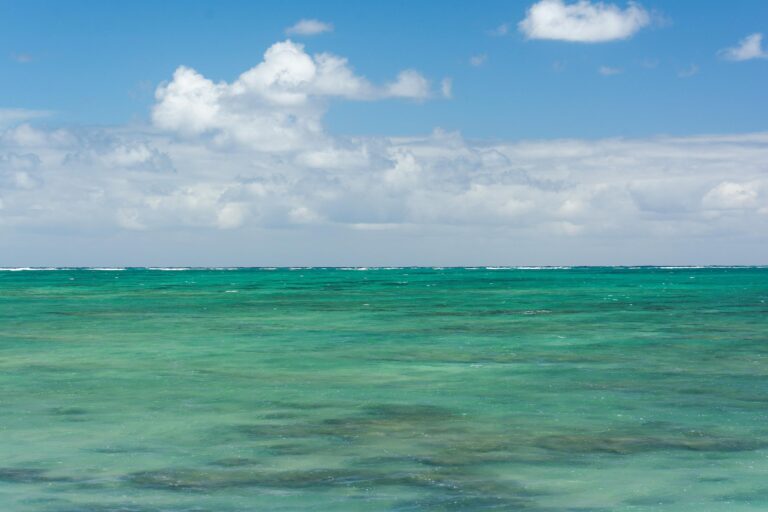
The Hawaiʻi Tourism Authority calls the water “calm and warm” (gohawaii.com). SafeBeachDay, the beach-hazard site built with the City, the Hawaii Lifeguard Association and the state Department of Health, describes a thin strip of white sand and small waves, with a barrier reef about half a mile offshore. Read its hazard list: sudden drop-off, sharp coral, strong currents, large waves and high surf. It also warns that lifeguards are not always on duty.
Swim in front of the tower. Honolulu Ocean Safety lists Tower 9 at the park, open 8 a.m. to 6:30 p.m. daily, with closures posted on hnl.info (Ocean Safety). That list dates from August 2024, so look for the tower when you arrive.
The state Department of Health’s feed showed no open advisory for Kualoa on October 13 (DOH water quality map). Heavy rain changes that: the department has issued brown water advisories for Kualoa after storms (the latest in its feed is December 2021) and for the wider Kāneʻohe Bay (May 13, 2024). Check the map before you get in, and read our guide to swimming safely on Oahu today.
Storms close the park too: after the March 2026 Kona low, floodwater covered the main entry road and the lots (DPR, March 16). The City’s news feed showed no closure on October 13.
Mokoliʻi: What the City Says
Visitors ask whether they can paddle or wade out to Mokoliʻi. The City’s park page lists the islet as part of the park and gives no landing rules, hours or permit steps for it (DPR). The state’s list of Oʻahu offshore seabird sanctuaries (DLNR) does not include Mokoliʻi. We found no City or state page that says when or where to land, so this guide gives no landing route, wading advice or hours. Call the park office at (808) 768-8974 before you go. The Tourism Authority does list kayaking among the park’s activities (gohawaii.com).
If you want gear, one operator runs a four-hour self-guided Mokoliʻi kayak trip through Viator. You meet at its Kailua storefront, load the kayaks onto your own four-door car and drive to the park, about 30 minutes by its listing.

Mokoliʻi Island Self-Guided Kayak Tour
★★★★★ 4.7 · 46 reviews · From $82
Check AvailabilityWe may earn a commission if you book through this link, at no extra cost to you.
Restrooms, Picnic Tables and Beach Wheelchairs
The Hawaiʻi Tourism Authority lists a lifeguard, picnic tables, barbecue grills, restrooms, showers and phones (gohawaii.com); SafeBeachDay lists picnic areas, restrooms and showers. Neither gives a count or a condition.
All-terrain beach wheelchairs are kept at the recreation staff offices near Campground A. Call (808) 768-8980 at least one day ahead (Monday to Thursday 9 a.m. to 3 p.m., Friday 9 a.m. to noon) and pick up 15 minutes before your time (DPR). Both campgrounds have accessible campsites (City camping FAQ).
Camping Permits: Campgrounds A and B
Kualoa has 21 campsites at two campgrounds, and camping needs a City permit (DPR). Campground A, on the Kāneʻohe side, runs three-day permits and closes in summer for City youth programs. Campground B faces Mokoliʻi, runs five-day permits, and sits beside ancient Hawaiian fishponds; the City says fishing there “can be quite good.” Hoʻomaluhia Botanical Garden in Kāneʻohe also takes City camping permits (City camping FAQ).
Campground A also closes for events: in March 2026, March 6 to 9 for the canoe festival and March 20 to 23 for a teen program, while Campground B stayed open (DPR).
- When to book. Reservations open at 5 p.m. Hawaiʻi time on the Friday two weeks before the camping period and close at 11:59 p.m. the Thursday before (DPR camping page).
- Where. Online at the City’s camping site, which needs an hnl.info account, or in person at the Permits Office in the Fasi Municipal Building, 650 South King Street, weekdays 8 a.m. to 4 p.m. (closed weekends and State holidays).
- Who. Applicants must be 18 or older, one permit per weekend. A permit covers 10 people, two tents and three vehicles, entered when you book. Sleeping in a vehicle is not allowed.
- Which nights. Permits start Friday and end Monday at 8 a.m. (Campground A) or Wednesday at 8 a.m. (Campground B). All City campgrounds are closed Wednesdays and Thursdays.
- Cost. $10 per site per day, a $5 administrative fee (raised from $2 on July 1, 2026) and a 2.35 percent card fee. By the City’s own formula that is $35.82 for three days and $56.29 for five (DPR fee notice). Permits are non-refundable unless the City closes the campground.
- Groups. Large-group sites hold 150 people, small-group sites 60. Call (808) 768-8974 three weeks to six months ahead.
Getting There and Parking
Driving: from Kūhiō Beach in Waikīkī it is about 50 minutes and 23 miles with no traffic, by our own routing (OSRM). Kualoa Ranch says it is 45 minutes from Waikīkī, and the park is a short walk from the ranch. The coast to the south, Makapuʻu to Waimānalo, is in our east side Oahu drive guide, and Hoʻomaluhia Botanical Garden, the City’s Kāneʻohe garden, makes a companion stop.
Parking: the park has a lot off Kamehameha Highway, and the City closes it from 8 p.m. to 7 a.m. (closure list). No City page lists a fee, a stall count or a time limit. Campers need the vehicle permit on the dashboard.
TheBus: Route 60 (Honolulu to Kāneʻohe to Haleʻiwa) stops at Kamehameha Highway at Kualoa Regional Park. On the October 14 timetable the Haleʻiwa-bound bus leaves Kona Street at Keeaumoku Street at 8:00 a.m. and reaches the park stop at 9:18 a.m., with buses about every 30 minutes through midday (TheBus schedule data). Reaching Kona Street from Waikīkī is a separate ride.
Rental car
Windward Oahu is easier with a car
Kualoa is about 50 minutes from Waikīkī, and the campgrounds, the kayak outfitter and the highway stops along the coast all assume you are driving. Compare Oahu rental cars on DiscoverCars.
We may earn a commission if you book through this link, at no extra cost to you.
Rules at the Park
The City bans alcohol in all its parks: “Possessing alcoholic beverages is prohibited in all parks” (City camping rules). SafeBeachDay’s rule list for Kualoa (SafeBeachDay) adds no dogs, no drones, no smoking, no amplified music, no fire pits and no vending.
Campers face more: campfires only in the City’s pits and rings, no pets or generators, no driving or parking on the grass, no waterslides or bounce houses. A violation can bring a fine of up to $500 or loss of the permit.
For the rest of the island, see our things to do on Oahu guide.
Kualoa Regional Park: Questions
Is Kualoa Regional Park the same as Kualoa Ranch?
No. The park is a City park with campgrounds and a beach. Kualoa Ranch is a private ranch that sells tours. They are a short walk apart.
Are there lifeguards at Kualoa Regional Park?
Honolulu Ocean Safety lists Tower 9, open 8 a.m. to 6:30 p.m. daily.
Do you need a permit to camp at Kualoa Regional Park?
Yes. Book on the City’s camping site from 5 p.m. on the Friday two weeks before. By the City formula, three days cost $35.82 and five days $56.29.
What are the hours at Kualoa Regional Park?
The City lists only the parking lot, which is closed from 8 p.m. to 7 a.m.
Can you swim at Kualoa Beach Park?
Yes, near the lifeguard tower. SafeBeachDay lists sudden drop-offs, sharp coral and strong currents as hazards.
Can you kayak or walk to Chinaman’s Hat?
The City publishes no landing rules for the islet, which is named Mokoliʻi. Call the park office at (808) 768-8974 before you go.
How far is Kualoa Regional Park from Waikiki?
About 50 minutes and 23 miles by car with no traffic, by our own routing.
Sources, checked Oct 13, 2026
- Kualoa Regional Park (City DPR)
- Camping (City DPR)
- Camping rules (City DPR)
- Family camping FAQ (City DPR)
- Fee increases begin July 2026 (City DPR, Jun 18, 2026)
- City camping reservations
- Park closure hours (City DPR)
- City park directory and phone numbers
- Beach wheelchairs and mats (City DPR)
- Select City park facilities closed due to storm impacts (City DPR, Mar 16, 2026)
- Lifeguard tower locations (Honolulu Ocean Safety)
- Water quality advisories (Hawaii Department of Health)
- Kualoa Regional Park beach safety (SafeBeachDay)
- Kualoa Regional Park (Hawaii Tourism Authority)
- Senate Resolution 36 (Hawaii Legislature, 2007)
- Oʻahu wildlife and seabird sanctuaries (DLNR)
- Mokoliʻi (Wikipedia)
- TheBus GTFS schedule data (feed from Aug 9, 2026)
Researched from the sources above, checked Oct 13, 2026. We never claim a visit we did not make; first-hand notes are marked as Stew’s. How we research and review.
Leave a Reply